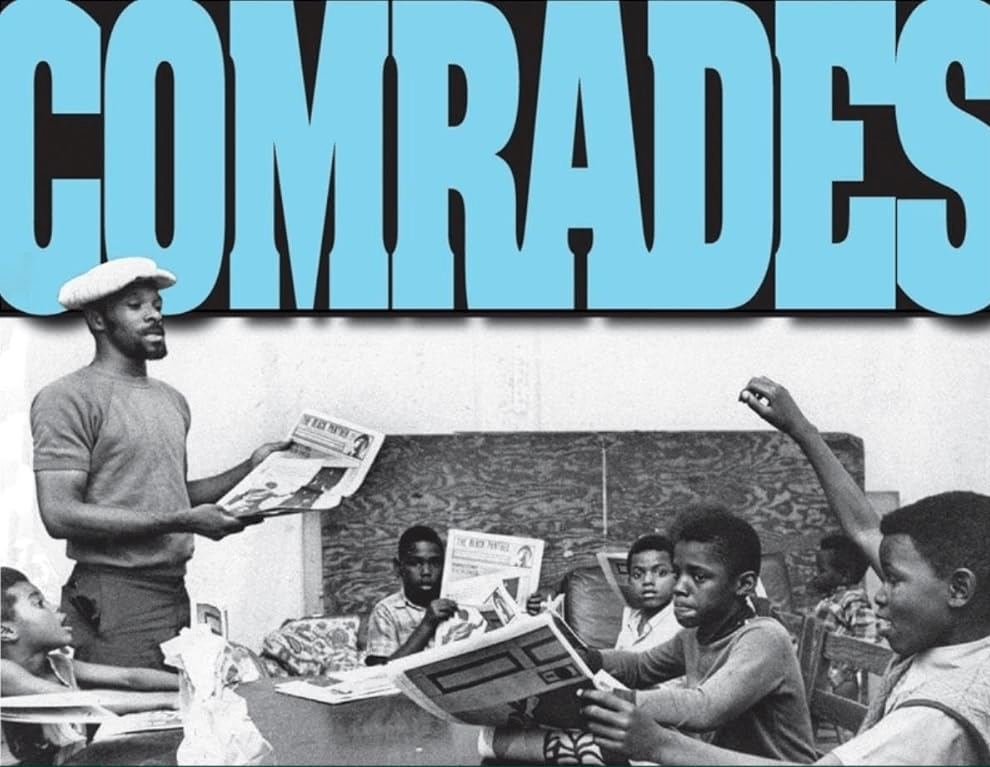
The Black Panther Party for Self-Defense was founded in Oakland, California, in 1966 by Huey P. Newton and Bobby Seale. It was perhaps the most visible of the Black Power groups in the late 60s and early 70s, not least because of its confrontational politics, its rejection of nonviolence, and its headline-catching, gun-toting militancy. Important on the national scene and highly visible on college campuses, the Panthers also worked at building grassroots support for local black political and economic power. Although there have been many books about the Black Panthers, none has looked at the organization and its work at the local level. This book examines the work and actions of seven local initiatives in Baltimore, Winston-Salem, Cleveland, Indianapolis, Milwaukee, Philadelphia, and Los Angeles. These local organizations are revealed as committed to programs of community activism that focused on problems of social, political, and economic justice.
Comrades: A Local History of the BPP_eBook
Pop the document out from the upper right to read / expand / download.
Comrades: A Local History of the BPP_Audiobook
Part 1
Part 2
Rebuild Collective Video Education Player
11 Video Playlist
Learn more in RBG Communiversity Knowledge Media eLibrary:
“Revolutionary Suicide” is an autobiographical work by Huey P. Newton, co-founder of the Black Panther Party, which details his life experiences, political philosophy, and the struggles of the Black community in America. The book combines personal narrative with a broader analysis of systemic racism, oppression, and the fight for social justice. Through his reflections, Newton articulates the concept of “revolutionary suicide” as a means of resisting oppression and asserting identity, emphasizing the need for revolutionary change to achieve true liberation. The introduction by Fredrika Newton provides context for Newton’s life and highlights his legacy as a revolutionary leader.
Essential Themes and Historical Context:
Introduction by Fredrika Newton
Overview of Huey P. Newton’s life and significance
Contextualization of the Black Panther Party’s mission and impact
Introduction to the themes of the book
Early Life and Influences
Newton’s childhood and upbringing in Oakland, California
Family background and early experiences with racism
Influences that shaped his political consciousness
Formation of the Black Panther Party
The founding of the Black Panther Party in 1966
Key principles and goals of the organization
The role of community programs and initiatives
Philosophy of Revolutionary Suicide
Explanation of the concept of “revolutionary suicide”
The significance of self-determination and resistance
Discussion of the philosophical underpinnings of Newton’s beliefs
Struggle Against Oppression
Analysis of systemic racism and police brutality in America
Accounts of confrontations with law enforcement
The impact of the FBI’s COINTELPRO on the Black Panther Party
Personal Experiences and Challenges
Newton’s arrest and legal battles
Reflections on leadership and the responsibilities of revolutionaries
The challenges faced by the Black Panther Party in the 1970s
Legacy and Impact
Examination of Newton’s influence on future generations of activists
The continuing relevance of his ideas in contemporary struggles for justice
Reflection on the Black Panther Party’s legacy in the fight for civil rights
Conclusion
Summary of key themes and messages from Newton’s narrative
Call for continued activism and dedication to social change
Revolutionary Suicide_eBook
The searing, visionary memoir of founding Black Panther Huey P. Newton, in a dazzling graphic package. Tracing the birth of a revolutionary, Huey P. Newton’s famous and oft-quoted autobiography is as much a manifesto as a portrait of the inner circle of America’s Black Panther Party. From Newton’s impoverished childhood on the streets of Oakland to his adolescence and struggles with the system, from his role in the Black Panthers to his solitary confinement in the Alameda County Jail, Revolutionary Suicide is unrepentant and thought-provoking in its portrayal of inspired radicalism.
Pop the documents out from the upper right to read / expand / download.
Revolutionary Suicide_Audiobook Part 1
Revolutionary Suicide_Audiobook Part 2
Huey P Newton: Rare Footage Clips and Interviews
Learn more in RBG Communiversity Knowledge Media eLibrary:
“Soledad Brother: The Prison Letters of George Jackson” is a powerful collection of letters written by George Jackson, a prominent African American activist and member of the Black Panther Party, during his time in prison. The book chronicles Jackson’s reflections on race, class, and the American penal system, offering a profound insight into the struggles faced by incarcerated individuals. Jackson’s letters, which were penned while he was imprisoned for armed robbery, articulate his political beliefs, experiences of systemic racism, and critiques of capitalism and imperialism. Through his writings, Jackson not only advocates for the rights of prisoners but also calls for broader social justice and revolutionary change. “Soledad Brother” serves as both a personal narrative and a political manifesto, illustrating the intersections of personal and collective struggles for liberation.
The outline that follows captures the main themes and structure of “Soledad Brother,” highlighting the critical discussions within the collection regarding George Jackson’s life, political beliefs, and the broader implications of his writings for understanding issues of race, justice, and incarceration. The book serves as an important resource for those seeking to engage with the history of the Black liberation movement and the ongoing struggles against systemic oppression.
I. Introduction
Overview of the book’s purpose: to present George Jackson’s letters from prison
Contextualization of Jackson’s life and political activism
The significance of his writings in understanding the prison-industrial complex and racial justice
II. Background on George Jackson
Brief biography of George Jackson: early life, criminalization, and incarceration
Overview of Jackson’s involvement with the Black Panther Party and his political development
Discussion of the events leading to his imprisonment and the context of the Soledad Brothers case
III. Themes of Race and Oppression
Exploration of Jackson’s reflections on systemic racism and its impact on Black Americans
Analysis of his experiences with racial discrimination within the prison system
Discussion of the broader implications of racial injustice in society
IV. Critique of the American Penal System
Examination of Jackson’s critiques of the prison-industrial complex
Insights into the dehumanizing conditions of prisons and the treatment of inmates
Discussion of the role of prisons in perpetuating social and economic inequalities
V. Revolutionary Ideology
Overview of Jackson’s political beliefs, including Marxism and Black nationalism
Exploration of his vision for revolution and the liberation of oppressed peoples
Discussion of the importance of solidarity among marginalized communities
VI. Personal Reflections and Emotional Struggles
Intimate insights into Jackson’s personal life, relationships, and emotional struggles while incarcerated
Exploration of the psychological impact of imprisonment and the quest for identity
Discussion of his hopes, fears, and aspirations for himself and the movement
VII. Call to Action
Examination of Jackson’s call for resistance against oppression and exploitation
Insights into his vision for a unified struggle for justice and liberation
Discussion of the importance of activism and solidarity in challenging systemic injustices
VIII. Legacy and Influence
Reflection on the impact of “Soledad Brother” on contemporary discussions of race, justice, and prison reform
Analysis of Jackson’s enduring legacy as a revolutionary figure and martyr
Exploration of how his writings continue to resonate with current movements for social justice
IX. Conclusion
Summary of key themes and insights from George Jackson’s letters
Reflection on the importance of bearing witness to the experiences of the incarcerated
A call to action for continued advocacy and engagement in the fight for racial and social justice
“Soledad Brother: The Prison Letters of George Jackson” is a profound and influential work that encapsulates the struggles, insights, and revolutionary spirit of George Jackson, who became a pivotal figure in the Black liberation movement during the 1960s and 1970s. His letters, written while he was incarcerated, provide a raw and unfiltered glimpse into the realities of life in prison, as well as a deep exploration of systemic issues affecting African Americans and marginalized communities.
Key Themes and Insights
Personal Journey and Incarceration:
Jackson’s letters document his transformation from a young man involved in crime to a politically conscious revolutionary. The correspondence reflects his evolving understanding of the systemic forces at play in society and his commitment to fighting against oppression.
His experiences in prison serve as a catalyst for his political awakening, as he begins to articulate the injustices faced by incarcerated individuals and the broader African American community.
Racial Injustice and Systemic Oppression:
A central theme throughout Jackson’s letters is the pervasive racism embedded in American society. He addresses the historical context of slavery, segregation, and ongoing discrimination, arguing that these issues are fundamental to understanding the plight of Black Americans.
Jackson critiques the criminal justice system as a mechanism of racial control, emphasizing how it disproportionately targets and punishes Black individuals.
Critique of Capitalism and Imperialism:
Jackson’s writings reflect his Marxist beliefs and critique of capitalism, which he views as inherently exploitative. He argues that capitalism perpetuates inequality and dehumanizes individuals, particularly those from marginalized backgrounds.
He also discusses imperialism’s role in shaping global power dynamics, linking local struggles for liberation to broader anti-imperialist movements.
Prison Conditions and Dehumanization:
Jackson provides vivid descriptions of the brutal conditions within prisons, highlighting issues such as overcrowding, violence, and the psychological toll of incarceration. His letters serve as a powerful indictment of the prison system, revealing how it strips individuals of their dignity and humanity.
He advocates for the rights of prisoners and emphasizes the need for reform, arguing that the treatment of incarcerated individuals reflects society’s values and priorities.
Revolutionary Ideology and Activism:
Throughout the letters, Jackson articulates his vision for revolution and the importance of collective struggle. He calls for solidarity among oppressed communities and emphasizes the need for organized resistance against systemic injustices.
His writings serve as a rallying cry for activism, urging individuals to engage in the fight for social justice and liberation.
Emotional Struggles and Personal Reflections:
In addition to political discourse, Jackson’s letters offer intimate reflections on his personal life, including his relationships with family and friends, his emotional struggles, and his hopes for the future.
These personal insights humanize Jackson, allowing readers to connect with him on a deeper level and understand the toll that imprisonment takes on individuals.
Legacy and Impact:
“Soledad Brother” has had a lasting impact on discussions of race, justice, and the prison system in the United States. Jackson’s writings continue to resonate with contemporary movements advocating for prison reform and racial justice.
His legacy as a revolutionary thinker and martyr is honored by activists and scholars, who draw inspiration from his commitment to social change and his unyielding critique of oppression.
Conclusion
“Soledad Brother” is not just a collection of letters; it is a powerful testament to the resilience of the human spirit in the face of systemic oppression. George Jackson’s writings challenge readers to confront uncomfortable truths about race, justice, and the prison-industrial complex while inspiring a commitment to activism and change.
The book serves as a crucial resource for understanding the complexities of the Black liberation movement and the ongoing struggles for justice and equality. Jackson’s voice, rooted in personal experience and revolutionary ideology, continues to inspire new generations of activists and thinkers as they navigate the challenges of today’s world. Through his letters, Jackson invites readers to reflect on their own roles in the fight for a more just and equitable society.
Soledad Brother_eBook
Pop the documents out from the upper right to read / expand / download.
Soledad Brother_Audiobook
George Jackson (A Short Documentary Film)
Learn more in RBG Communiversity Knowledge Media eLibrary:
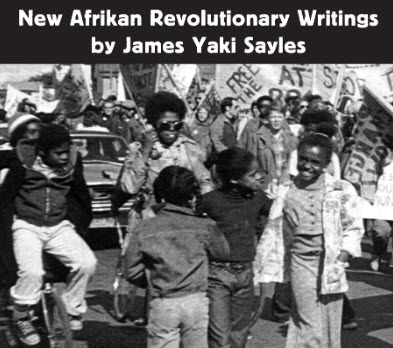
“Meditations on Frantz Fanon’s Wretched of the Earth” by James Yaki Sayles is a critical exploration of Frantz Fanon’s seminal work, “The Wretched of the Earth.” Sayles reflects on Fanon’s insights regarding colonialism, violence, and the struggle for liberation, placing them in contemporary contexts. The book serves as both a commentary and an invitation to engage with Fanon’s ideas about identity, resistance, and the dynamics of power.
Introduction
Brief introduction to Frantz Fanon and his importance in post-colonial studies.
Overview of “The Wretched of the Earth” and its key themes.
Purpose of Sayles’s meditations: to deepen understanding and provoke thought.
Chapter 1: The Context of Colonialism
Examination of colonialism’s psychological and social effects.
Discussion of the dehumanization of colonized peoples.
Fanon’s perspective on the role of culture and identity in resistance.
Chapter 2: Violence as a Catalyst for Change
Analysis of Fanon’s assertion that violence is a necessary response to colonial oppression.
Historical examples of violent resistance movements.
Ethical considerations surrounding the use of violence in liberation struggles.
Chapter 3: The Role of the Intellectual
Fanon’s views on the responsibility of intellectuals in revolutionary movements.
The relationship between theory and practice in the fight against colonialism.
Sayles’s reflections on contemporary intellectuals and their roles.
Chapter 4: National Consciousness and Identity
Exploration of Fanon’s concept of national consciousness.
The tension between national identity and the global struggle against imperialism.
The importance of culture and heritage in building a liberated identity.
Chapter 5: Decolonization and its Challenges
The process of decolonization as described by Fanon.
Challenges faced by newly independent nations.
Sayles’s insights on the ongoing effects of colonialism in the modern world.
Conclusion: Relevance of Fanon Today
Summary of key insights from Sayles’s meditations.
Reflection on the continued relevance of Fanon’s ideas in contemporary social justice movements.
Call to action for readers to engage with Fanon’s work and its implications for today’s struggles.
Final Thoughts
Encouragement to critically engage with colonial histories and their lasting impacts.
The importance of solidarity in the fight against oppression.
Invitation to continue exploring Fanon’s legacy in various contexts.
Meditations on Frantz Fanon’s Wretched of the Earth, By James Yaki Sayles_eBook
This exercise is about more than our desire to read and understand Wretched (as if it were about some abstract world, and not our own); it’s about more than our need to understand (the failures of) the anti-colonial struggles on the African continent. This exercise is also about us, and about some of the things that We need to understand and to change in ourselves and our world.’-James Yaki Sayles One of those who eagerly picked up Fanon in the 60s, who carried out armed expropriations and violence against white settlers, Sayles reveals how, behind the image of Fanon as race thinker, there is an underlying reality of antiracist communist thought.
Pop the documents out from the upper right to read / expand / download.
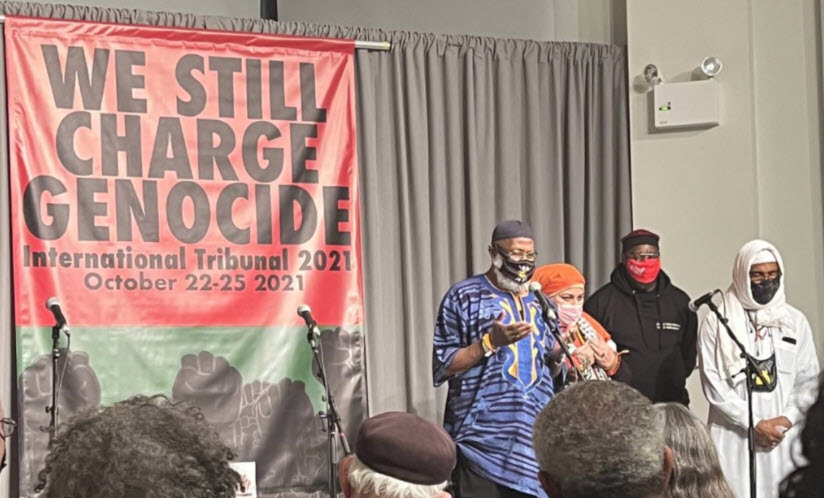
About the People (AtP) is an audio-visual project that emerges out of the 2021 International Tribunal and the ongoing organizing lens of the Spirit of Mandela Coalition campaign (SoM), which brought five charges of genocide against the U.S. Following the Guilty Verdict on all five counts, AtP was created to highlight the grassroots work of committed strugglers, revolutionaries, and people of conscience in these looted colonies and territories.
6 Video Playlist
Supplemental_Peoples’ Senate INTRO WEBINAR Feb 18, 2023
Speakers include: Sekou Odinga, Emcee
Jihad Abdulmumit: Spirit of Mandela Coalition
Magdalene Moonsamy: Chief Jurist, October 2021 Tribunal
Luis Rosa: Occupied and Colonized Peoples Forum
Jalil Muntaqim: Spirit of Mandela Coalition
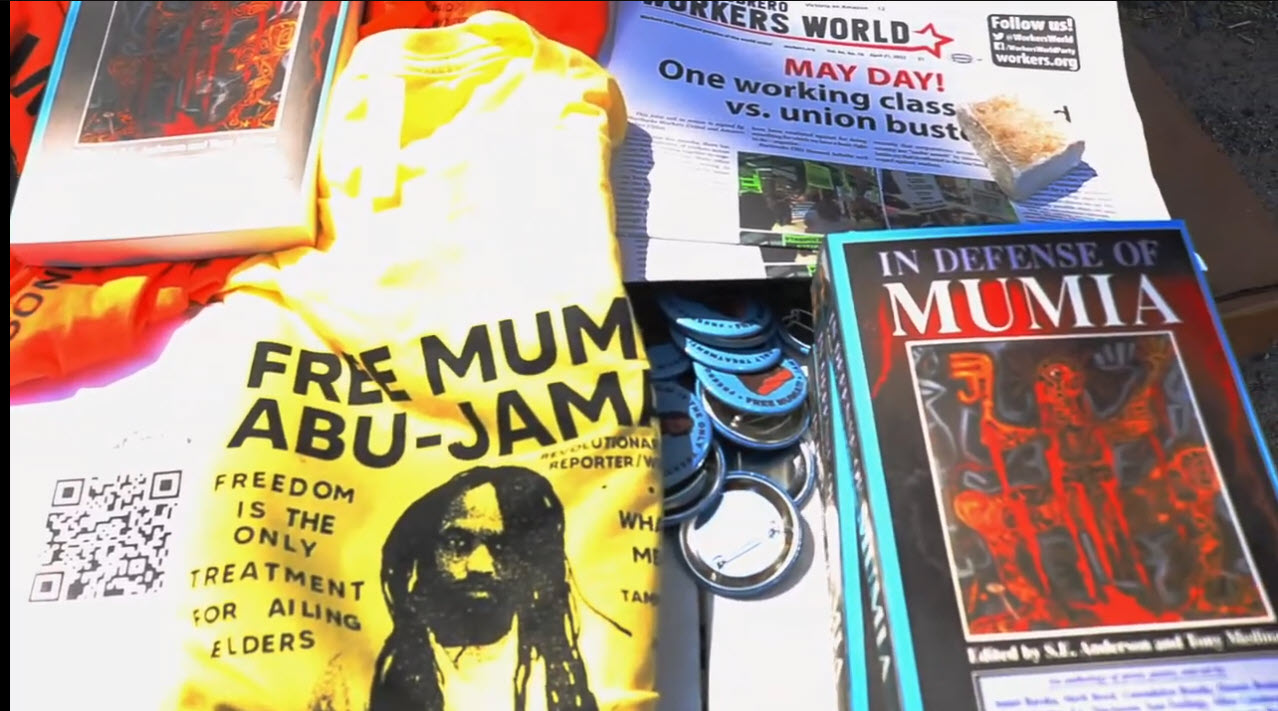
Johanna Fernandez: Campaign to Bring Mumia Home
Polly Walker: (Cherokee) Indigenous Education Institute
Kempis (Ghani) Songster: Ubuntu Philadelphia
Mary Louise Patterson: Physicians for a National Health Program
Tania Siddiqi: Texas Death Penalty Abolition Movement










 RBG Communiversity: Message 2 Da Grassroots
You must be logged in to post a comment.