Collected Writings Of: John Henrik Clarke Web Edition:
Book Summary
“Collected Writings of John Henrik Clarke” is a compilation of the works of John Henrik Clarke, a prominent African-American historian, educator, and activist. Clarke’s writings cover a wide range of topics, including African history, the African diaspora, social justice, and the importance of cultural identity. The collection highlights his commitment to the study of African history from an Afrocentric perspective and his advocacy for the recognition and celebration of African contributions to world civilization. Through his works, Clarke seeks to empower people of African descent and inspire a deeper understanding of their historical legacy.
Essential Themes and Contributions of JHC:
Introduction to John Henrik Clarke
Overview of Clarke’s life and significance as a historian and activist
Context of his work within the broader African and African-American history
The Importance of African History
Clarke’s perspective on the necessity of studying African history
Critique of Eurocentric historical narratives
Advocacy for an Afrocentric approach to history
Key Themes in Clarke’s Writings
Exploration of African civilizations and their contributions
Analysis of the African diaspora and its impact on world history
Discussion on colonization, slavery, and the struggle for liberation
Cultural Identity and Heritage
Clarke’s emphasis on the importance of cultural identity for African people
The role of education in fostering a sense of heritage and pride
Advocacy for the reclamation of African history and culture
Social Justice and Activism
Clarke’s involvement in civil rights and social justice movements
Reflections on the struggles faced by African-Americans and Africans
Calls for unity and collective action in the fight against oppression
Influential Works and Contributions
Overview of key essays, lectures, and books authored by Clarke
Impact of his work on the fields of history and African studies
Recognition and accolades received throughout his career
Legacy and Continuing Influence
Clarke’s lasting impact on future generations of scholars and activists
Examination of how his ideas continue to resonate in contemporary discussions on race and identity
Celebrating Clarke’s contributions to the understanding of African history
Conclusion
Summary of the key insights and themes from Clarke’s collected writings
Reflection on the importance of preserving and sharing African history
Collected Writings of John Henrik Clarke_eBook
NB: The Writings contained do not represent a selection but merely a collection of the Writings available on the Internet. They are preserved in here too keep them openly available after africawithin.com seems unfortunately to be out of service. Much of the Writings have been taken from there. The Organization is roughly as follows I. Autobiographical Writings, II. African World History, III. Other.
Pop the document out from the upper right to read / expand / download.
Collected Writings of John Henrik Clarke_Audiobook
Part 1
Part 2
RBG| John Henrik Clarke_His Greatest Lectures
Introduction: Afrikan-centered Education_Prof. John Henrik Clarke, Dr. Marimba Ani and Dr. Amos N Wilson
29 Video Playlist
Learn more in RBG Communiversity Knowledge Media eLibrary:
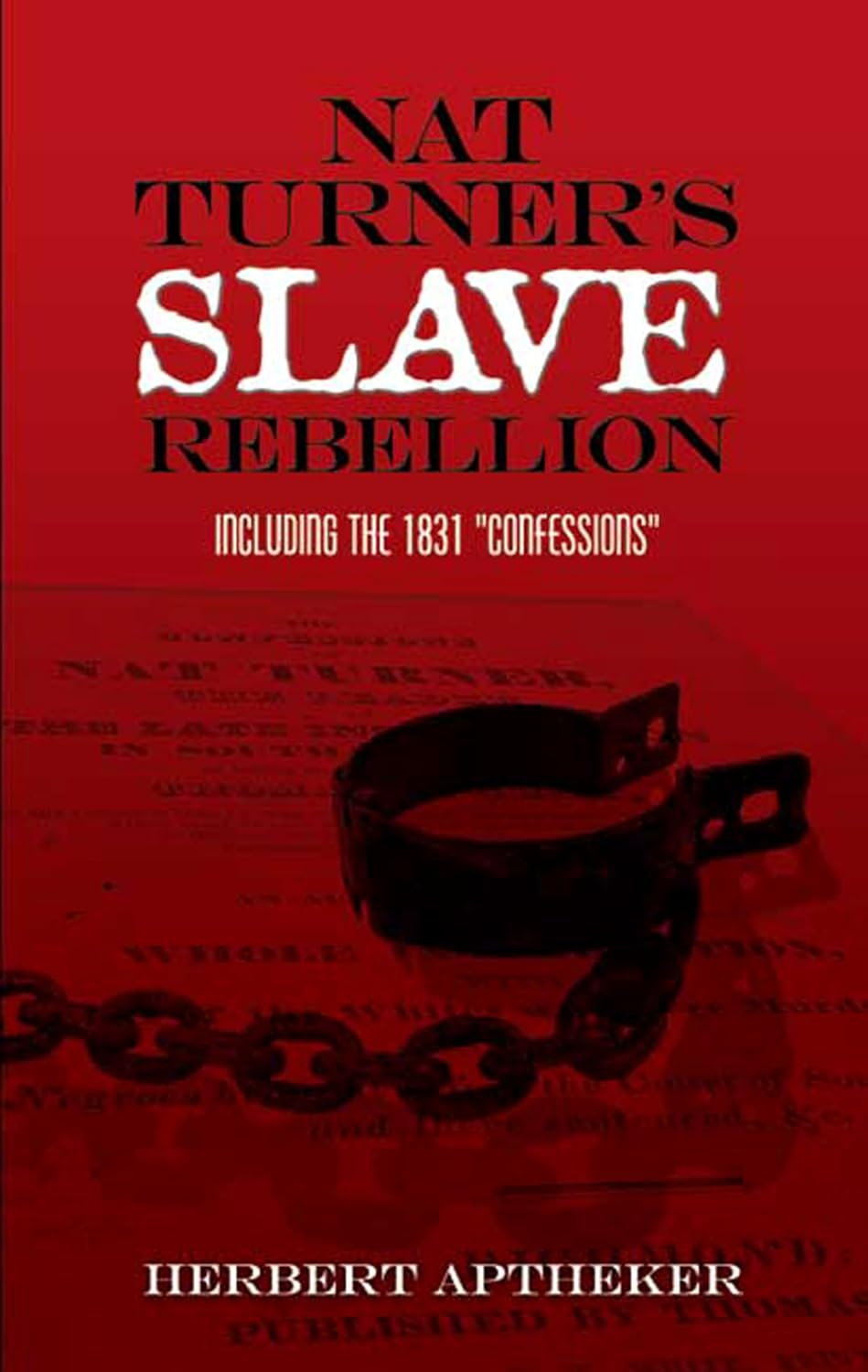
From the Preface: “Herbert Aptheker wrote Nat Turner’s Rebellion as his Master’s Thesis at Columbia University, and submitted it in February 1937. The only work on Turner prior to Aptheker’s study, titled The Southampton Insurrection, was written by William S. Drewry and published in 1900. It treated the insurrection with fear and contempt and sexualized Turner’s motives”…
Book Summary
“Nat Turner’s Slave Rebellion” by Herbert Aptheker provides a detailed analysis of the insurrection led by Nat Turner in 1831 in Virginia, which is one of the most significant slave revolts in American history. Aptheker explores the social, political, and economic conditions that led to the rebellion, as well as the aftermath and its implications for slavery and race relations in the United States. The book combines historical documentation with an examination of the broader context of slavery, resistance, and the struggles for freedom.
The following outline encapsulates the essential themes and structure of “Nat Turner’s Slave Rebellion” by Herbert Aptheker. The book serves as an important historical document that not only recounts the events of the rebellion but also situates it within the broader narrative of American slavery, resistance, and the quest for freedom. Aptheker’s work emphasizes the significance of Nat Turner’s leadership and the enduring impact of the rebellion on American society and history.
I. Introduction
A. Background of Nat Turner and the rebellion
B. Importance of the rebellion in American history
C. Purpose of the book
II. The Context of Slavery in America
A. Overview of the institution of slavery
B. Conditions faced by enslaved individuals in the South
C. The role of religion and community among enslaved people
III. Nat Turner: Life and Leadership
A. Early life and experiences of Nat Turner
Background and upbringing
Religious influence and visions
B. Turner’s role as a leader and preacher
Charismatic leadership
Development of revolutionary ideas
IV. The Rebellion of 1831
A. Planning and preparation for the uprising
Recruitment of followers
Strategic considerations
B. Key events of the rebellion
Timeline of the uprising
Major actions and confrontations
C. The response of the local authorities and the white community
Immediate military response
Panic and retaliation against enslaved people
V. Aftermath of the Rebellion
A. Consequences for the Turner and his followers
Capture and execution of Nat Turner
Repression of enslaved communities
B. Impact on slavery and plantation life
Increased restrictions on enslaved individuals
Heightened fear among slaveholders
C. Changes in public perception and discourse regarding slavery
VI. Historical Significance of the Rebellion
A. Legacy of Nat Turner’s rebellion in American history
Influence on abolitionist movements
Role in shaping public policy and attitudes toward slavery
B. Examination of rebellion as a form of resistance
Broader context of slave resistance in the U.S.
Nat Turner’s place in the history of civil rights
VII. Conclusion
A. Summary of key themes and findings
B. Reflection on the ongoing relevance of Nat Turner’s story
C. Call for continued study of slavery and resistance
“Nat Turner’s Slave Rebellion” by Herbert Aptheker is a pivotal work that delves deeply into one of the most significant slave uprisings in American history. Here’s a more detailed examination of the book’s key themes, context, and implications:
Detailed Exploration of Key Themes
1. Historical Context of Slavery
Institution of Slavery: Aptheker provides an in-depth analysis of the institution of slavery in the United States, especially in the Southern states where enslaved people were subjected to brutal conditions. He discusses the economic motivations behind slavery and how it shaped societal structures.
Living Conditions: The book highlights the dehumanizing conditions faced by enslaved individuals, including physical and psychological abuse, lack of freedom, and the denial of basic human rights. These factors contributed to a pervasive sense of oppression that fueled resistance.
2. Nat Turner: The Man and the Leader
Biography: Aptheker examines Nat Turner’s early life, including his upbringing in a religious environment that greatly influenced his worldview. Turner was known for his intelligence and strong religious convictions, which played a crucial role in his leadership.
Visionary Experiences: The author discusses Turner’s reported visions, which he interpreted as divine messages urging him to lead a rebellion against the institution of slavery. These experiences framed his motivation and justification for the uprising.
3. The Rebellion of 1831
Planning the Uprising: Aptheker outlines how Turner organized the rebellion, gathering a group of enslaved individuals who shared his desire for freedom. The planning phase included strategic considerations on timing and execution.
Execution of the Rebellion: The rebellion began on August 21, 1831, and lasted for several days. Turner and his followers attacked plantation owners and their families, resulting in the deaths of approximately 60 white individuals. The uprising was marked by its brutality, reflecting the deep-seated anger and desperation of the enslaved population.
Response from Authorities: The violent response from local militias and white citizens was swift and severe. The rebellion instigated widespread fear among slaveholders, leading to increased militarization and repression.
4. Aftermath and Repercussions
Turner’s Fate: Following the suppression of the rebellion, Turner was captured, tried, and executed. His death became a symbol of both martyrdom and fear for many in the enslaved community and beyond.
Impact on Slavery: The rebellion led to harsher laws and restrictions on enslaved people. Southern states enacted more stringent slave codes, limiting movement, education, and assembly among enslaved populations.
Psychological Impact: The rebellion instilled fear in the white population, leading to a more oppressive environment for enslaved individuals. The fear of further uprisings prompted increased surveillance and control.
5. Legacy of Nat Turner
Abolitionist Movement: Aptheker discusses how Turner’s rebellion influenced the abolitionist movement, galvanizing activists and intellectuals who highlighted the need for immediate action against slavery.
Cultural Memory: Nat Turner became a significant figure in African American history and folklore. His story is often invoked in discussions of resistance, agency, and the fight for freedom.
Ongoing Relevance: The themes of resistance and the quest for justice resonate throughout American history, and Turner’s story is frequently referenced in contemporary discussions of civil rights and social justice.
Conclusion
Herbert Aptheker’s “Nat Turner’s Slave Rebellion” is an essential contribution to the understanding of slavery, resistance, and the historical significance of Nat Turner. By combining thorough historical research with a compelling narrative, Aptheker provides readers with insights into the motivations behind the rebellion and its lasting impact on American society. The book encourages reflection on the broader themes of oppression, resistance, and the struggle for human rights, making it relevant not only to historical scholarship but also to contemporary discussions about race and justice.
Through this examination, Aptheker reinforces the importance of recognizing the agency of enslaved individuals and their capacity for resistance, contributing to a more nuanced understanding of American history.
Nat Turner’s Slave Rebellion_eBook
Pop the document out from the upper right to read / expand / download.
Nat Turner’s Slave Rebellion_Audiobook
RBG| Reef , Nat Turner
Learn more in RBG Communiversity Knowledge Media eLibrary:
“A Certain Amount of Madness: The Life Politics and Legacies of Thomas Sankara,” edited by Amber Murrey, is a comprehensive examination of the life and enduring impact of Thomas Sankara, the revolutionary leader of Burkina Faso. Sankara, who served as president from 1983 until his assassination in 1987, is celebrated for his radical policies aimed at achieving social justice, economic self-sufficiency, and anti-imperialism. This anthology brings together a diverse range of essays and reflections from scholars, activists, and thinkers who explore Sankara’s political philosophy, his vision for Africa, and the continuing relevance of his ideas in contemporary struggles for justice and equality. Through this collection, the editors aim to honor Sankara’s legacy while also encouraging critical dialogue about the challenges and possibilities for revolutionary change in the present day.
The outline that follows captures the main themes and structure of “A Certain Amount of Madness,” highlighting the critical discussions within the anthology regarding Thomas Sankara’s legacy and its significance for contemporary social justice movements. The book serves as an important resource for understanding the complexities of revolutionary thought and the ongoing fight for justice and equality in Africa and beyond.
I. Introduction
Overview of the book’s purpose: to explore the life, politics, and legacy of Thomas Sankara
Introduction to Amber Murrey as the editor and her significance in the discourse on African political thought
The importance of examining Sankara’s contributions to contemporary movements for social justice
II. Historical Context of Sankara’s Leadership
Examination of Burkina Faso’s political landscape prior to Sankara’s rise to power
Overview of Sankara’s military background and his ascent within the political sphere
Discussion of the socio-economic conditions that prompted Sankara’s revolutionary vision
III. Sankara’s Political Philosophy
Analysis of Sankara’s revolutionary ideology, including his views on socialism, nationalism, and anti-imperialism
Exploration of his emphasis on self-reliance and economic independence for African nations
Discussion of Sankara’s approach to leadership and governance, including his commitment to transparency and accountability
IV. Policies and Reforms Under Sankara
Examination of key policies implemented during Sankara’s presidency, including land reform, education, healthcare, and women’s rights
Insights into Sankara’s efforts to combat corruption and promote environmental sustainability
Discussion of the challenges and successes of these policies in transforming Burkina Faso
V. The Role of Women in Sankara’s Vision
Exploration of Sankara’s commitment to gender equality and the empowerment of women
Analysis of policies aimed at improving women’s rights and participation in governance
Discussion of the impact of these policies on societal attitudes toward gender roles in Burkina Faso
VI. Sankara’s International Relations and Anti-Imperialism
Examination of Sankara’s foreign policy, including his relationships with other African nations and global powers
Analysis of his stance against neo-colonialism and imperialism, and his advocacy for pan-African solidarity
Insights into Sankara’s participation in international forums and his influence on global anti-imperialist movements
VII. Legacy and Memory of Sankara
Discussion of the circumstances surrounding Sankara’s assassination and its aftermath
Exploration of how Sankara’s legacy is remembered in Burkina Faso and beyond, including cultural representations and commemorations
Analysis of the ongoing relevance of Sankara’s ideas in contemporary social and political movements
VIII. Reflections on Revolutionary Change
Critical reflections on the lessons learned from Sankara’s life and leadership
Discussion of the challenges facing contemporary movements for social justice and how Sankara’s legacy can inform current struggles
Exploration of the notion of revolutionary change in the context of modern political realities
IX. Conclusion
Summary of key themes and insights from the anthology
Reflection on the enduring significance of Thomas Sankara’s ideas and actions for current and future generations
A call to action for continued advocacy and engagement in the pursuit of justice, equality, and revolutionary change
“A Certain Amount of Madness: The Life Politics and Legacies of Thomas Sankara,” edited by Amber Murrey, offers an in-depth exploration of one of Africa’s most iconic revolutionary leaders, Thomas Sankara. Known as the “African Che Guevara,” Sankara’s presidency in Burkina Faso from 1983 until his assassination in 1987 was marked by transformative policies aimed at addressing social inequalities, fostering economic independence, and promoting pan-African solidarity. This anthology not only honors Sankara’s legacy but also critically engages with his ideas and their relevance in contemporary political contexts.
Key Themes and Insights
Historical Context of Burkina Faso:
The anthology begins by situating Sankara within the historical and political landscape of Burkina Faso prior to his leadership. It discusses the colonial legacy and the socio-economic challenges the country faced, including poverty, illiteracy, and dependency on foreign aid.
Contributors provide insights into the conditions that allowed for Sankara’s rise to power, including his military background and the revolutionary atmosphere of the early 1980s.
Political Philosophy and Ideology:
Sankara’s political philosophy is a central theme throughout the book. His commitment to socialism, nationalism, and anti-imperialism is thoroughly analyzed, showcasing his vision for a self-reliant African continent.
The anthology highlights Sankara’s rejection of neo-colonialism and his advocacy for African unity, reflecting his belief that true independence could only be achieved through collective action and solidarity among African nations.
Innovative Policies and Reforms:
The book delves into the key policies implemented during Sankara’s presidency, such as land reform, which aimed to redistribute land to peasants and promote agricultural self-sufficiency.
Contributors discuss his ambitious health and education initiatives, which significantly improved literacy rates and access to healthcare, particularly for marginalized communities.
Sankara’s efforts to combat environmental degradation and promote sustainable development are also highlighted as integral components of his governance.
Empowerment of Women:
One of the most notable aspects of Sankara’s leadership was his commitment to gender equality. The anthology explores how he championed women’s rights, promoting policies that aimed to improve women’s social and economic status.
Contributors analyze the impact of these policies on societal attitudes toward women and their roles in governance, illustrating how Sankara’s vision sought to dismantle patriarchal structures.
International Relations and Anti-Imperialism:
Sankara’s foreign policy, characterized by a commitment to pan-Africanism and anti-imperialism, is examined in detail. The book discusses his relationships with other African leaders and his advocacy for solidarity among African nations against external exploitation.
The anthology provides insights into how Sankara’s international stance resonated with global anti-colonial movements, reinforcing his status as a prominent figure in the struggle against imperialism.
Assassination and Legacy:
The circumstances surrounding Sankara’s assassination in 1987 and its implications for Burkina Faso are critically analyzed. Contributors discuss the political climate that led to his death and the subsequent impact on the country and the broader region.
The anthology reflects on how Sankara’s legacy is remembered today, including cultural representations, commemorations, and the ongoing influence of his ideas on contemporary social movements.
Contemporary Relevance:
A significant portion of the anthology is dedicated to exploring the relevance of Sankara’s ideas in current struggles for justice and equality. Contributors draw connections between Sankara’s vision and contemporary issues such as globalization, social inequality, and environmental challenges.
The discussions emphasize the need for renewed revolutionary spirit and collective action to address the injustices that persist in today’s world.
Lessons for Future Generations:
The anthology concludes with reflections on the lessons learned from Sankara’s life and leadership. Contributors encourage readers to engage with his teachings and apply them to contemporary struggles for justice, advocating for a commitment to revolutionary change in the face of adversity.
The call to action emphasizes the importance of grassroots organizing, community engagement, and solidarity in the pursuit of a more equitable world.
Conclusion
“A Certain Amount of Madness” is a crucial contribution to the understanding of Thomas Sankara’s legacy and its significance for contemporary social justice movements. The anthology showcases a diverse range of perspectives that not only celebrate Sankara’s achievements but also engage critically with the complexities of his policies and ideas.
By illuminating the historical context, political philosophy, and lasting impact of Sankara’s leadership, the book serves as an important resource for scholars, activists, and anyone interested in the ongoing fight for justice, equality, and revolutionary change. It encourages readers to draw inspiration from Sankara’s vision as they navigate the challenges of the present and work towards a more just and liberated future.
A Certain Amount of Madness_eBook
Pop the documents out from the upper right to read / expand / download.
A Certain Amount of Madness_Audiobook
Audio start corresponds to page 12 of the above Reader.
From Thomas Sankara to Captain Ibrahim Traore Video Player
13 Video Playlist
Learn more in RBG Communiversity Knowledge Media eLibrary:
11 Video Playlist (Audio reading corresponds to page 15 and foward for the Reader below.)
Long Walk to Freedom eBook
Nelson Mandela was one of the great moral and political leaders of his time: an international hero whose lifelong dedication to the fight against racial oppression in South Africa won him the Nobel Peace Prize and the presidency of his country. After his triumphant release in 1990 from more than a quarter-century of imprisonment, Mandela was at the center of the most compelling and inspiring political drama in the world. As president of the African National Congress and head of South Africa’s antiapartheid movement, he was instrumental in moving the nation toward multiracial government and majority rule. He is still revered everywhere as a vital force in the fight for human rights and racial equality. Long Walk to Freedom is his moving and exhilarating autobiography, destined to take its place among the finest memoirs of history’s greatest figures. Here for the first time, Nelson Rolihlahla Mandela told the extraordinary story of his life — an epic of struggle, setback, renewed hope, and ultimate triumph.
Pop the documents out from the upper right to read / expand / download.
Spirit of Mandela is a campaign to bring international attention to U.S. human rights violations of Black, Brown, Indigenous People, and U.S. held political prisoners.
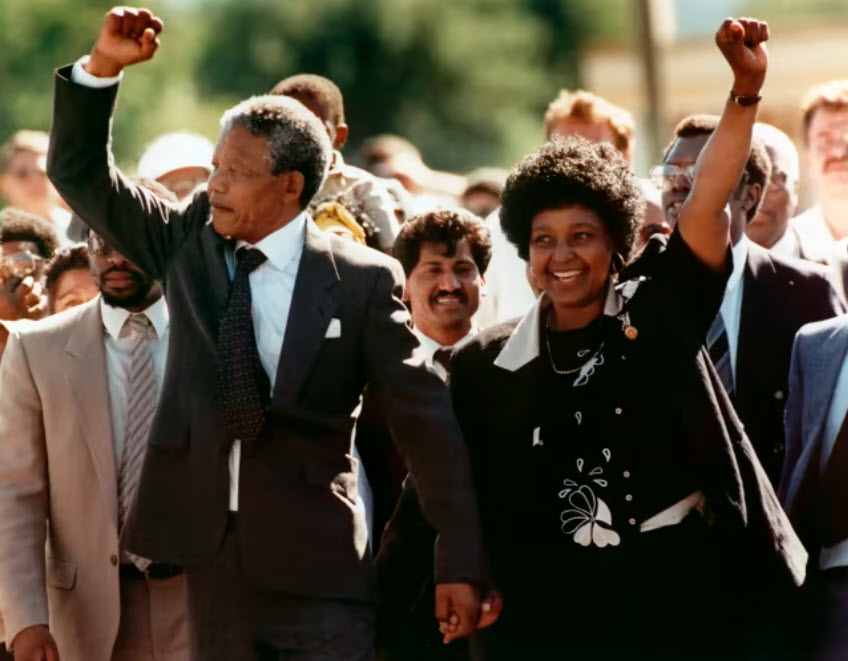
Clickable Photo Credits: AP 2020. FILE – In this Feb. 13, 1990 file photo, Nelson Mandela and his wife, Winnie Madikizela-Mandela, gesture as they arrive at Soccer City Stadium in Soweto, South Africa two days after after being released after serving 27 years in prison. Mandela’s release set off joyous celebrations and violent clashes as supporters welcomed Mandela back from years in jail. (AP Photo/Udo Weitz, File)The Peoples’ Senate is a national cohesive network of people reflective of poor and working-class communities across the United States; joined together to protect, champion, and uphold the human rights of Black, Brown, and Indigenous people, and by doing so, ensure the human rights of all people.https://spiritofmandela.org/intro-peoples-senate
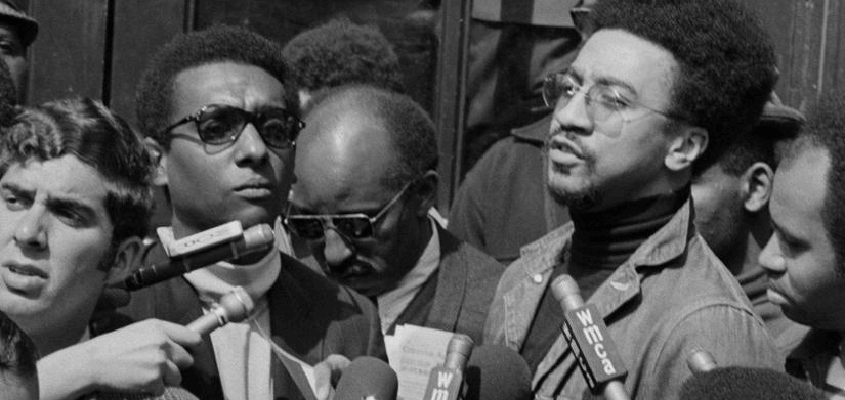
“Black Power: The Politics of Liberation in America” by Kwame Ture (formerly known as Stokely Carmichael) and Charles V. Hamilton is a seminal text that articulates the philosophy and strategy of Black Power as a movement for social and political change in the United States. Published in 1967, the book examines the historical context of African American struggles for civil rights, critiques the limitations of the integrationist approach, and advocates for a more radical, self-determined strategy for achieving liberation. Ture and Hamilton emphasize the importance of collective identity, political organization, and grassroots activism in the fight against systemic racism and oppression.
The outline that follows captures the essence of “Black Power: The Politics of Liberation in America,” highlighting the authors’ exploration of the philosophy, strategies, and historical context of the Black Power movement. Ture and Hamilton provide a critical analysis of the limitations of previous civil rights strategies and advocate for a more radical and self-determined approach to achieving liberation for African Americans. The book remains a foundational text in understanding the dynamics of race, power, and social justice in the United States.
Introduction
Overview of the Black Power movement and its significance in American history
Definition of Black Power and its core principles
The authors’ motivations for writing the book and its intended impact
Historical Context
Examination of the civil rights movement and its achievements
Critique of integrationist strategies and their limitations
Historical roots of Black nationalism and the emergence of Black Power
The Philosophy of Black Power
Definition and exploration of the concept of Black Power
Emphasis on self-determination, pride, and identity
The importance of understanding race as a political category
Discussion of the psychological impact of oppression on African Americans
The role of culture and heritage in fostering a sense of community and empowerment
Political Organization and Strategy
Analysis of the need for organized political action among African Americans
The importance of grassroots movements and community organizing
Strategies for building political power, including voter registration and mobilization
The role of leadership in the Black Power movement
Critique of Liberalism
Examination of liberalism’s shortcomings in addressing the needs and aspirations of Black Americans
Arguments against reliance on white allies and the limitations of legislative reforms
The necessity for a more radical approach to achieve meaningful change
The Role of Violence and Self-Defense
Discussion of the relationship between the Black Power movement and the use of violence
The concept of self-defense against systemic violence and oppression
The authors’ stance on the legitimacy of armed struggle in the pursuit of liberation
Intersectionality and Solidarity
Exploration of the connections between race, class, and gender in the struggle for liberation
The need for solidarity among marginalized groups to achieve broader social justice
The importance of internationalism and global solidarity in the fight against imperialism and colonialism
The Future of Black Power
Vision for the future of the Black Power movement and its potential impact
The necessity for continued activism and political engagement
Call to action for younger generations to embrace the principles of Black Power
Conclusion
Summary of key arguments and insights presented in the book
Reflection on the ongoing relevance of Black Power in contemporary movements for racial and social justice
Final thoughts on the importance of self-determination and collective action
“Black Power: The Politics of Liberation in America” is a groundbreaking work that articulates the philosophy and strategies of the Black Power movement, which emerged as a response to the limitations of the civil rights movement. Published in 1967, the book offers profound insights into the political, social, and psychological dimensions of the struggle for African American liberation. Here’s a deeper exploration of the key themes, arguments, and historical significance of the book:
Key Themes Explored
Historical Context and Civil Rights Movement
The authors begin by situating the Black Power movement within the broader civil rights struggle, acknowledging the achievements made through nonviolent protests and legal reforms.
However, they critique the limitations of these integrationist strategies, arguing that they often failed to address the systemic nature of racism and the underlying economic inequalities faced by Black Americans.
Defining Black Power
Ture and Hamilton define Black Power as a call for self-determination, emphasizing the importance of Black identity, pride, and community solidarity.
They argue that understanding race as a political category is essential for mobilizing African Americans toward collective action and political empowerment.
Black Power is framed as a movement that encourages African Americans to recognize their own strength and potential, fostering a sense of agency and responsibility for their own liberation.
Political Organization and Grassroots Activism
The authors stress the need for organized political action, advocating for grassroots movements that empower local communities.
They outline strategies for building political power, including voter registration, community organizing, and the establishment of independent political entities to represent Black interests.
Ture and Hamilton highlight the role of leadership and the necessity of developing a new generation of leaders who are committed to the principles of Black Power.
Critique of Liberalism
The book critiques liberal approaches to civil rights, arguing that they often prioritize integration and assimilation over true liberation.
Ture and Hamilton contend that relying on white allies and legislative reforms is insufficient for achieving meaningful change, calling for a more radical rethinking of strategies to address systemic oppression.
They advocate for a fundamental restructuring of power dynamics, challenging the status quo that perpetuates racial injustice.
Violence and Self-Defense
The authors engage in a nuanced discussion about the use of violence in the pursuit of liberation. While they do not advocate for violence as the primary means of struggle, they emphasize the legitimacy of self-defense against systemic violence and the oppressive actions of the state.
They argue that, in the face of brutality, African Americans have the right to protect themselves and their communities.
Intersectionality and Solidarity
Ture and Hamilton explore the interconnectedness of race, class, and gender, arguing that the struggle for Black liberation must also address issues of economic inequality and gender oppression.
They call for solidarity among marginalized groups, emphasizing that true liberation requires the collective effort of all oppressed peoples.
The authors also stress the importance of internationalism, advocating for solidarity with anti-colonial movements around the world and recognizing the global dimensions of oppression.
Vision for the Future of Black Power
The book concludes with a forward-looking vision for the Black Power movement, urging continued activism and political engagement.
Ture and Hamilton encourage younger generations to embrace the principles of Black Power and to engage in the ongoing struggle for justice and equality.
They envision a future where African Americans can fully realize their potential and achieve true liberation through self-determination and collective action.
Significance and Impact
Foundational Text in Black Studies
“Black Power” has become a foundational text in Black Studies and political science, influencing generations of activists, scholars, and policymakers.
The book’s emphasis on self-determination, grassroots activism, and political organization has resonated with various social movements, including contemporary movements for racial justice, such as Black Lives Matter.
Legacy of the Black Power Movement
Ture and Hamilton’s work has contributed to a broader understanding of the Black Power movement as a critical response to systemic racism and oppression in the United States.
Their ideas continue to inform discussions about race, identity, and social justice, highlighting the importance of collective action in the pursuit of liberation.
Overall, “Black Power: The Politics of Liberation in America” is a powerful and impactful work that articulates a vision for Black liberation rooted in self-determination, political organization, and community empowerment. Kwame Ture and Charles V. Hamilton provide a compelling critique of existing systems of oppression and call for a radical rethinking of strategies to achieve meaningful change. The book remains a vital resource for understanding the dynamics of race and power in America and the ongoing struggle for justice and equality.
Black Power: The Politics of Liberation in America” by Kwame Ture (formerly known as Stokely Carmichael) and Charles V. Hamilton_eBook
Pop the documents out from the upper right to read / expand / download.










 RBG Communiversity: Message 2 Da Grassroots
You must be logged in to post a comment.