Shahid Bolsen Biography and From Selma to Salaam Series and Us and Them Series

Shahid Bolsen Biography (Grok)

Video Education Playlist (YT)

Full Video Archive: RBG Communiversity Knowledge Media e-Library

Background and Life Story

Shahid Bolsen (born Shannon Morris in 1971 in Boulder, Colorado) is an American convert to Islam, political commentator, strategist, and activist. He is best known as the founder and main voice behind Middle Nation, a platform focused on geopolitics, Muslim world sovereignty, anti-colonial analysis, economic independence for Muslim countries, and critiques of Western power structures.

  • Early Life: Raised in a working-class family after his parents’ divorce. He showed early interest in social justice, influenced by figures like Gandhi and Martin Luther King Jr., and worked in social services helping the homeless and at-risk communities.
  • Conversion to Islam: In his early 20s (mid-1990s), after reading Malcolm X’s autobiography during African-American studies. He took the name Shahid (meaning “witness” or “martyr”) and became active in Muslim communities in the US, including outreach and media work. He lived in the Middle East starting around 2003.
  • Controversial Incident (2006): In the UAE, he was involved in an incident where a German man (Martin Steiner/Herbert) died during a confrontation at his home. Bolsen claimed it stemmed from the man attempting to assault a housemaid. He was initially sentenced to death, spent years on death row, and was eventually released after his sentence was reduced to manslaughter with blood money paid (he maintains his account of events). This period is often highlighted by critics.
  • Later Activism: Lived in Turkey and Malaysia. He gained attention for online commentary on the Arab Spring, Egypt, and anti-corporate/anti-Western activism. He has faced accusations of incitement (which he denies, emphasizing non-violent strategies), and Western media has portrayed him variably as an agitator or extremist.

Middle Nation

Middle Nation is his primary platform (YouTube channel @MiddleNation, plus TikTok, Telegram, podcast, Substack, and website). It features lectures, analyses, and commentary on:

  • Geopolitical strategy and power dynamics (e.g., sanctions, oil, BRICS, Venezuela as a “diagnostic” for real power).
  • Promoting economic and political sovereignty for Muslim nations.
  • Critiques of Western foreign policy, history, morality, and “psychological decolonization” for Muslims.
  • Topics like boycotts vs. real power plays, US influence, Palestine/Israel, and civilizational “us vs. them” distinctions.

The channel analyzes global events from a perspective prioritizing Muslim Ummah interests, often challenging mainstream narratives. Content includes talks on history, economics (“moral economy”), and current affairs. It has a dedicated following for its sharp, unapologetic style.

Reception and Controversies

  • Supporters view him as a clear-eyed analyst exposing hypocrisy in Western policy, corporate power, and media, while advocating strategic independence for the Muslim world.
  • Critics (including some in progressive Muslim circles and Western outlets) question his religious interpretations, past, or tone. Accusations range from radicalism to personal controversies, though he consistently denies promoting violence or ties to groups like ISIS or the Muslim Brotherhood.
  • He maintains an active presence on X (@ShahidkBolsen) and other platforms, with recent content on topics like political violence, resistance strategies, and historical reckonings.

For the most direct experience, check the Middle Nation YouTube channel or his official site (shahidkingbolsen.org). His work blends personal journey, geopolitical insight, and calls for sovereignty—polarizing but influential in certain online Muslim and anti-imperialist spaces.

Analyze Middle Nation economic sovereignty

From Selma to Salaam Series

Middle Nation’s concept of economic sovereignty, as articulated by Shahid Bolsen, is a core pillar of its platform—alongside political independence and psychological decolonization. It emphasizes functional control over a nation’s (or Ummah’s) economic decisions, resources, and vulnerabilities, rather than symbolic “flag independence.”

Core Definition and Diagnosis

Bolsen distinguishes true sovereignty from its performance: Most Global South/Muslim-majority countries have nominal independence, but their finance ministries often follow IMF dictates, mineral sectors serve foreign firms, currencies collapse with U.S. policy shifts, and food supplies depend on uncontrolled chains. This is “incarceration,” not sovereignty.

The primary adversary is not Western governments per se, but the Owners and Controllers of Global Financialized Capital (OCGFC)—anational entities like BlackRock, Vanguard, State Street, rating agencies, and multilateral institutions. These prioritize returns on capital over any national loyalty and enforce extraction through sanctions, conditionality, resource nationalism warnings, and “corridor of permissible aggression” (punishing moves toward real control).

Real economic sovereignty means reducing structural dependency so external shocks (currency devaluation, inflation, sanctions) lose leverage. It requires deliberate policy architecture, not patron-switching (e.g., from West to China/BRICS without deeper changes).

Key Strategies and Mechanisms

  • Food Security and Domestic Production First: Prioritize localized supply chains, agriculture incentives, reduced imports, and domestic consumption. This insulates against external shocks and builds ripple effects in other sectors. Malaysia (and similar nations) is critiqued for over-reliance on food imports.
  • Smart FDI and Labor/Industry Policy: Reject neoliberal “ease of doing business” as default. FDI must develop domestic industries, skills, and competitiveness—not just embed locals in foreign value chains. Ban raw exports (like Indonesia’s nickel) to force local processing/value addition. Treat labor as a strategic resource: foreign firms must build full domestic production, not assembly.
  • Decoupling and De-dollarization: Reduce exposure to Western/dollar-dominated systems. Build regional and South-South trade. Leverage the current global pivot (demographics favoring the South, Western decline) for better negotiation terms without confrontation.
  • Resource Nationalism and Managed Stakes: Exercise control over natural resources for national benefit. Negotiate with OCGFC tactfully—secure incremental sovereignty gains through diplomacy, avoiding outright defiance that triggers preemption (e.g., sanctions on Venezuela, Russia).
  • Moral Economy (Islamic Framework): Reject Western economics’ core assumption (humans as self-interest maximizers leading to greed, externalities, inequality). Build from Islamic anthropology: humans as khalifa (stewards/trustees). Mechanisms include prohibitions on riba (usury) and gharar (excessive uncertainty), partnerships (mudharaba, musharaka), zakat, waqf, and hisbah (market oversight). This creates ethical, stable systems proven over centuries, contrasting capitalism’s failures (crises, inequality, environmental collapse).
  • Collective/Ummah-Level Sovereignty: Individual nations need alliances and “broker nations” for trade, private-sector strategies, and solidarity across the Muslim world/Global South. Historical precedents like Ottoman networks show feasibility.

Strengths of the Analysis

  • Realistic Power Mapping: Shifts focus from states to transnational capital, explaining why “multipolarity” alone may not deliver sovereignty.
  • Pragmatic Timing: Emphasizes the current transition window (Western demographic/economic weaknesses) for assertive but smart negotiation.
  • Holistic Integration: Links economics to culture, politics, and ethics; critiques performative activism (e.g., boycotts without power plays).
  • Country-Specific Application: Series on nations like Indonesia, Malaysia, etc., with concrete examples (semiconductors, autos in Malaysia).

Potential Critiques and Challenges

  • Implementation Risks: Negotiating with OCGFC assumes skilled, non-compromised elites; historical “hostage” dynamics could persist. Bold moves still risk retaliation.
  • Interdependence Reality: Full autarky is impossible; success hinges on execution amid global supply chains.
  • Ideological Blend: Islamic moral economy is presented as superior and proven, but scaling it in diverse Muslim states with varying governance faces practical hurdles (e.g., corruption, elite capture).
  • Optimism on Pivot: Assumes Global South unity and OCGFC flexibility; real outcomes may involve new dependencies.

Overall, Middle Nation frames economic sovereignty as the foundation for civilizational resurgence—achievable through strategic self-focus, ethical restructuring, and opportunistic navigation of global shifts, rather than confrontation or imitation of failing Western models. It is diagnostic, prescriptive, and oriented toward long-term Ummah power. For deeper dives, key resources include the “Middle Nation Sovereignty Framework” playlist, “Sufficiency Lectures,” and “Mechanisms of a Moral Economy” on the Middle Nation YouTube channel.

Us and Them Series

Explore Islamic moral economy mechanisms

Islamic Moral Economy Mechanisms, as framed by Shahid Bolsen in Middle Nation content (especially his lecture “Mechanisms of a Moral Economy”), rest on a fundamentally different anthropological foundation from Western capitalism. Capitalism assumes humans as rational self-interest maximizers driven by greed (the “invisible hand”), leading to inevitable externalities like inequality, environmental collapse, and instability. Islam views the human as khalifa (steward/trustee/vicegerent of God on Earth), responsible for ethical management of resources for collective well-being, justice, and accountability in this life and the hereafter.

Everything in the system—prohibitions and positive institutions—flows from this stewardship principle. It is not anti-profit or anti-trade (which are encouraged when ethical), but anti-exploitation and pro-sustainability. Bolsen emphasizes this as a proven historical system across centuries and geographies, not abstract theory.

Core Prohibitions (What It Prevents)

  • Riba (Usury/Interest): Any predetermined excess return on loans or debt, regardless of outcome. It creates risk-free profit for the lender while burdening the borrower, leading to debt traps, wealth concentration, and instability (e.g., 2008 crisis). Instead, it promotes risk-sharing and ties finance to real economic activity.
  • Gharar (Excessive Uncertainty/Speculation): Contracts with major ambiguity, zero-sum gambling, or derivatives detached from real assets. This discourages pure speculation (e.g., excessive derivatives markets) and favors transparent, asset-backed dealings.

These prohibitions aim to eliminate exploitation, moral hazard, and systemic fragility.

Positive Mechanisms (What It Builds)

Bolsen walks through these as structural logic that incentivizes stewardship, justice (adl), and social harmony:

  • Mudharaba (Profit-Sharing Partnership): One party provides capital (rabb al-mal), the other expertise/management (mudarib). Profits are shared per agreed ratio; losses borne by capital provider (unless negligence). This aligns incentives, encourages productive investment, and shares risk—contrasting debt-based systems where the borrower bears all downside.
  • Musharaka (Joint Venture/Partnership): All partners contribute capital and/or effort, sharing profits and losses proportionally. Promotes collaborative enterprise, skin-in-the-game for all, and equitable risk distribution. Ideal for larger projects.
  • Zakat (Mandatory Wealth Purification/Redistribution): 2.5% annual levy on qualifying wealth (not just income), directed to specific categories (poor, needy, debtors, etc.). Functions as a built-in fiscal tool for circulation of wealth, poverty alleviation, and social stability. Historically credited with near-eliminating poverty in early Islamic societies. It is a right of the poor, not optional charity.
  • Waqf (Perpetual Charitable Endowment): Irrevocable dedication of assets (property, cash, etc.) for ongoing public benefit (mosques, schools, hospitals, infrastructure, orphanages). Generates sustainable community wealth that cannot be sold or inherited privately. Bolsen highlights this as a powerful alternative to state or private monopolies—creating perpetual social capital and reducing inequality over generations.
  • Hisbah (Market Oversight/Accountability): Institutionalized public authority (or societal duty) to enforce fair trade, prevent fraud, hoarding, price manipulation, and harm. Ensures markets serve people with transparency, ethical standards, and prevention of monopolistic abuses—blending self-regulation with supervision.

Additional supporting elements include:

  • Emphasis on fair contracts, transparency, and prohibition of harm (la darar wa la dirar).
  • Encouragement of sadaqah (voluntary charity) and ethical trade.
  • Focus on real economy (agriculture, production, localized chains) over financialization.

How It Integrates for Sovereignty (Middle Nation Application)

Bolsen links these to broader goals:

  • Sufficiency and Resilience: Prioritize domestic production, food security, and ethical finance to reduce external dependency.
  • Moral Realism: Outcomes matter—stability, reduced inequality, environmental stewardship—over ideological labels.
  • Historical Proof: Islamic societies built sophisticated institutions, guilds, and trade networks using these tools, achieving prosperity without the boom-bust cycles or extreme disparities seen today.

Strengths (per Bolsen and broader Islamic economics): Promotes stability through risk-sharing, social cohesion via redistribution, long-term thinking (waqf), and ethical incentives aligned with human purpose.

Practical Challenges: Modern implementation faces elite capture, governance issues, hybrid global systems, and scaling in diverse states. Islamic finance today often uses compliant structures (e.g., murabaha cost-plus sales) but is critiqued for not fully embodying the moral vision.

For the fullest exploration, watch “Mechanisms of a Moral Economy” on the Middle Nation YouTube channel (core lecture). It pairs well with the Sufficiency Lectures series and sovereignty framework content. These mechanisms are presented not as utopian ideals but as rational, outcome-oriented tools for civilizational independence in a multipolar world.

Learn more in RBG Communiversity Knowledge Media eLibrary:

RBG4Lif Teaching /Learning Tools & Resources |

 BPM|BLM eBooks | 

BPM|BLM Audiobooks

Kwame Nkrumah’s “Neo-Colonialism: The Last Stage of Imperialism”eBook and Audiobook, with Africans Must Unite Playlist

Book Symmary

Kwame Nkrumah’s “Neo-Colonialism: The Last Stage of Imperialism” is a critical examination of the dynamics of post-colonial power and the ongoing exploitation of African countries through economic and political means. Nkrumah argues that while formal colonial rule may have ended, neo-colonialism continues to oppress nations, particularly in Africa, by perpetuating dependency on imperial powers. Here’s an overview and outline of the book:

Icebreaker Video

Overview:

  • Definition of Neo-Colonialism: Nkrumah defines neo-colonialism as a form of indirect control where former colonial powers maintain influence over newly independent nations through economic, political, and cultural means.
  • Exploitation and Dependency: The book discusses how neo-colonialism fosters economic dependency, hindering genuine development and self-determination for African countries.
  • Role of Global Institutions: Nkrumah highlights the complicity of international organizations, multinational corporations, and foreign governments in perpetuating neo-colonial practices.
  • Call for Unity and Resistance: The book advocates for African unity and collective action as essential strategies for combating neo-colonialism and achieving true independence.

Outline:

  • Introduction
    • Purpose of the book
    • Overview of neo-colonialism as a concept
  • Chapter 1: The Nature of Neo-Colonialism
    • Definition and characteristics of neo-colonialism
    • Distinction between colonialism and neo-colonialism
  • Chapter 2: Economic Dependence
    • Analysis of how economic policies of former colonial powers create dependency
    • The role of trade, debt, and foreign aid in sustaining neo-colonialism
  • Chapter 3: Political Manipulation
    • Examination of political tactics used by imperial powers to influence newly independent nations
    • The impact of foreign intervention and support for puppet regimes
  • Chapter 4: Cultural Imperialism
    • Discussion of cultural domination and the imposition of foreign values
    • The effects of Western education, media, and consumer culture on African societies
  • Chapter 5: The Role of Multinational Corporations
    • Analysis of how multinational corporations exploit resources and labor in Africa
    • The relationship between governments and corporations in sustaining neo-colonial practices
  • Chapter 6: The Complicity of International Organizations
    • Examination of the roles of institutions like the IMF, World Bank, and United Nations
    • How these organizations perpetuate neo-colonial policies under the guise of development aid
  • Chapter 7: The Struggle for True Independence
    • Strategies for resisting neo-colonialism
    • The importance of Pan-Africanism and solidarity among African nations
  • Chapter 8: The Future of Africa
    • Vision for a liberated and self-sufficient Africa
    • The necessity of political and economic unity to combat neo-colonialism
  • Conclusion
    • Summary of key arguments
    • Call to action for African leaders and peoples to reject neo-colonialism

Significance:

“Neo-Colonialism: The Last Stage of Imperialism” is a crucial text that challenges the notion that colonialism ended with political independence. Nkrumah’s analysis of neo-colonial dynamics serves as a powerful reminder of the ongoing struggles for true sovereignty and self-determination in Africa. By advocating for unity and resistance against neo-colonial forces, the book aims to inspire a collective movement towards genuine liberation and development. Nkrumah’s insights continue to resonate in contemporary discussions about globalization, economic exploitation, and the quest for justice and equality in the post-colonial world.

Kwame Nkrumah’s “Neo-Colonialism: The Last Stage of Imperialism” provides a comprehensive analysis of the ways in which former colonial powers maintain control over newly independent nations, particularly in Africa. Here are some deeper insights into the key themes, concepts, and implications of the book:

Key Themes and Insights:

  1. Definition and Characteristics of Neo-Colonialism:
    • Nkrumah defines neo-colonialism as a system where colonial powers exert influence over former colonies without direct political control. He explores how economic, political, and cultural mechanisms create a scenario where nations appear independent but are still heavily influenced by external powers.
  2. Economic Dependency:
    • The book emphasizes the economic structures that keep African nations dependent on former colonial powers. Nkrumah argues that the terms of trade, debt obligations, and reliance on foreign aid trap African countries in cycles of poverty and underdevelopment. He highlights how these factors inhibit genuine economic growth and self-reliance.
  3. Political Manipulation:
    • Nkrumah discusses how neo-colonialism manifests in political interference, where foreign powers support certain regimes or leaders that align with their interests. This manipulation often leads to the establishment of puppet governments that lack legitimacy and fail to represent the will of the people.
  4. Cultural Imperialism:
    • The book addresses the cultural dimensions of neo-colonialism, where Western values and ideologies are imposed on African societies. Nkrumah critiques the influence of Western education, media, and consumer culture, arguing that these elements erode local traditions and identities.
  5. Role of Multinational Corporations:
    • Multinational corporations are portrayed as key players in the neo-colonial system. Nkrumah explains how these entities exploit Africa’s natural resources and labor while contributing little to local economies. He highlights the need for African nations to reclaim control over their resources.
  6. Complicity of International Organizations:
    • Nkrumah critiques international organizations like the IMF and World Bank for perpetuating neo-colonial policies. He argues that these institutions often impose conditions on loans and aid that prioritize the interests of donor countries over the needs of African nations.
  7. Resistance and Solidarity:
    • The book advocates for a united front among African nations to resist neo-colonialism. Nkrumah emphasizes the importance of Pan-Africanism, urging African leaders and peoples to come together in solidarity to combat external influences and work towards true independence.
  8. Vision for the Future:
    • Nkrumah envisions a liberated Africa where nations are self-sufficient and politically united. He argues that only through collective action and a rejection of neo-colonial practices can Africa achieve genuine development and empowerment.

Implications of Nkrumah’s Analysis:

  • Historical Context: Written in the 1960s, the book reflects the realities of post-colonial Africa, where many nations were grappling with the challenges of independence while facing ongoing external pressures. Nkrumah’s insights remain relevant as many African countries continue to confront neo-colonial dynamics.
  • Influence on Political Discourse: Nkrumah’s work has significantly influenced political thought in Africa and beyond. His critiques of imperialism and calls for unity resonate with contemporary movements advocating for social justice, economic independence, and political sovereignty.
  • Ongoing Relevance: The themes of neo-colonialism are particularly pertinent today in discussions about globalization, economic exploitation, and the influence of multinational corporations. Nkrumah’s analysis encourages critical examination of how power dynamics operate in the modern world, especially in relation to developing nations.
  • Legacy of Pan-Africanism: Nkrumah’s advocacy for Pan-Africanism serves as a foundational element for many contemporary movements seeking African unity and cooperation. His vision of a collective struggle against neo-colonial forces continues to inspire activists and leaders advocating for a unified Africa.

Conclusion:

“Neo-Colonialism: The Last Stage of Imperialism” is a powerful critique of the ongoing exploitation of African nations in the post-colonial era. Nkrumah’s insights into economic dependency, political manipulation, and cultural imperialism provide a comprehensive framework for understanding the complexities of neo-colonial power dynamics. His call for unity and resistance remains a rallying cry for those seeking true independence and self-determination in Africa and beyond. The book not only serves as a historical analysis but also as a guide for future generations committed to the struggle for justice and equality.

Kwame Nkrumah’s “Neo-Colonialism: The Last Stage of Imperialism”eBook

Pop the document out from the upper right to read / expand / download.

Kwame Nkrumah’s “Neo-Colonialism: The Last Stage of Imperialism”Audiobook

Africans Must Unite Playlist

14 Video Playlist

Learn more in RBG Communiversity Knowledge Media eLibrary:

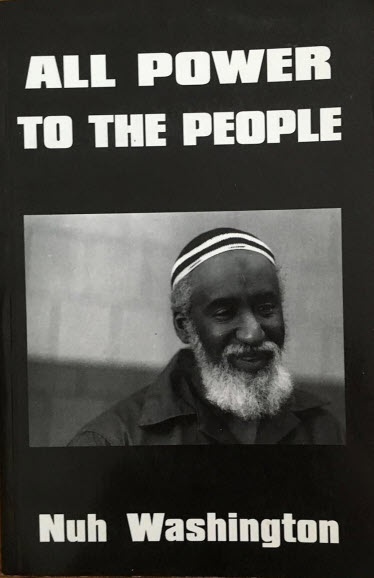
All Power to the People by Albert Nuh Washington, eBook and Audiobook, with Video Education Player

ICEBREAKER VIDEO

Pop the document out from the upper right to read / expand / download.

See NY3. The Case of the New York Three.pdf

Book Summary

Overview

“All Power to the People” by Albert Nuh Washington is a significant work that explores the history and impact of the Black Panther Party (BPP) and the broader Black radical movement in the United States. Published in 2002, the book provides an in-depth analysis of the social, political, and economic conditions that gave rise to the BPP, as well as the party’s contributions to the struggle for civil rights and social justice. Washington draws on personal experiences, interviews, and historical narratives to highlight the achievements and challenges faced by the Black Panther Party, offering a critical perspective on its legacy and the continuing relevance of its ideals in contemporary society. The outline and overview that follows provides a structured look at the contents of “All Power to the People” by Albert Nuh Washington.

Outline

I. Introduction

  • A. Overview of the Black Panther Party’s significance
  • B. Purpose of the book and its relevance to contemporary social justice movements
  • C. Author’s background and perspective

II. Historical Context

  • A. The civil rights movement and its limitations
    • Key figures and events leading to the rise of the BPP
    • Challenges faced by African Americans in the 1960s
  • B. The influence of Black nationalism and radical thought
    • Connection to earlier movements (e.g., Marcus Garvey, the Nation of Islam)
  • Emergence of the Black Power movement

III. Formation of the Black Panther Party

  • A. Founding members and their motivations
    • Huey P. Newton and Bobby Seale
    • Key ideological influences
  • B. Development of the party’s platform and goals
    • The Ten-Point Program
  • Focus on community empowerment and social justice

IV. Key Activities and Programs

  • A. Community initiatives
    • Free breakfast programs for children
    • Health clinics and education programs
  • B. Armed self-defense and its implications
    • The philosophy of self-defense against police brutality
  • Impact on public perception and law enforcement responses

V. Internal Challenges and Conflicts

  • A. Struggles within the organization
    • Leadership disputes and factionalism
    • The influence of COINTELPRO and government repression
  • B. The impact of external pressures
    • Surveillance and infiltration by law enforcement
  • Media portrayal and public perception of the BPP

VI. Legacy of the Black Panther Party

  • A. Contributions to civil rights and social justice
    • Influence on later movements (e.g., Black Lives Matter)
    • Cultural impact through art, music, and literature
  • B. Ongoing relevance of BPP ideals
    • Discussion of systemic racism and inequality today
  • Calls for community empowerment and social change

VII. Conclusion

  • A. Summary of key themes and insights from the book
  • B. Reflection on the importance of understanding the BPP’s history
  • C. Call to action for continued activism and social justice

“All Power to the People” serves as a vital resource for understanding the history and legacy of the Black Panther Party and the broader struggle for racial and social justice in America. By examining the party’s origins, key initiatives, and challenges, Washington provides valuable insights into the ongoing fight against systemic oppression and the importance of community empowerment. The book encourages readers to reflect on the lessons of the past while inspiring continued activism in the pursuit of equality and justice.

“All Power to the People” is an essential examination of the Black Panther Party (BPP) and its pivotal role in the fight for civil rights and social justice in the United States. Here’s a more detailed exploration of the book’s themes, key figures, historical context, and its significance:

Detailed Exploration of Key Themes

1. Historical Context

  • Civil Rights Movement Limitations: Washington discusses the civil rights movement’s achievements, such as the Civil Rights Act and the Voting Rights Act, while highlighting its limitations in addressing systemic issues like poverty, police brutality, and economic inequality. The urgency for a more radical approach was felt by many African Americans, leading to the rise of the Black Panther Party.
  • Influence of Black Nationalism: The book places the BPP within the wider context of Black Nationalism and the Black Power movement, which emerged in the 1960s as a response to the perceived inadequacies of mainstream civil rights strategies. Washington emphasizes the influence of figures like Marcus Garvey and Malcolm X, who advocated for self-determination and empowerment for Black communities.

2. Formation and Ideology of the Black Panther Party

  • Founding Members: The BPP was founded in 1966 by Huey P. Newton and Bobby Seale in Oakland, California. Washington explores how their backgrounds and experiences shaped their vision for the party, particularly their commitment to armed self-defense against police violence.
  • The Ten-Point Program: A central feature of the BPP’s ideology was its Ten-Point Program, which outlined the party’s demands for justice, equality, and economic empowerment. Washington details each point, which included calls for decent housing, education, and employment, as well as an end to police brutality.

3. Community Programs and Activism

  • Social Initiatives: Washington highlights the BPP’s commitment to community service through programs like free breakfast for children, health clinics, and educational programs. These initiatives were designed to address the immediate needs of African American communities and demonstrate that the BPP was more than just a militant organization.
  • Armed Self-Defense: The book discusses the philosophy of armed self-defense that the BPP adopted in response to police brutality. Washington analyzes how the party’s public displays of armed self-defense were both a statement of empowerment and a catalyst for increased tensions with law enforcement.

4. Internal Struggles and External Pressures

  • Factionalism and Leadership Conflicts: Washington examines internal conflicts within the BPP, particularly the power struggles between different factions. These conflicts were exacerbated by the pressure from law enforcement and the FBI’s Counterintelligence Program (COINTELPRO), which sought to undermine the party through infiltration, disinformation, and surveillance.
  • Government Repression: The book details the various tactics used by law enforcement to suppress the BPP, including arrests, harassment, and violent confrontations. Washington underscores the impact of COINTELPRO in destabilizing the organization and contributing to its decline in the early 1970s.

5. Legacy and Ongoing Relevance

  • Cultural Impact: Washington discusses how the BPP’s ideals and aesthetics influenced music, art, and literature, leaving a lasting mark on African American culture. The party’s imagery and messages of empowerment continue to resonate in contemporary artistic expressions.
  • Influence on Modern Movements: The book draws connections between the BPP and contemporary movements such as Black Lives Matter, highlighting how the party’s focus on systemic injustice and community empowerment laid the groundwork for ongoing activism. Washington calls attention to the continuing struggle against racism, police violence, and inequality.

Significance of the Work

  • Educational Resource: “All Power to the People” serves as an important educational tool for understanding the complexities of the Black Panther Party and the broader Black radical movement. It provides a nuanced perspective that challenges mainstream narratives about the BPP as solely a militant organization.
  • Inspiration for Activism: Washington’s work encourages readers to reflect on the lessons of the past and recognize the importance of grassroots activism in effecting social change. The book emphasizes the need for community engagement and the importance of addressing systemic issues through collective action.
  • Reexamination of History: By providing a detailed account of the BPP’s history and its various programs, Washington invites readers to reconsider the legacy of the Black Panther Party and its contributions to the struggle for civil rights and social justice in America. It challenges readers to acknowledge the complexities of the BPP’s mission and its relevance in contemporary discussions about race and inequality.

Conclusion

“All Power to the People” by Nuh Washington is a vital contribution to the understanding of the Black Panther Party and the Black radical movement in the United States. Through its exploration of historical context, ideology, activism, and legacy, the book highlights the significance of the BPP in shaping the discourse around civil rights and social justice. Washington’s work serves as both a historical account and a call to action, inspiring readers to engage with the ongoing fight for equality and justice in today’s society.

All Power to the People by Albert Nuh Washington, eBook

Pop the document out from the upper right to read / expand / download.

All Power to the People by Albert Nuh Washington, Audiobook

Video Education_All Power To The People The Black Panther Party & Beyond

Learn more in RBG Knowledge Media eLibrary

RBG4Lif Teaching /Learning Tools & Resources

BPM|BLM eBooks 

BPM|BLM Audiobooks

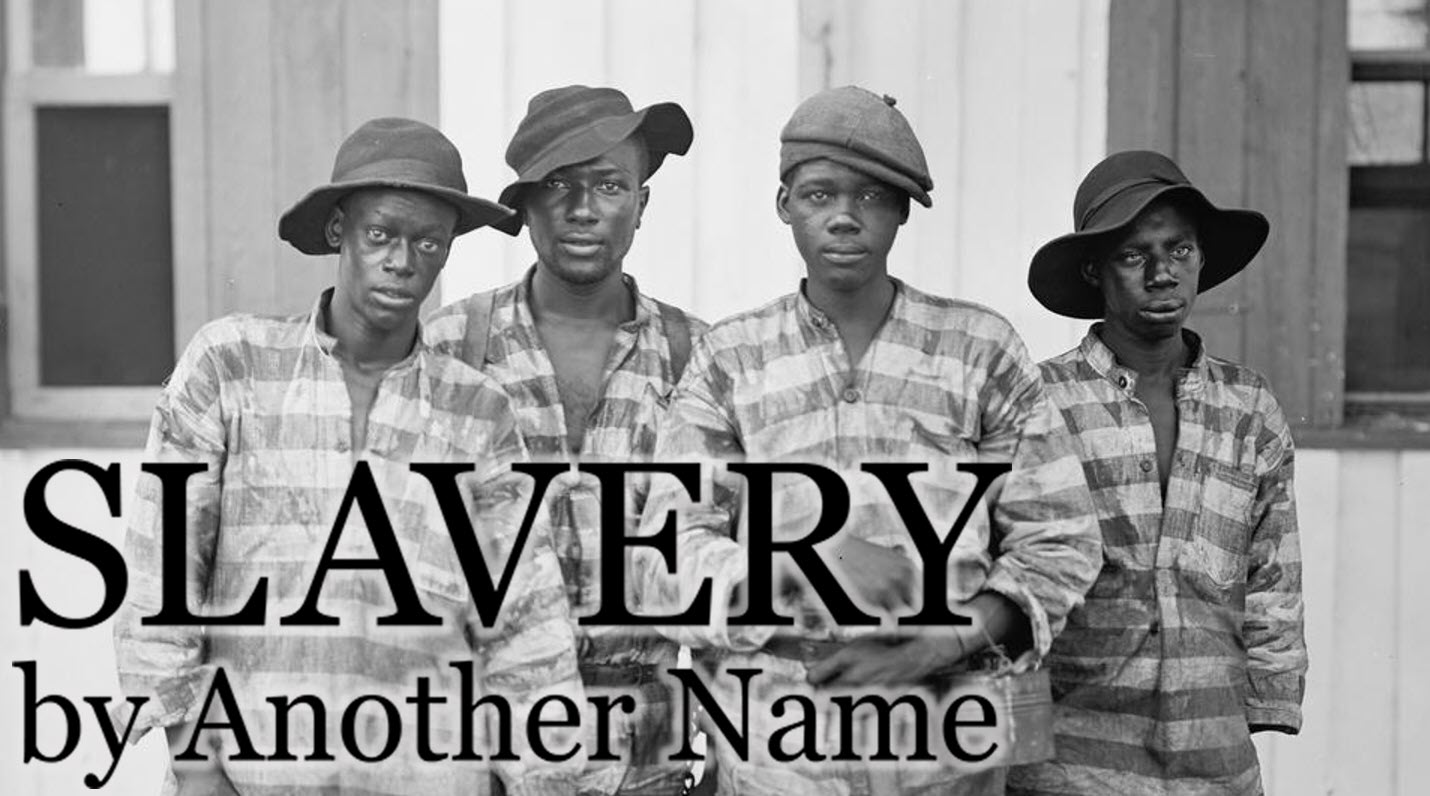
Slavery by Another Name: The Re-Enslavement of Black Americans from the Civil War to World War II by Douglas A. Blackmon_eBook and Audiobook, with Slavery by Another Name Documentary Film

The 13th Amendment to the United States Constitution provides that “Neither slavery nor involuntary servitude, except as a punishment for crime whereof the party shall have been duly convicted, shall exist within the United States, or any place subject to their jurisdiction.”

Book Summary

Douglas A. Blackmon’s “Slavery by Another Name: The Re-Enslavement of Black Americans from the Civil War to World War II” explores the continuation of forced labor and systemic oppression of Black Americans in the decades following the Civil War. The book argues that despite the abolition of slavery, many African Americans were subjected to new forms of servitude that mirrored the conditions of slavery.

The overview and outline that follows provides a structured look at the contents of Blackmon’s “Slavery by Another Name,” encapsulating the main themes and historical significance of the re-enslavement of Black Americans post-Civil War and its enduring legacy.

Overview:

  • Historical Context: The book examines the period from the end of the Civil War through World War II, highlighting how economic, social, and legal systems perpetuated the exploitation of Black Americans.
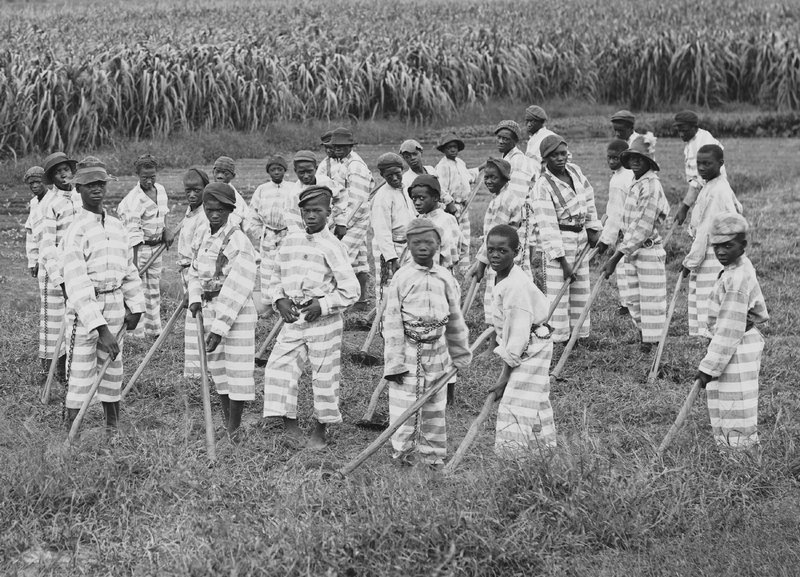
  • Convict Leasing System: Blackmon focuses on the convict leasing system, where African Americans were often arrested on dubious charges and forced into labor for private companies, effectively re-enslaving them.
  • Economic Exploitation: The narrative details how Southern states and businesses exploited Black labor to rebuild the economy after the Civil War, using tactics that included intimidation, violence, and legal manipulation.
  • Personal Stories: The book interweaves personal narratives and testimonies of individuals affected by these practices, providing a human face to the historical analysis.
  • Legacy and Impact: Blackmon discusses the long-term effects of these practices on African American communities and how they laid the groundwork for ongoing racial inequality and injustice.

Outline:

  • Introduction
    • Purpose of the book
    • Overview of the argument regarding the continuity of slavery-like conditions
  • Chapter 1: The End of the Civil War
    • The immediate aftermath of the Civil War and abolition of slavery
    • Initial hopes and challenges faced by newly freed Black Americans
  • Chapter 2: The Rise of Jim Crow
    • The establishment of Jim Crow laws and systemic racism
    • How these laws facilitated the re-enslavement of Black Americans
  • Chapter 3: The Convict Leasing System
    • Detailed description of convict leasing and how it operated
    • The role of law enforcement and the judicial system in perpetuating this system
  • Chapter 4: Economic Motivations
    • The economic interests of Southern states and businesses in maintaining forced labor
    • Analysis of how Black labor was exploited for profit
  • Chapter 5: Personal Narratives
    • Accounts of individuals who experienced re-enslavement
    • Impact of these experiences on families and communities
  • Chapter 6: Resistance and Resilience
    • Examples of resistance against re-enslavement practices
    • The role of Black communities in advocating for rights and reform
  • Chapter 7: National Attention and Reform Movements
    • The growing awareness of racial injustices and exploitation
    • Efforts by activists and organizations to combat systemic oppression
  • Chapter 8: The Legacy of Re-Enslavement
    • Examination of the long-term effects on Black Americans and society at large
    • Connections to contemporary issues of racial inequality and injustice
  • Conclusion
    • Summary of key themes and arguments
    • Reflection on the importance of understanding this history in the context of modern America

Douglas A. Blackmon’s “Slavery by Another Name: The Re-Enslavement of Black Americans from the Civil War to World War II” is a groundbreaking work that sheds light on the continuation of racial oppression and forced labor in the United States long after the formal abolition of slavery. Here are some deeper insights into the themes, events, and significance of the book:

Key Themes and Insights:

  1. Continuity of Oppression:
    • Blackmon argues that the end of slavery did not lead to true freedom for African Americans. Instead, a series of laws and practices emerged to maintain racial hierarchy and economic exploitation, creating a system that functioned similarly to slavery.
  2. Convict Leasing System:
    • One of the central focuses of the book is the convict leasing system, which allowed Southern states to lease convicts (often disproportionately Black men) to private companies for labor. This system became a profitable enterprise, with prisoners subjected to harsh conditions, violence, and little regard for their lives or well-being.
  3. Jim Crow Laws:
    • Following the Reconstruction era, Jim Crow laws institutionalized racial segregation and discrimination. Blackmon details how these laws facilitated the re-enslavement of Black Americans, enforcing a social order that kept them marginalized and economically disadvantaged.
  4. Economic Exploitation:
    • The book examines how economic interests in the South were heavily reliant on the exploitation of Black labor. Southern states and businesses sought to rebuild their economies after the Civil War by using forced labor, which was seen as a cost-effective means to achieve profitability, particularly in industries like agriculture and mining.
  5. Personal Narratives and Testimonies:
    • Blackmon incorporates personal stories of individuals who were subjected to these oppressive systems. These narratives bring a human element to the historical analysis, illustrating the trauma and resilience of those affected. Stories of families torn apart, individuals falsely accused and imprisoned, and the struggles for dignity and justice are poignantly detailed.
  6. Resistance Movements:
    • The author highlights the various forms of resistance against the re-enslavement practices, including protests, legal challenges, and the efforts of Black communities to advocate for their rights. This theme emphasizes the agency of Black Americans in fighting against systemic oppression.
  7. National Awareness and Reform:
    • As the 20th century progressed, growing awareness of racial injustices began to emerge. Blackmon discusses the role of activists and organizations that brought attention to the plight of Black Americans, pushing for reforms and challenging the status quo.
  8. Long-term Legacy:
    • The book concludes by examining the enduring legacy of these practices on contemporary American society. Blackmon argues that the historical exploitation of Black Americans laid the groundwork for ongoing issues of racial inequality, economic disparity, and social injustice that continue to affect African American communities today.

Conclusion:

“Slavery by Another Name” is a vital contribution to the understanding of American history, particularly regarding race relations and the systemic oppression of African Americans. Blackmon’s work challenges readers to recognize the complexities of freedom and the pervasive nature of racism that persisted after the Civil War. By illuminating the harsh realities of the convict leasing system and other forms of re-enslavement, the book serves as a powerful reminder of the struggles faced by Black Americans and the importance of acknowledging this history in the pursuit of justice and equality today.

The book received critical acclaim, including the Pulitzer Prize for History, and has significantly influenced scholarship on race, labor, and American history, encouraging a reevaluation of the narrative surrounding the post-Civil War era and its implications for modern society.

Slavery by Another Name_eBook

Pop the document out from the upper right to read / expand / download.

Slavery by Another Name_Audiobook

PART 1

PART 2

Slavery by Another Name Documentary Film

Learn more in RBG Communiversity Knowledge Media eLibrary:

Maafa_African Holocaust, Chattel Slavery, Jim Crow, Influencers and more_Books, Videos & Audio Folder

Prisons, Slavery, Policing and Imperialism (The Correctional-Industrial Complex [CIC]) Folder

“Ghosts in Our Blood: With Malcolm X in Africa, England, and the Caribbean” by Jan R. Carew eBook and Audiobok, with Minister Malcolm X Select Teachings Video Player

ICEBREAKER Video: Malcolm X Oxford Union Debate, Dec 3 1964

Book Summary

“Ghosts in Our Blood: With Malcolm X in Africa, England, and the Caribbean” by Jan R. Carew is a compelling memoir that chronicles the life and experiences of Malcolm X during his travels in Africa, England, and the Caribbean. The book provides a unique perspective on Malcolm’s journey of self-discovery and his evolving political and social beliefs. Carew, who was a close associate of Malcolm X, offers insights into the influential figures he encountered, the cultural exchanges he experienced, and the broader implications of his activism.

The following outline captures Malcolm’s vision for global Black empowerment, his commitment to social justice, and the legacy he left behind as written in the book.

Outline

I. Introduction

  • A. Overview of Malcolm X’s significance in the civil  and human rights movements
  • B. Purpose of the memoir and its connection to Malcolm’s journey
  • C. Brief introduction to Jan R. Carew and his relationship with Malcolm X

II. Early Life and Background

  • A. Malcolm X’s upbringing and formative experiences
  • B. The impact of race and identity on Malcolm’s worldview
  • C. Introduction to Carew’s background and perspective

III. Malcolm’s Travels in Africa

  • A. Arrival in Africa and initial impressions
    • Reactions to African culture and society
  • Encounters with African leaders and activists
  • B. Exploration of Pan-Africanism
  • Malcolm’s engagement with the ideals of unity and self-determination
  • Impact of African independence movements on Malcolm’s thinking

IV. Experiences in England

  • A. Malcolm’s visit to England and interactions with British audiences
    • Speaking engagements and public reception
  • Reflections on race relations in the UK
  • B. Discussion of global solidarity among Black communities
  • Connections with British activists and intellectual
  • The influence of international perspectives on Malcolm’s views

V. The Caribbean Journey

  • A. Malcolm’s travels throughout the Caribbean
    • Cultural exchanges and connections with Caribbean leaders
  • Exploration of colonial legacies and struggles for independence
  • B. Insights into the Caribbean diaspora and identity
  • Malcolm’s reflections on shared experiences of oppression
  • The importance of collective action for liberation

VI. Malcolm’s Evolving Political Philosophy

  • A. Transformation of Malcolm’s beliefs during his travels
    • Embracing broader notions of human rights
  • Shifts in perspective on race and identity
  • B. Influence of global events on Malcolm’s activism
  • Responses to anti-colonial movements and global injustices
  • The emergence of a more inclusive vision for social justice

VII. Legacy of Malcolm X

  • A. The impact of Malcolm’s travels on his legacy
    • Lasting influence on the civil rights movement and beyond
  • Continued relevance of Malcolm’s ideas in contemporary discussions
  • B. Carew’s reflections on Malcolm’s enduring spirit
  • Personal anecdotes and memories of Malcolm
  • The significance of preserving Malcolm’s legacy for future generations

VIII. Conclusion

  • A. Summary of key themes and insights from the memoir
  • B. Reflection on the importance of Malcolm X’s journey
  • C. Call to action for continued activism and social change

“Ghosts in Our Blood: With Malcolm X in Africa, England, and the Caribbean” is a powerful memoir that offers a unique perspective on the life and legacy of Malcolm X during a pivotal time in his journey. Through Carew’s firsthand experiences and reflections, the book highlights the global dimensions of Malcolm’s activism and the importance of solidarity among Black communities. By exploring Malcolm’s travels and evolving beliefs, the memoir serves as both a tribute to his impact and a call for continued commitment to social justice and empowerment.

“Ghosts in Our Blood: With Malcolm X in Africa, England, and the Caribbean” is a significant work that not only chronicles the experiences of Malcolm X but also provides profound insights into his evolving worldview during a transformative period in his life. Here’s a more detailed exploration of the book’s themes, context, and significance:

Detailed Exploration of Key Themes

1. Malcolm X’s Global Perspective

  • Internationalism: One of the central themes of the book is Malcolm X’s growing understanding of internationalism and Pan-Africanism. His travels to Africa, England, and the Caribbean exposed him to anti-colonial movements and the struggles of people of African descent around the world. This broadened his perspective on race, identity, and the fight against oppression.
  • Solidarity Among Black Communities: Carew emphasizes the connections Malcolm made with various leaders and activists during his travels. These relationships highlighted the importance of solidarity among Black communities globally, reinforcing Malcolm’s belief that struggles for liberation were interconnected.

2. Cultural Exchanges and Identity

  • Cultural Appreciation: Throughout his travels, Malcolm X engaged with various cultures, which enriched his understanding of African heritage and identity. He was deeply moved by the rich histories and traditions he encountered, leading him to appreciate the cultural roots of the African diaspora.
  • Reflections on Identity: Malcolm’s experiences prompted him to reflect on his own identity and the complexities of being a Black man in America. His encounters with diverse communities allowed him to see the shared experiences of oppression and resilience among people of African descent, fostering a sense of unity.

3. Transformation of Political Philosophy

  • Evolution of Beliefs: Carew captures Malcolm’s transformation from a more nationalistic perspective to one that embraced broader human rights issues. His travels influenced his views on race relations, moving towards a more inclusive ideology that recognized the struggles of all oppressed people, not just those in the U.S.
  • Influence of Global Events: The book details how significant global events, such as the independence movements in Africa and the civil rights struggles in the Caribbean, shaped Malcolm’s thinking. He began to frame his activism within a larger context of global justice and human rights.

4. Legacy and Impact

  • Enduring Influence: Carew discusses the lasting impact of Malcolm X’s travels and his philosophy on contemporary social justice movements. Malcolm’s ideas about empowerment, self-determination, and the importance of grassroots activism continue to resonate today.
  • Personal Reflections: Through anecdotes and personal memories, Carew provides a humanizing portrait of Malcolm X. He reflects on their conversations, Malcolm’s charisma, and his commitment to justice, contributing to a deeper understanding of Malcolm as a person and a leader.

Contextual Significance

  • Historical Context: The book situates Malcolm X within the broader historical context of the civil rights movement and global struggles against colonialism. Understanding the geopolitical landscape of the 1960s enhances the reader’s appreciation of the challenges and opportunities Malcolm faced during his travels.
  • Cultural and Political Climate: Carew’s narrative also reflects the cultural and political climate of the time, including the rise of nationalism in Africa and the Caribbean. This context is crucial for understanding how Malcolm’s experiences shaped his ideology and activism.

Conclusion

“Ghosts in Our Blood: With Malcolm X in Africa, England, and the Caribbean” by Jan R. Carew is a poignant and illuminating memoir that captures a vital period in Malcolm X’s life. It highlights his transformation, the depth of his political philosophy, and his commitment to global solidarity among oppressed peoples. Carew’s insights and personal reflections provide a unique perspective on Malcolm’s legacy, making the book an essential read for those interested in civil rights, history, and the ongoing struggle for social justice. It serves not only as a tribute to Malcolm X but also as a call for continued activism in the pursuit of equity and liberation.

“Ghosts in Our Blood: With Malcolm X in Africa, England, and the Caribbean” eBook

Pop the documents out from the upper right to read / expand / download.

“Ghosts in Our Blood: With Malcolm X in Africa, England, and the Caribbean” Audiobook

Minister Malcolm X Select Teachings Video Player

26 Video Playlist

RBG Communiversity eLibrary: Minister Malcolm X “A Comprehensive Achieve” Folder