For additional learning Read/Study “The New Jim Crow: Mass Incarceration in the Age of Colorblindness, Michelle Alexander (2011)”
Book Summary
“The New Jim Crow: Mass Incarceration in the Age of Colorblindness” by Michelle Alexander explores the systemic racial discrimination embedded in the U.S. criminal justice system. Alexander argues that mass incarceration functions as a contemporary system of racial control, reminiscent of the Jim Crow laws that enforced racial segregation. She highlights how policies and practices disproportionately target African Americans and other minorities, resulting in significant social, economic, and political consequences. Through a thorough analysis of the legal framework, societal attitudes, and the impact on communities, Alexander calls for a reevaluation of the criminal justice system and advocates for social justice and policy reform.
The outline that followers captures the key themes and concepts of “The New Jim Crow”.
Introduction
Context of racial discrimination in America
Overview of mass incarceration as a modern issue
Historical Background
Jim Crow laws and their impact on African Americans
Transition from overt racial segregation to more covert forms of discrimination
Mass Incarceration
Definition and statistics on incarceration rates
Racial disparities in arrest and sentencing
Colorblindness and Racial Control
Concept of colorblindness in contemporary society
How it perpetuates systemic racism
Impact on Communities
Social and economic consequences of mass incarceration
Effects on families and community structures
Legal and Political Framework
Role of legislation in perpetuating mass incarceration
Examination of the War on Drugs
Call to Action
Advocacy for policy reform and social justice
Importance of awareness and activism in addressing these issues
Conclusion
Reflection on the ongoing challenges of racial inequality
Vision for a more equitable future
“The New Jim Crow” delves deeper into the mechanisms and implications of mass incarceration in the United States. Here are some additional insights into key themes and concepts from the book:
Key Themes and Concepts:
Racial Caste System:
Alexander posits that mass incarceration has created a racial caste system that marginalizes African Americans and other minorities. This system functions similarly to the Jim Crow laws by relegating these groups to a second-class status, stripping them of rights and opportunities.
The War on Drugs:
A significant focus of the book is on the War on Drugs, which Alexander argues has disproportionately targeted black communities. Policies such as mandatory minimum sentences and “three strikes” laws have led to the over-policing of these communities, resulting in higher incarceration rates for drug-related offenses.
Legal Discrimination:
Alexander highlights how the legal system perpetuates discrimination through practices such as racial profiling, biased sentencing, and the criminalization of minor offenses. She examines how the legal framework often fails to protect the rights of those who are disproportionately affected.
Social Stigma and Barriers:
Once individuals are incarcerated, they face numerous barriers upon reentry into society, including difficulty finding employment, housing, and accessing education. This stigma further entrenches the cycle of poverty and disadvantage.
Role of Media and Public Perception:
The book discusses how media portrayal of crime and criminals influences public perception, often reinforcing stereotypes about race and criminality. This contributes to a culture of fear and justification for harsh sentencing laws.
Colorblindness as a Hindrance:
Alexander critiques the notion of colorblindness, arguing that it obscures the realities of racial injustice and allows systemic racism to persist unchecked. By denying the significance of race, society overlooks the need for targeted interventions and reforms.
Calls for Reform:
Alexander emphasizes the importance of grassroots activism and collective action in addressing the issues of mass incarceration. She encourages readers to challenge the status quo, advocate for policy changes, and engage in conversations about race and justice.
Conclusion:
“The New Jim Crow” is a powerful examination of how mass incarceration serves as a modern mechanism of racial control, perpetuating inequality and injustice. Alexander’s work encourages a critical rethinking of the criminal justice system and highlights the urgent need for comprehensive reforms to dismantle the structures that uphold systemic racism. The book has sparked significant discussion and activism around issues of race, justice, and civil rights, making it a crucial read for anyone interested in understanding the intersections of race and criminal justice in America.
“The New Jim Crow: Mass Incarceration in the Age of Colorblindness”eBook
Pop the documents out from the upper right to read / expand / download.
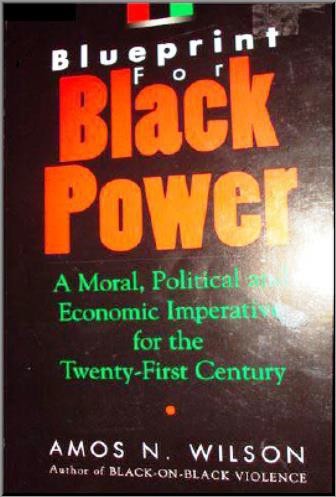
NB: “except for its mainly second-tier alien employment status, its cultural entertainment contributions to the American market economy, its role as a mass consumer market for White American manufactured products and services, its full-spectrum participation in and integration into American society is negligible.” (Dr. Amos Wilson, Blueprint for Black Power 1998, pg. 504)
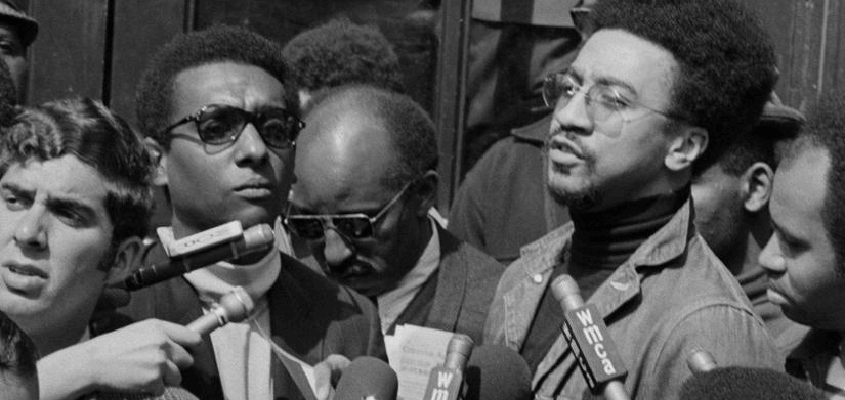
“Black Power: The Politics of Liberation in America” by Kwame Ture (formerly known as Stokely Carmichael) and Charles V. Hamilton is a seminal text that articulates the philosophy and strategy of Black Power as a movement for social and political change in the United States. Published in 1967, the book examines the historical context of African American struggles for civil rights, critiques the limitations of the integrationist approach, and advocates for a more radical, self-determined strategy for achieving liberation. Ture and Hamilton emphasize the importance of collective identity, political organization, and grassroots activism in the fight against systemic racism and oppression.
The outline that follows captures the essence of “Black Power: The Politics of Liberation in America,” highlighting the authors’ exploration of the philosophy, strategies, and historical context of the Black Power movement. Ture and Hamilton provide a critical analysis of the limitations of previous civil rights strategies and advocate for a more radical and self-determined approach to achieving liberation for African Americans. The book remains a foundational text in understanding the dynamics of race, power, and social justice in the United States.
Introduction
Overview of the Black Power movement and its significance in American history
Definition of Black Power and its core principles
The authors’ motivations for writing the book and its intended impact
Historical Context
Examination of the civil rights movement and its achievements
Critique of integrationist strategies and their limitations
Historical roots of Black nationalism and the emergence of Black Power
The Philosophy of Black Power
Definition and exploration of the concept of Black Power
Emphasis on self-determination, pride, and identity
The importance of understanding race as a political category
Discussion of the psychological impact of oppression on African Americans
The role of culture and heritage in fostering a sense of community and empowerment
Political Organization and Strategy
Analysis of the need for organized political action among African Americans
The importance of grassroots movements and community organizing
Strategies for building political power, including voter registration and mobilization
The role of leadership in the Black Power movement
Critique of Liberalism
Examination of liberalism’s shortcomings in addressing the needs and aspirations of Black Americans
Arguments against reliance on white allies and the limitations of legislative reforms
The necessity for a more radical approach to achieve meaningful change
The Role of Violence and Self-Defense
Discussion of the relationship between the Black Power movement and the use of violence
The concept of self-defense against systemic violence and oppression
The authors’ stance on the legitimacy of armed struggle in the pursuit of liberation
Intersectionality and Solidarity
Exploration of the connections between race, class, and gender in the struggle for liberation
The need for solidarity among marginalized groups to achieve broader social justice
The importance of internationalism and global solidarity in the fight against imperialism and colonialism
The Future of Black Power
Vision for the future of the Black Power movement and its potential impact
The necessity for continued activism and political engagement
Call to action for younger generations to embrace the principles of Black Power
Conclusion
Summary of key arguments and insights presented in the book
Reflection on the ongoing relevance of Black Power in contemporary movements for racial and social justice
Final thoughts on the importance of self-determination and collective action
“Black Power: The Politics of Liberation in America” is a groundbreaking work that articulates the philosophy and strategies of the Black Power movement, which emerged as a response to the limitations of the civil rights movement. Published in 1967, the book offers profound insights into the political, social, and psychological dimensions of the struggle for African American liberation. Here’s a deeper exploration of the key themes, arguments, and historical significance of the book:
Key Themes Explored
Historical Context and Civil Rights Movement
The authors begin by situating the Black Power movement within the broader civil rights struggle, acknowledging the achievements made through nonviolent protests and legal reforms.
However, they critique the limitations of these integrationist strategies, arguing that they often failed to address the systemic nature of racism and the underlying economic inequalities faced by Black Americans.
Defining Black Power
Ture and Hamilton define Black Power as a call for self-determination, emphasizing the importance of Black identity, pride, and community solidarity.
They argue that understanding race as a political category is essential for mobilizing African Americans toward collective action and political empowerment.
Black Power is framed as a movement that encourages African Americans to recognize their own strength and potential, fostering a sense of agency and responsibility for their own liberation.
Political Organization and Grassroots Activism
The authors stress the need for organized political action, advocating for grassroots movements that empower local communities.
They outline strategies for building political power, including voter registration, community organizing, and the establishment of independent political entities to represent Black interests.
Ture and Hamilton highlight the role of leadership and the necessity of developing a new generation of leaders who are committed to the principles of Black Power.
Critique of Liberalism
The book critiques liberal approaches to civil rights, arguing that they often prioritize integration and assimilation over true liberation.
Ture and Hamilton contend that relying on white allies and legislative reforms is insufficient for achieving meaningful change, calling for a more radical rethinking of strategies to address systemic oppression.
They advocate for a fundamental restructuring of power dynamics, challenging the status quo that perpetuates racial injustice.
Violence and Self-Defense
The authors engage in a nuanced discussion about the use of violence in the pursuit of liberation. While they do not advocate for violence as the primary means of struggle, they emphasize the legitimacy of self-defense against systemic violence and the oppressive actions of the state.
They argue that, in the face of brutality, African Americans have the right to protect themselves and their communities.
Intersectionality and Solidarity
Ture and Hamilton explore the interconnectedness of race, class, and gender, arguing that the struggle for Black liberation must also address issues of economic inequality and gender oppression.
They call for solidarity among marginalized groups, emphasizing that true liberation requires the collective effort of all oppressed peoples.
The authors also stress the importance of internationalism, advocating for solidarity with anti-colonial movements around the world and recognizing the global dimensions of oppression.
Vision for the Future of Black Power
The book concludes with a forward-looking vision for the Black Power movement, urging continued activism and political engagement.
Ture and Hamilton encourage younger generations to embrace the principles of Black Power and to engage in the ongoing struggle for justice and equality.
They envision a future where African Americans can fully realize their potential and achieve true liberation through self-determination and collective action.
Significance and Impact
Foundational Text in Black Studies
“Black Power” has become a foundational text in Black Studies and political science, influencing generations of activists, scholars, and policymakers.
The book’s emphasis on self-determination, grassroots activism, and political organization has resonated with various social movements, including contemporary movements for racial justice, such as Black Lives Matter.
Legacy of the Black Power Movement
Ture and Hamilton’s work has contributed to a broader understanding of the Black Power movement as a critical response to systemic racism and oppression in the United States.
Their ideas continue to inform discussions about race, identity, and social justice, highlighting the importance of collective action in the pursuit of liberation.
Overall, “Black Power: The Politics of Liberation in America” is a powerful and impactful work that articulates a vision for Black liberation rooted in self-determination, political organization, and community empowerment. Kwame Ture and Charles V. Hamilton provide a compelling critique of existing systems of oppression and call for a radical rethinking of strategies to achieve meaningful change. The book remains a vital resource for understanding the dynamics of race and power in America and the ongoing struggle for justice and equality.
Black Power: The Politics of Liberation in America” by Kwame Ture (formerly known as Stokely Carmichael) and Charles V. Hamilton_eBook
Pop the documents out from the upper right to read / expand / download.
Pop the documents out from the upper right to read / expand / download.
The Prison-industrial Complex, the Global Economy. (Eve Goldberg, Linda Evans)
Book Summary
“The Prison-Industrial Complex: The Global Economy” by Eve Goldberg and Linda Evans examines the intersection of the prison system with economic and social structures on a global scale. The authors argue that the expansion of the prison system is closely linked to neoliberal economic policies, systemic racism, and social inequality. The book critiques the growing influence of the prison-industrial complex, which they define as the relationship between government, private industry, and the prison system, highlighting how this relationship perpetuates cycles of poverty, marginalization, and oppression. Through analysis of case studies, policy discussions, and historical context, Goldberg and Evans call for awareness and action against the injustices perpetuated by this complex.
The outline that follows encapsulates the essence of “The Prison-Industrial Complex: The Global Economy,” highlighting Eve Goldberg and Linda Evans’ critical examination of the prison system’s relationship with global economic structures. The book serves as an important resource for understanding the complexities of mass incarceration and its implications for social justice, urging readers to consider the broader societal impacts of the prison-industrial complex and to engage in efforts for meaningful reform.
Introduction
Overview of the prison-industrial complex and its significance in contemporary society
Explanation of the book’s objectives and key themes
Part I: Historical Context of the Prison System
Evolution of Prisons
Overview of the history of prisons in the United States and globally
Discussion of how societal attitudes toward punishment and rehabilitation have changed over time
Impact of Neoliberalism
Examination of the rise of neoliberal economic policies and their influence on the prison system
Analysis of the relationship between economic downturns and increased incarceration rates
Part II: The Prison-Industrial Complex
Definition and Components
Explanation of what constitutes the prison-industrial complex
Overview of the roles of government, private corporations, and non-profit organizations in the prison system
Economic Incentives
Discussion of the financial motivations behind the expansion of the prison system
Examination of how private prisons and prison labor create profit opportunities for companies
Part III: Social and Racial Implications
Systemic Racism and Incarceration
Analysis of the disproportionate impact of incarceration on communities of color
Examination of how systemic racism is embedded in the criminal justice system
Impact on Families and Communities
Discussion of the social consequences of mass incarceration on families and communities
Exploration of the long-term effects of incarceration on individuals and their reintegration into society
Part IV: Global Perspectives on Incarceration
Comparative Analysis
Examination of incarceration rates and prison systems in different countries
Discussion of how globalization affects the prison-industrial complex and human rights
Case Studies
Presentation of specific case studies that illustrate the global implications of the prison system
Analysis of international movements against mass incarceration and prison exploitation
Part V: Alternatives and Solutions
Reforming the Prison System
Discussion of potential reforms to address the injustices of the prison-industrial complex
Exploration of restorative justice and alternative sentencing as viable solutions
Activism and Advocacy
Overview of grassroots movements and organizations working to combat the prison-industrial complex
Call to action for readers to engage in advocacy and support efforts for reform
Conclusion
Summary of key arguments and insights presented in the book
Reflection on the necessity of dismantling the prison-industrial complex for social justice
Final thoughts on the role of individuals and communities in advocating for change
“The Prison-Industrial Complex: The Global Economy” offers a critical exploration of how the prison system intersects with broader economic, social, and political structures. The authors argue that the expansion of the prison system is not merely a response to crime but is deeply rooted in systemic inequalities, neoliberal economic policies, and the profit motives of both government and private entities. Below is a more in-depth examination of the key themes, arguments, and significance of the book:
Key Themes Explored
Prison-Industrial Complex
The authors define the prison-industrial complex as the interlocking relationships between government agencies, private corporations, and non-profit organizations that benefit from the expansion of the prison system. This complex creates a cycle of incarceration that prioritizes profit over rehabilitation and social justice.
They highlight how the privatization of prisons has led to a profit-driven model that incentivizes incarceration rather than addressing the root causes of crime.
Historical Context and Neoliberalism
Goldberg and Evans provide a historical overview of the prison system, detailing its evolution from a focus on rehabilitation to a punitive model that reflects neoliberal economic policies. They argue that the shift toward neoliberalism in the late 20th century has exacerbated social inequalities and led to increased incarceration rates, particularly among marginalized communities.
The authors connect economic downturns and social unrest to the rise in incarceration, suggesting that prisons are often used as a tool to control dissent and manage social problems.
Systemic Racism and Social Inequality
A significant focus of the book is the impact of systemic racism on incarceration rates. The authors argue that the criminal justice system disproportionately affects people of color due to discriminatory policies, biased policing practices, and socio-economic disparities.
They emphasize that mass incarceration serves as a mechanism of social control, perpetuating cycles of poverty and marginalization in communities of color.
Global Perspectives on Incarceration
The book provides a comparative analysis of prison systems worldwide, exploring how globalization affects incarceration rates and human rights. Goldberg and Evans examine the similarities and differences in how countries address crime and punishment, shedding light on the global implications of the prison-industrial complex.
They discuss international movements advocating for prison reform and the abolition of mass incarceration, highlighting the importance of solidarity in the fight for justice.
Contributions and Insights
Critical Analysis of Economic Incentives
The authors delve into the economic motivations behind the prison-industrial complex, illustrating how private corporations profit from prison labor and the construction of new facilities. They argue that these financial incentives create a system that prioritizes incarceration over rehabilitation and community support.
Through detailed analysis, Goldberg and Evans reveal the ways in which economic policies and prison expansion are intertwined, calling for a reevaluation of how society views crime and punishment.
Social Consequences of Incarceration
The book discusses the far-reaching social consequences of mass incarceration, including its impact on families, communities, and social cohesion. The authors highlight how incarceration disrupts familial bonds, exacerbates poverty, and contributes to community destabilization.
They argue that the repercussions of incarceration extend beyond the prison walls, affecting future generations and perpetuating cycles of disadvantage.
Significance of the Book
Awareness of the Prison-Industrial Complex
“The Prison-Industrial Complex: The Global Economy” serves as an important resource for understanding the complexities of mass incarceration and its implications for social justice. The authors encourage readers to critically engage with the narratives surrounding crime and punishment.
By raising awareness of the economic and social factors contributing to the expansion of the prison system, the book challenges readers to reconsider their perspectives on justice and rehabilitation.
Call to Action for Reform
The authors advocate for systemic reforms to address the injustices perpetuated by the prison-industrial complex. They propose alternatives to incarceration, such as restorative justice practices, community-based interventions, and policies aimed at addressing the root causes of crime.
The book empowers readers to take action, highlighting grassroots movements and organizations working toward meaningful change in the criminal justice system.
Relevance to Contemporary Issues
The themes explored in the book are especially relevant in the context of ongoing debates about criminal justice reform, police violence, and systemic racism. The authors’ insights resonate with contemporary movements advocating for the abolition of mass incarceration and the promotion of social justice.
By situating the prison-industrial complex within a global context, the book encourages a deeper understanding of the interconnectedness of social struggles and the need for solidarity in the fight for justice.
Conclusion
“The Prison-Industrial Complex: The Global Economy” is a powerful critique of the systemic issues surrounding mass incarceration and the economic motivations driving the prison system. By analyzing the historical context, social implications, and global perspectives of incarceration, the authors provide a comprehensive understanding of the prison-industrial complex and its consequences for society. The book serves as both a wake-up call and a call to action, urging readers to engage in advocacy for reform and to challenge the injustices perpetuated by a profit-driven prison system. Through their work, Goldberg and Evans contribute significantly to the discourse on criminal justice, social inequality, and the necessity of systemic change.
“The Prison-Industrial Complex: The Global Economy”_eBook
Pop the documents out from the upper right to read / expand / download.


















































You must be logged in to post a comment.