“Revolutionary Suicide” is an autobiographical work by Huey P. Newton, co-founder of the Black Panther Party, which details his life experiences, political philosophy, and the struggles of the Black community in America. The book combines personal narrative with a broader analysis of systemic racism, oppression, and the fight for social justice. Through his reflections, Newton articulates the concept of “revolutionary suicide” as a means of resisting oppression and asserting identity, emphasizing the need for revolutionary change to achieve true liberation. The introduction by Fredrika Newton provides context for Newton’s life and highlights his legacy as a revolutionary leader.
Essential Themes and Historical Context:
Introduction by Fredrika Newton
Overview of Huey P. Newton’s life and significance
Contextualization of the Black Panther Party’s mission and impact
Introduction to the themes of the book
Early Life and Influences
Newton’s childhood and upbringing in Oakland, California
Family background and early experiences with racism
Influences that shaped his political consciousness
Formation of the Black Panther Party
The founding of the Black Panther Party in 1966
Key principles and goals of the organization
The role of community programs and initiatives
Philosophy of Revolutionary Suicide
Explanation of the concept of “revolutionary suicide”
The significance of self-determination and resistance
Discussion of the philosophical underpinnings of Newton’s beliefs
Struggle Against Oppression
Analysis of systemic racism and police brutality in America
Accounts of confrontations with law enforcement
The impact of the FBI’s COINTELPRO on the Black Panther Party
Personal Experiences and Challenges
Newton’s arrest and legal battles
Reflections on leadership and the responsibilities of revolutionaries
The challenges faced by the Black Panther Party in the 1970s
Legacy and Impact
Examination of Newton’s influence on future generations of activists
The continuing relevance of his ideas in contemporary struggles for justice
Reflection on the Black Panther Party’s legacy in the fight for civil rights
Conclusion
Summary of key themes and messages from Newton’s narrative
Call for continued activism and dedication to social change
Revolutionary Suicide_eBook
The searing, visionary memoir of founding Black Panther Huey P. Newton, in a dazzling graphic package. Tracing the birth of a revolutionary, Huey P. Newton’s famous and oft-quoted autobiography is as much a manifesto as a portrait of the inner circle of America’s Black Panther Party. From Newton’s impoverished childhood on the streets of Oakland to his adolescence and struggles with the system, from his role in the Black Panthers to his solitary confinement in the Alameda County Jail, Revolutionary Suicide is unrepentant and thought-provoking in its portrayal of inspired radicalism.
Pop the documents out from the upper right to read / expand / download.
Revolutionary Suicide_Audiobook Part 1
Revolutionary Suicide_Audiobook Part 2
Huey P Newton: Rare Footage Clips and Interviews
Learn more in RBG Communiversity Knowledge Media eLibrary:
“Soledad Brother: The Prison Letters of George Jackson” is a powerful collection of letters written by George Jackson, a prominent African American activist and member of the Black Panther Party, during his time in prison. The book chronicles Jackson’s reflections on race, class, and the American penal system, offering a profound insight into the struggles faced by incarcerated individuals. Jackson’s letters, which were penned while he was imprisoned for armed robbery, articulate his political beliefs, experiences of systemic racism, and critiques of capitalism and imperialism. Through his writings, Jackson not only advocates for the rights of prisoners but also calls for broader social justice and revolutionary change. “Soledad Brother” serves as both a personal narrative and a political manifesto, illustrating the intersections of personal and collective struggles for liberation.
The outline that follows captures the main themes and structure of “Soledad Brother,” highlighting the critical discussions within the collection regarding George Jackson’s life, political beliefs, and the broader implications of his writings for understanding issues of race, justice, and incarceration. The book serves as an important resource for those seeking to engage with the history of the Black liberation movement and the ongoing struggles against systemic oppression.
I. Introduction
Overview of the book’s purpose: to present George Jackson’s letters from prison
Contextualization of Jackson’s life and political activism
The significance of his writings in understanding the prison-industrial complex and racial justice
II. Background on George Jackson
Brief biography of George Jackson: early life, criminalization, and incarceration
Overview of Jackson’s involvement with the Black Panther Party and his political development
Discussion of the events leading to his imprisonment and the context of the Soledad Brothers case
III. Themes of Race and Oppression
Exploration of Jackson’s reflections on systemic racism and its impact on Black Americans
Analysis of his experiences with racial discrimination within the prison system
Discussion of the broader implications of racial injustice in society
IV. Critique of the American Penal System
Examination of Jackson’s critiques of the prison-industrial complex
Insights into the dehumanizing conditions of prisons and the treatment of inmates
Discussion of the role of prisons in perpetuating social and economic inequalities
V. Revolutionary Ideology
Overview of Jackson’s political beliefs, including Marxism and Black nationalism
Exploration of his vision for revolution and the liberation of oppressed peoples
Discussion of the importance of solidarity among marginalized communities
VI. Personal Reflections and Emotional Struggles
Intimate insights into Jackson’s personal life, relationships, and emotional struggles while incarcerated
Exploration of the psychological impact of imprisonment and the quest for identity
Discussion of his hopes, fears, and aspirations for himself and the movement
VII. Call to Action
Examination of Jackson’s call for resistance against oppression and exploitation
Insights into his vision for a unified struggle for justice and liberation
Discussion of the importance of activism and solidarity in challenging systemic injustices
VIII. Legacy and Influence
Reflection on the impact of “Soledad Brother” on contemporary discussions of race, justice, and prison reform
Analysis of Jackson’s enduring legacy as a revolutionary figure and martyr
Exploration of how his writings continue to resonate with current movements for social justice
IX. Conclusion
Summary of key themes and insights from George Jackson’s letters
Reflection on the importance of bearing witness to the experiences of the incarcerated
A call to action for continued advocacy and engagement in the fight for racial and social justice
“Soledad Brother: The Prison Letters of George Jackson” is a profound and influential work that encapsulates the struggles, insights, and revolutionary spirit of George Jackson, who became a pivotal figure in the Black liberation movement during the 1960s and 1970s. His letters, written while he was incarcerated, provide a raw and unfiltered glimpse into the realities of life in prison, as well as a deep exploration of systemic issues affecting African Americans and marginalized communities.
Key Themes and Insights
Personal Journey and Incarceration:
Jackson’s letters document his transformation from a young man involved in crime to a politically conscious revolutionary. The correspondence reflects his evolving understanding of the systemic forces at play in society and his commitment to fighting against oppression.
His experiences in prison serve as a catalyst for his political awakening, as he begins to articulate the injustices faced by incarcerated individuals and the broader African American community.
Racial Injustice and Systemic Oppression:
A central theme throughout Jackson’s letters is the pervasive racism embedded in American society. He addresses the historical context of slavery, segregation, and ongoing discrimination, arguing that these issues are fundamental to understanding the plight of Black Americans.
Jackson critiques the criminal justice system as a mechanism of racial control, emphasizing how it disproportionately targets and punishes Black individuals.
Critique of Capitalism and Imperialism:
Jackson’s writings reflect his Marxist beliefs and critique of capitalism, which he views as inherently exploitative. He argues that capitalism perpetuates inequality and dehumanizes individuals, particularly those from marginalized backgrounds.
He also discusses imperialism’s role in shaping global power dynamics, linking local struggles for liberation to broader anti-imperialist movements.
Prison Conditions and Dehumanization:
Jackson provides vivid descriptions of the brutal conditions within prisons, highlighting issues such as overcrowding, violence, and the psychological toll of incarceration. His letters serve as a powerful indictment of the prison system, revealing how it strips individuals of their dignity and humanity.
He advocates for the rights of prisoners and emphasizes the need for reform, arguing that the treatment of incarcerated individuals reflects society’s values and priorities.
Revolutionary Ideology and Activism:
Throughout the letters, Jackson articulates his vision for revolution and the importance of collective struggle. He calls for solidarity among oppressed communities and emphasizes the need for organized resistance against systemic injustices.
His writings serve as a rallying cry for activism, urging individuals to engage in the fight for social justice and liberation.
Emotional Struggles and Personal Reflections:
In addition to political discourse, Jackson’s letters offer intimate reflections on his personal life, including his relationships with family and friends, his emotional struggles, and his hopes for the future.
These personal insights humanize Jackson, allowing readers to connect with him on a deeper level and understand the toll that imprisonment takes on individuals.
Legacy and Impact:
“Soledad Brother” has had a lasting impact on discussions of race, justice, and the prison system in the United States. Jackson’s writings continue to resonate with contemporary movements advocating for prison reform and racial justice.
His legacy as a revolutionary thinker and martyr is honored by activists and scholars, who draw inspiration from his commitment to social change and his unyielding critique of oppression.
Conclusion
“Soledad Brother” is not just a collection of letters; it is a powerful testament to the resilience of the human spirit in the face of systemic oppression. George Jackson’s writings challenge readers to confront uncomfortable truths about race, justice, and the prison-industrial complex while inspiring a commitment to activism and change.
The book serves as a crucial resource for understanding the complexities of the Black liberation movement and the ongoing struggles for justice and equality. Jackson’s voice, rooted in personal experience and revolutionary ideology, continues to inspire new generations of activists and thinkers as they navigate the challenges of today’s world. Through his letters, Jackson invites readers to reflect on their own roles in the fight for a more just and equitable society.
Soledad Brother_eBook
Pop the documents out from the upper right to read / expand / download.
Soledad Brother_Audiobook
George Jackson (A Short Documentary Film)
Learn more in RBG Communiversity Knowledge Media eLibrary:
Overview of the book’s objectives and key arguments
Historical Context
The arrival of European settlers and the establishment of colonies
Early interactions with Indigenous populations
The impact of colonization on native peoples and cultures
The Myth of the White Proletariat
Examination of the concept of the white working class
Critique of the portrayal of white settlers as victims of capitalism
Discussion of the privileges afforded to white settlers
Class and Race Dynamics
Analysis of the relationships between race and class throughout American history
The role of white supremacy in shaping labor relations and social hierarchies
Impact of immigration and labor movements on racial dynamics
The Role of Settlers in Capitalism
The contributions of settlers to the development of capitalism in America
Exploration of how settler colonialism facilitated economic exploitation
The relationship between land ownership and class status
Resistance and Solidarity
The role of marginalized groups in resisting settler colonialism
Examples of solidarity between Indigenous peoples and other oppressed groups
The importance of intersectional analysis in understanding social movements
Contemporary Implications
The lasting effects of settler colonialism on modern society
Discussion of ongoing struggles against systemic racism and oppression
The need for a re-evaluation of historical narratives and identities
Conclusion
Summary of key themes and arguments presented in the book
Call to action for readers to critically engage with the history of settler colonialism
Settlers: The Mythology of the White Proletariat from Mayflower to Modern by J. Sakai_eBook
A uniquely important book in the canon of the North American revolutionary left and anticolonial movements, Settlers was first published in the 1980s. Written by activists with decades of experience organizing in grassroots anticapitalist struggles against white supremacy, the book established itself as an essential reference point for revolutionary nationalists and dissident currents within the Marxist-Leninist and anarchist movements. Always controversial within the establishment left, Settlers uncovers centuries of collaboration between capitalism and white workers and their organizations, as well as their neocolonial allies, showing how the United States was designed from the ground up as a parasitic and genocidal entity. As recounted in painful detail by J. Sakai, the United States has been built on the theft of Indigenous lands and of Afrikan labor, on the robbery of the northern third of Mexico, the colonization of Puerto Rico, and the expropriation of the Asian working class, with each of these crimes being accompanied by violence. This new edition includes a new essay and an interview with author J. Sakai by Ernesto Aguilar.
Pop the document out from the upper right to read / expand / download.
Settlers: The Mythology of the White Proletariat from Mayflower to Modern by J. Sakai_Audiobook
Part 1
Part 2
Learn more in RBG Communiversity Knowledge Media eLibrary:
Pop the documents out from the upper right to read / expand / download.
Supplemental Studies:
I: Robert L Allen, “The Social Context of Black Power” (Text and Audio)
Please feel free to start the audio and pop the document out/expand and read along with the audio for a nice learning experience.
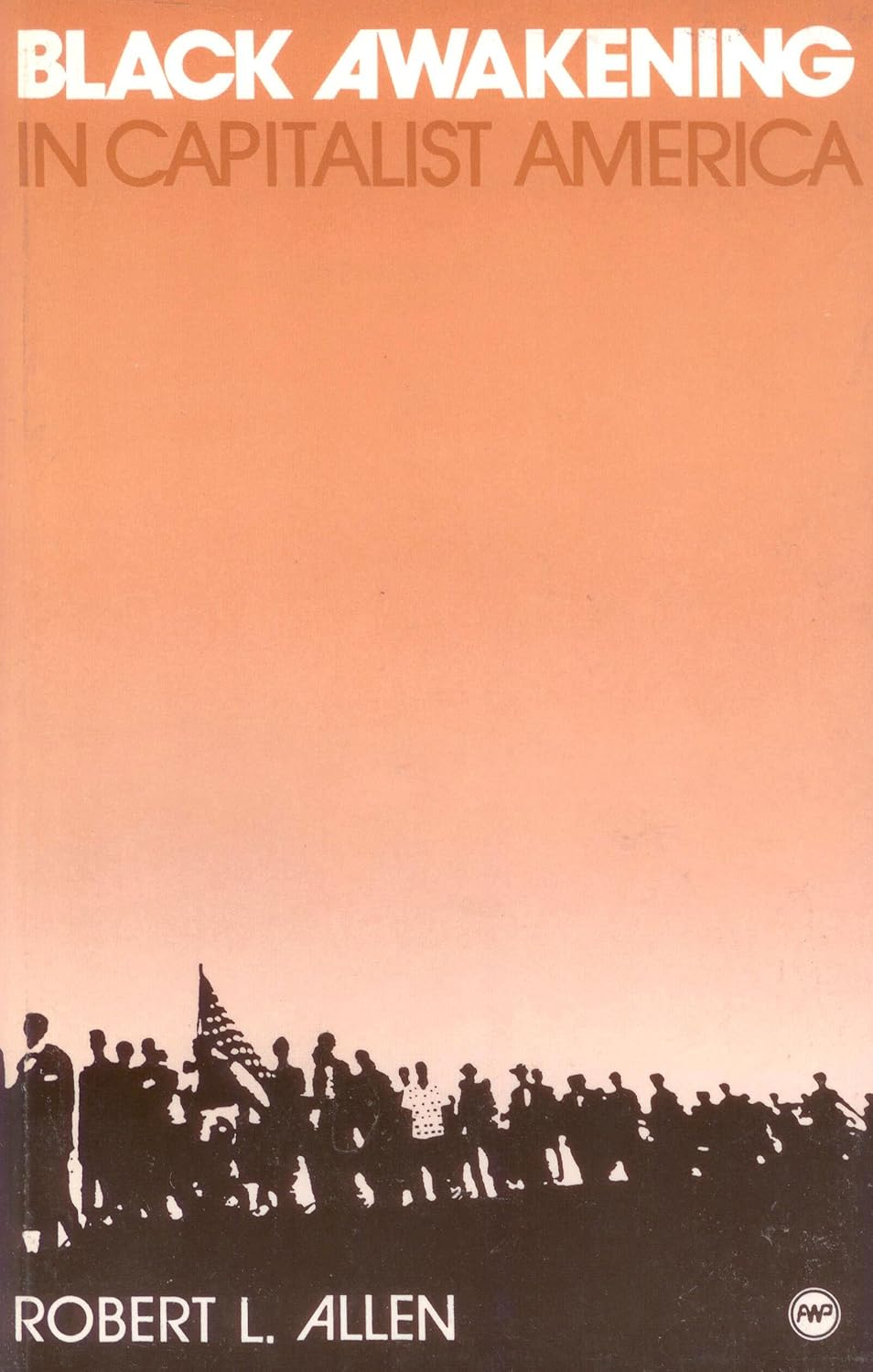
II: Black Awakening in Capitalist America: An Analytic History First Edition by Robert L. Allen
Book Summary
The book explores the intersections of race, class, and capitalism in America, particularly how these elements have shaped the experiences and struggles of Black people. Allen argues that the systemic inequalities rooted in capitalism have led to a profound awakening among Black communities, manifesting in various forms of resistance and activism. Through historical analysis, the author delves into the impacts of capitalism on Black life and the collective awakening that has occurred as a response to oppression.
The outline that follows captures the main themes and structure of Allen’s work, emphasizing the critical relationship between capitalism and the Black experience in America.
Introduction
Context of Black awakening in America
Overview of capitalism’s role in racial oppression
Historical Context
The legacy of slavery and its aftermath
Reconstruction and its failures
Rise of Jim Crow laws
Capitalism and Racial Oppression
Economic exploitation of Black labor
The role of capitalism in sustaining racial hierarchies
Case studies of Black economic struggles
The Civil Rights Movement
Key figures and events
The impact of capitalism on the movement
Shifts in strategy and ideology
Black Power and Resistance
Emergence of the Black Power movement
Analysis of militant and non-militant approaches
The significance of cultural identity
Contemporary Issues
The intersection of race and class in modern America
Impact of globalization on Black communities
Analysis of systemic racism in various sectors (education, employment, etc.)
The Future of Black Resistance
Potential paths for Black empowerment
Importance of solidarity across movements
Vision for a more equitable society
Conclusion
Reflection on the ongoing struggle against capitalism and racism
Call to action for renewed activism and awareness
Learn more in RBG Communivesity Knowledge Media eLibrary:
“Hip-Hop Revolution” delves into the cultural, social, and political dimensions of hip-hop music and culture. Ogbar explores its origins, evolution, and impact on society, emphasizing hip-hop as a powerful form of expression for marginalized communities. The book examines the genre not just as entertainment but as a significant cultural movement that reflects and shapes the realities of urban life.
In the world of hip-hop, “keeping it real” has always been a primary goal–and realness takes on special meaning as rappers mold their images for street cred and increasingly measure authenticity by ghetto-centric notions of “Who’s badder?”
In this groundbreaking book, Jeffrey O. G. Ogbar celebrates hip-hop and confronts the cult of authenticity that defines its essential character–that dictates how performers walk, talk, and express themselves artistically and also influences the consumer market. Hip-Hop Revolution is a balanced cultural history that looks past negative stereotypes of hip-hop as a monolith of hedonistic, unthinking noise to reveal its evolving positive role within American society.
A writer who’s personally encountered many of hip-hop’s icons, Ogbar traces hip-hop’s rise as a cultural juggernaut, focusing on how it negotiates its own sense of identity. He especially explores the lyrical world of rap as artists struggle to define what realness means in an art where class, race, and gender are central to expressions of authenticity–and how this realness is articulated in a society dominated by gendered and racialized stereotypes.
Ogbar also explores problematic black images, including minstrelsy, hip-hop’s social milieu, and the artists’ own historical and political awareness. Ranging across the rap spectrum from the conscious hip-hop of Mos Def to the gangsta rap of 50 Cent to the “underground” sounds of Jurassic 5 and the Roots, he tracks the ongoing quest for a unique and credible voice to show how complex, contested, and malleable these codes of authenticity are. Most important, Ogbar persuasively challenges widely held notions that hip-hop is socially dangerous–to black youths in particular–by addressing the ways in which rappers critically view the popularity of crime-focused lyrics, the antisocial messages of their peers, and the volatile politics of the word “nigga.”
Hip-Hop Revolution deftly balances an insider’s love of the culture with a scholar’s detached critique, exploring popular myths about black educational attainment, civic engagement, crime, and sexuality. By cutting to the bone of a lifestyle that many outsiders find threatening, Ogbar makes hip-hop realer than it’s ever been before.
The outline that follows captures the major themes and structure of Ogbar’s work, highlighting the multifaceted nature of hip-hop as both a cultural phenomenon and a platform for political expression.
Introduction to Hip-Hop Culture
Definition and scope of hip-hop
Overview of hip-hop’s rise in the cultural landscape
Importance of hip-hop in contemporary society
Historical Context
Origins of hip-hop in the 1970s
Key figures and pioneers in hip-hop culture
The socio-political environment during hip-hop’s emergence
Elements of Hip-Hop
Breakdown of the four core elements: MCing, DJing, graffiti art, and breakdancing
The role of each element in shaping hip-hop culture
The interplay between different forms of expression
Hip-Hop and Identity
Exploration of race, class, and gender within hip-hop
How hip-hop serves as a voice for marginalized communities
Analysis of identity formation through hip-hop narratives
Political Dimensions of Hip-Hop
Examination of hip-hop as a form of protest and political commentary
Key songs and artists that have addressed social issues
Impact of hip-hop on public discourse and activism
Commercialization and Mainstream Success
The transition of hip-hop from underground to mainstream
The effects of commercialization on hip-hop culture
Critiques of the mainstream portrayal of hip-hop artists
Global Influence of Hip-Hop
Spread of hip-hop culture beyond the United States
Adaptation and transformation of hip-hop in different cultural contexts
Case studies of international hip-hop movements
Future of Hip-Hop
Current trends and innovations within the genre
Challenges facing hip-hop artists and communities
The potential of hip-hop to influence future social movements
Conclusion
Reflection on the significance of hip-hop in contemporary society
The ongoing evolution of hip-hop as a cultural force
Call to recognize and support the diverse voices within hip-hop culture
Here’s a deeper exploration of some key themes and concepts presented in “Hip-Hop Revolution”
Historical Context
Roots in the 1970s: Ogbar emphasizes that hip-hop emerged from the socio-economic struggles of African American communities in the Bronx, New York. It reflects the challenges faced by these communities, including poverty, violence, and systemic racism.
Pioneering Figures: The book discusses influential figures like DJ Kool Herc, Grandmaster Flash, and Afrika Bambaataa, who laid the groundwork for hip-hop music and culture. Their innovative techniques in DJing and MCing set the stage for future artists.
Elements of Hip-Hop
MCing (Rapping): Ogbar explores the lyrical aspect of hip-hop, focusing on storytelling and the use of wordplay to convey messages about life experiences, struggles, and aspirations.
DJing: The role of DJs in creating beats and mixing tracks is highlighted, showcasing how they contribute to the live performance aspect of hip-hop.
Graffiti Art: This visual element is discussed as a form of self-expression and social commentary, often conveying messages about identity, resistance, and community.
Breakdancing: Ogbar examines breakdancing as a physical manifestation of hip-hop culture, emphasizing its significance in competitions and as a form of artistic expression.
Hip-Hop and Identity
Cultural Identity: The book delves into how hip-hop serves as a means for individuals to express their cultural identities, particularly among African Americans and Latino communities. It acts as a platform for addressing issues related to race, class, and social justice.
Gender Dynamics: Ogbar addresses the portrayal and participation of women in hip-hop, discussing both the challenges they face and the influential roles they play in the culture.
Political Dimensions
Social Commentary: Hip-hop artists often use their music to critique social injustices, police violence, and economic disparities. Ogbar analyzes key tracks and artists, such as Public Enemy and N.W.A, that have made significant political statements through their work.
Activism: The book highlights the role of hip-hop in mobilizing communities and fostering activism, particularly among youth. It examines how hip-hop has been intertwined with movements for civil rights and social change.
Commercialization and Mainstream Success
Shift to Mainstream: Ogbar discusses the transition of hip-hop from underground scenes to global commercial success, examining the implications of this shift for the authenticity and message of the genre.
Critique of Commercialization: The book raises concerns about how commercialization can dilute the original messages of hip-hop, focusing instead on profit and marketability.
Global Influence
International Adaptations: The influence of hip-hop culture across the globe is explored, with examples from countries like France, Japan, and South Africa. Each region adapts hip-hop to reflect local issues and cultural experiences.
Cultural Exchange: Ogbar emphasizes the global exchange of ideas within hip-hop, highlighting collaborations between artists from different backgrounds that enrich the genre.
Future of Hip-Hop
Evolving Trends: The book discusses current trends in hip-hop, such as the rise of digital platforms and the impact of social media on how artists create and share their work.
Continued Relevance: Ogbar argues that hip-hop remains a vital form of expression and activism, continually evolving to address contemporary issues facing society.
Conclusion
Cultural Significance: The conclusion reinforces the importance of hip-hop not just as music but as a cultural movement that reflects the complexities of urban life and social realities.
Support for Diverse Voices: Ogbar calls for recognition and support of the diverse voices within hip-hop, advocating for a deeper understanding of its cultural significance and potential for social change.
Hip-Hop Revolution: The Culture and Politics of Rap (CultureAmerica) by Jeffrey O. G. Ogbar (2007). Winner: W. E. B. Du Bois Book Award
Pop the document out from the upper right to read / expand / download.
About Jeffrey Ogbonna Green Ogbar:
Jeffrey Ogbonna Green Ogbar was born in Chicago and raised in Los Angeles, California. He received his BA in History from Morehouse College in Atlanta. He earned his MA and Ph.D. in U.S. History with a minor in African studies from Indiana University in Bloomington. Since 1997 he has taught at the University of Connecticut’s Department of History. From 2003-2009 he served as the Director of the Africana Studies Institute. He served as Associate Dean for the Humanities in the College of Liberal Arts and Sciences from 2009-2012. In June 2012 he was named the University’s Vice Provost for Diversity. In 2014 he became founding director of the Center for the Study of Popular Music. Jeffrey O. G. Ogbar’s research interests include the 20th century United States with a focus in African American history. More specifically, Dr. Ogbar studies black nationalism and social justice movements. He has developed courses, lectured and published articles on subjects as varied as the New Negro Renaissance, mass incarceration, civil rights struggles, and hip-hop. Prof. Ogbar has held fellowships at Harvard University’s W.E.B. Du Bois Research Institute, where he completed work on his book, Black Power: Radical Politics and African American Identity. He also held fellowships at the Schomburg Center for Research in Black Culture in New York City, and the Africana studies program at the University of Miami where he conducted research for his book Hip-Hop Revolution: The Culture and Politics of Rap. Along with research and teaching, Dr. Ogbar has enjoyed his role as the advisor to numerous student organizations, as well as working in various community service projects.
Supplemental: RBG|Classic Hip-Hop Joints_Rap Music 100









 RBG Communiversity: Message 2 Da Grassroots
You must be logged in to post a comment.