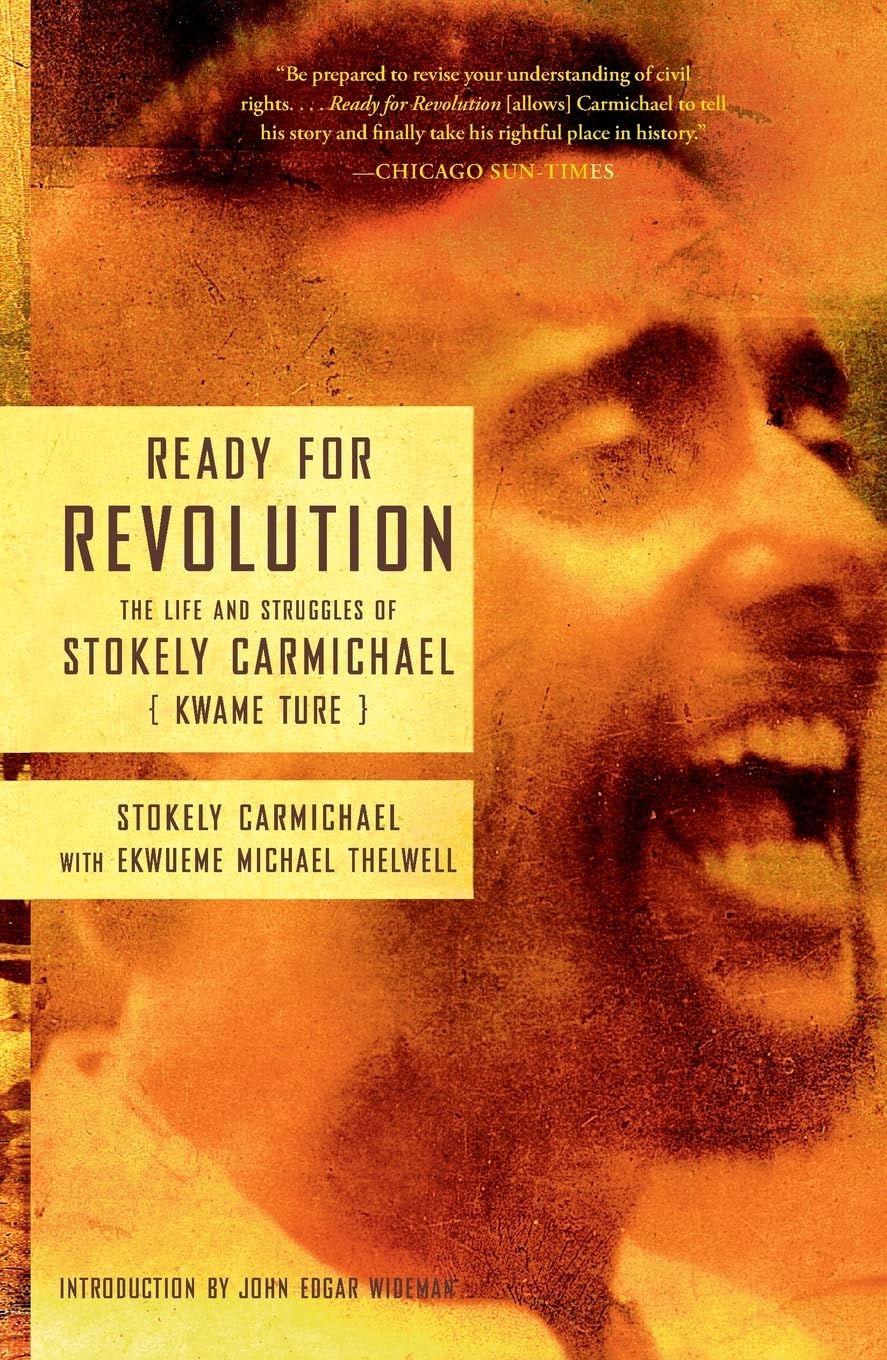
Ready for Revolution_ The Life and Struggles of Stokely Carmichael (Kwame Ture)_eBook and Audiobook, Stokely Carmichael (Kwame Ture) Video Education Player

Ready for Revolution: The Life and Struggles of Stokely Carmichael (Kwame Ture) by Stokely Carmichael (Author), John Edgar Wideman (Introduction), Ekwueme Michael Thelwell (Contributor)

Book Summary

“Ready for Revolution: The Life and Struggles of Stokely Carmichael (Kwame Ture)” is an autobiographical account by Stokely Carmichael, a key figure in the civil rights movement and a prominent advocate for Black power. This book chronicles his journey from a young activist in the South to a leader of the Student Nonviolent Coordinating Committee (SNCC) and later a figurehead in the Pan-African movement. Carmichael reflects on his experiences, the evolution of his political ideology, and the challenges faced by the Black liberation struggle in America and abroad. Through personal anecdotes, historical context, and political insights, Carmichael offers a compelling narrative of resistance, empowerment, and the necessity of revolutionary change.

The outline that follows encapsulates the essence of “Ready for Revolution,” highlighting Stokely Carmichael’s life, activism, and the evolution of his political thought. The autobiography serves as both a personal narrative and a historical account, providing valuable insights into the struggles for civil rights and Black empowerment in the United States and beyond. Through his reflections, Carmichael emphasizes the necessity of revolutionary change and the importance of solidarity in the ongoing fight for justice.

  • Introduction
  • Overview of Stokely Carmichael’s significance in the civil rights movement
  • Brief summary of the themes and objectives of the autobiography
  • Part I: Early Life and Influences
  • Childhood and Family Background
    • Exploration of Carmichael’s upbringing in Trinidad and later in the United States
    • Discussion of the values instilled by his family and their impact on his activism
  • Encountering Racism
    • Analysis of Carmichael’s early experiences with racism and discrimination in America
    • The formation of his consciousness around issues of race and identity
  • Part II: Activism and the Civil Rights Movement
  • Joining SNCC
    • Overview of Carmichael’s involvement with the Student Nonviolent Coordinating Committee
    • Examination of his role in organizing voter registration drives and grassroots activism
  • Rise of the Black Power Movement
    • Discussion of the emergence of the Black Power movement and Carmichael’s advocacy for its principles
    • Reflection on the famous phrase “Black Power” and its implications for the struggle for racial equality
  • Part III: Political Evolution and Internationalism
  • Shift to Revolutionary Politics
    • Analysis of Carmichael’s transition from civil rights activism to revolutionary politics
    • The influence of international figures and movements on his political ideology
  • Pan-Africanism and Global Solidarity
    • Exploration of Carmichael’s commitment to Pan-Africanism and the fight against colonialism
    • Discussion of his travels and interactions with leaders in Africa and the Caribbean
  • Part IV: Legacy and Reflections
  • Critique of American Politics
    • Examination of Carmichael’s criticisms of U.S. policies and the limitations of traditional civil rights strategies
    • Discussion of the need for systemic change and revolutionary action
  • Personal Reflections
    • Insights into Carmichael’s personal struggles, victories, and lessons learned throughout his activism
    • The importance of solidarity and collective action in the fight for liberation
  • Conclusion
  • Summary of Carmichael’s journey and the enduring relevance of his ideas
  • Call to action for future generations to continue the struggle for justice and equality
  • Reflection on the importance of revolutionary consciousness in contemporary movements

“Ready for Revolution” is a powerful and poignant autobiographical account that captures the essence of Stokely Carmichael’s journey as a civil rights activist and revolutionary leader. His life reflects the complexities of the struggle for racial justice in America and the broader fight against imperialism and oppression globally. Here’s a deeper exploration of key themes, contributions, and the significance of the book:

Key Themes Explored

  • Radical Activism and Black Power
  • Carmichael is best known for popularizing the term “Black Power,” which became a rallying cry for a movement that emphasized self-determination, racial pride, and the need for a more militant approach to achieving civil rights.
  • The book illustrates his belief that true liberation could not be achieved through assimilation into a system that perpetuates oppression. Instead, he advocated for a revolutionary transformation of society that embraced Black identity and culture.
  • Intersection of Personal and Political
  • Carmichael’s narrative intertwines his personal experiences with broader political movements. His early encounters with racism and discrimination shaped his understanding of systemic oppression and fueled his commitment to activism.
  • The book presents a candid look at how Carmichael’s personal life influenced his political ideology, including his relationships with other prominent figures in the civil rights movement.
  • Internationalism and Pan-Africanism
  • A significant aspect of Carmichael’s evolution as an activist was his commitment to Pan-Africanism and solidarity with oppressed peoples worldwide. He recognized the interconnectedness of struggles against colonialism and racism across the globe.
  • The book recounts his experiences in Africa and his interactions with leaders such as Kwame Nkrumah and Julius Nyerere, which deepened his understanding of global politics and the fight for liberation.
  • Critique of American Society
  • Carmichael provides a critical analysis of American society, particularly its racial dynamics and systemic injustices. He argues that the traditional civil rights movement’s focus on integration and reform was insufficient to address the root causes of racial oppression.
  • The book challenges readers to confront the realities of capitalism, imperialism, and institutional racism, advocating for a radical rethinking of strategies for social change.

Contributions and Insights

  • Historical Context
  • Carmichael’s autobiography is not only a personal narrative but also a historical document. It captures the spirit of the civil rights movement and the evolution of Black activism during a pivotal time in American history.
  • The book includes reflections on key events, such as the Freedom Rides, voter registration drives in the South, and the rise of the Black Panther Party, providing a firsthand account of the struggles and triumphs of the movement.
  • Authentic Voice
  • Carmichael’s authentic voice and passionate prose convey the urgency of the issues he addresses. He writes with candor about his frustrations, hopes, and the complexities of navigating activism in a turbulent political landscape.
  • His storytelling draws readers into the heart of the civil rights struggle, making it relatable and impactful.

Significance of the Book

  • Educational Resource
  • “Ready for Revolution” serves as an essential resource for understanding the Black Power movement and the broader civil rights struggle. It provides valuable insights for students, activists, and anyone interested in social justice and history.
  • The book encourages critical thinking about race, identity, and the ongoing fight for equality, making it relevant to contemporary discussions on these issues.
  • Inspiration for Future Generations
  • Carmichael’s life and activism inspire future generations to engage in the struggle for justice and empowerment. His emphasis on the need for collective action and revolutionary change resonates with current movements advocating for racial and social justice.
  • The book serves as a reminder of the importance of standing up against oppression and fighting for a more just society.
  • Legacy and Relevance
  • Stokely Carmichael’s legacy continues to influence contemporary movements, including Black Lives Matter and other efforts advocating for racial equity. His ideas about self-determination, solidarity, and the necessity of revolutionary change remain pertinent in today’s socio-political climate.
  • The autobiography reinforces the idea that the struggle for justice is ongoing and that each generation must contribute to the fight.

Conclusion

“Ready for Revolution: The Life and Struggles of Stokely Carmichael (Kwame Ture)” is a compelling and insightful autobiographical account that captures the essence of one of the most prominent voices in the civil rights movement. Stokely Carmichael’s reflections on his life, activism, and political ideology provide a unique perspective on the struggles for racial justice and liberation. Through his powerful narrative, Carmichael emphasizes the importance of self-determination, collective action, and revolutionary change in the fight against oppression. The book serves as both a historical document and a source of inspiration, urging readers to reflect on their roles in the ongoing struggle for justice and equality.

Ready for Revolution: The Life and Struggles of Stokely Carmichael (Kwame Ture)_eBook

Pop the documents out from the upper right to read / expand / download.

Ready for Revolution: The Life and Struggles of Stokely Carmichael (Kwame Ture)_Audiobook, with Kwame Ture (fna Stokely Carmichael) _Audiobok

Part 1

Part 2

Part 3

Part 4

Stokely Carmichael (Kwame Ture) Video Education Player

11 Video Playlist

Learn more in RBG Communiversity Knowledge Media eLibrary:

The Portable Malcolm X Reader: A Man Who Stands for Nothing Will Fall for Anything, Edited by Manning Marable and Garrett Felber_eBook and Audiobook

Book Summary

“The Portable Malcolm X Reader” is a comprehensive anthology that brings together a selection of writings, speeches, and interviews of Malcolm X, one of the most influential figures in the American civil and human rights movement. Edited by Manning Marable and Garrett Felber, this collection captures the evolution of Malcolm X’s thought and activism, showcasing his powerful oratory and incisive critiques of racism, inequality, and injustice in America. The anthology includes various types of content that reflect Malcolm X’s journey, from his early life and experiences with racism to his later transformation and embrace of a more global perspective on human rights. The title, “A Man Who Stands for Nothing Will Fall for Anything,” encapsulates his philosophy of self-determination and empowerment for Black people.

The outline that follows captures the essence of “The Portable Malcolm X Reader,” emphasizing the key aspects of Malcolm X’s life, thought, and activism. The anthology serves as a vital resource for understanding his contributions to the civil rights movement and the ongoing struggle for racial justice and equality. Through the selected writings and speeches, readers gain insight into Malcolm X’s philosophy and the relevance of his ideas in contemporary discussions about race, identity, and social justice.

  • Introduction by Manning Marable
    • Overview of Malcolm X’s significance in American history
    • Discussion of the themes that will be explored in the anthology
    • Contextualization of Malcolm X’s life and legacy within the civil rights movement
  • Part I: Early Life and Influences
    • Childhood and Adolescence
      • Exploration of Malcolm’s early life in Omaha, Nebraska, and Lansing, Michigan
      • Discussion of the impact of his family, especially his father’s activism and mother’s struggles
    • Encountering Racism
      • Analysis of Malcolm’s experiences with systemic racism and violence
      • The influence of these experiences on his worldview and identity
  • Part II: Transformation and Activism
    • Involvement with the Nation of Islam
      • Overview of Malcolm’s introduction to the Nation of Islam and its teachings
      • Examination of his rise as a prominent spokesperson for the organization
    • Key Speeches and Writings
      • Selection of significant speeches, including “The Ballot or the Bullet” and “Message to the Grassroots”
      • Discussion of Malcolm’s evolving views on race, politics, and social justice
  • Part III: Break from the Nation of Islam
    • Critique of Elijah Muhammad
      • Analysis of the tensions between Malcolm and the leadership of the Nation of Islam
      • The impact of personal and ideological conflicts on Malcolm’s activism
    • Pilgrimage to Mecca
      • Reflection on Malcolm’s pilgrimage to Mecca and its transformative effects
      • Discussion of his newfound perspective on race, unity, and human rights
  • Part IV: Global Perspective and Human Rights
    • Advocating for Global Solidarity
      • Examination of Malcolm’s shift toward a broader understanding of human rights and global justice
      • Analysis of his speeches at the Organization of Afro-American Unity and other international platforms
    • Legacy and Influence
      • Discussion of Malcolm X’s enduring influence on contemporary social movements
      • Reflection on his impact on Black empowerment, Pan-Africanism, and the struggle for justice
  • Conclusion by Garrett Felber
    • Summary of key themes and insights from the anthology
    • Reflection on Malcolm’s legacy as a symbol of resistance and empowerment
    • Call to action for continued engagement with his ideas and principles

“The Portable Malcolm X Reader,” offers a rich and multifaceted exploration of Malcolm X’s life, thoughts, and contributions to the civil rights movement. By compiling a wide range of his writings, speeches, and interviews, the anthology not only documents his evolution as an activist and thinker but also highlights the enduring relevance of his ideas in contemporary discussions about race, justice, and empowerment. Here’s a deeper exploration of the key themes, contributions, and significance of the anthology:

Key Themes Explored

  • Self-Determination and Empowerment
    • One of Malcolm X’s central messages is the importance of self-determination for Black individuals and communities. He emphasizes that true freedom cannot be granted by others but must be claimed through personal and collective action.
    • The anthology showcases his advocacy for Black pride, economic independence, and the necessity of standing up against oppression.
  • Critique of Systemic Racism
    • Malcolm X’s writings provide a powerful critique of systemic racism and social injustice in America. He eloquently articulates the daily realities of racism faced by African Americans and challenges the notion of a post-racial society.
    • Through his speeches, he addresses issues such as police brutality, economic exploitation, and political disenfranchisement, making a compelling case for the need for radical change.
  • Transformation and Growth
    • The anthology illustrates Malcolm’s transformative journey, from his early experiences with racism to his involvement with the Nation of Islam, and ultimately to his break from the organization and embrace of a more inclusive perspective on human rights.
    • His pilgrimage to Mecca serves as a pivotal moment, broadening his worldview and fostering a sense of international solidarity with oppressed people globally.
  • Global Human Rights Perspective
    • Malcolm X’s later speeches reflect his commitment to a global human rights agenda, recognizing the interconnectedness of struggles against oppression. He speaks about the importance of solidarity among oppressed peoples worldwide and highlights the necessity of addressing colonialism and imperialism.
    • The anthology captures his efforts to bring attention to the plight of Africans and people of African descent globally, positioning the struggle for civil rights within a broader context of human rights.

Contributions from Editors and Authors

  • Manning Marable
    • As a leading scholar on Malcolm X, Marable provides critical context and analysis throughout the anthology. His introduction sets the stage for understanding Malcolm’s significance within the civil rights movement and the broader historical context.
    • Marable’s scholarly insights help frame Malcolm’s ideas and actions, illustrating their relevance in both historical and contemporary contexts.
  • Garrett Felber
    • Felber’s contributions emphasize the need for continued engagement with Malcolm X’s legacy. His conclusion reflects on the impact of Malcolm’s ideas on modern social movements, including Black Lives Matter and other movements advocating for racial justice.
    • Felber encourages readers to critically engage with Malcolm’s teachings and apply them to ongoing struggles for equality and empowerment.

Significance of the Anthology

  • Educational Resource
    • “The Portable Malcolm X Reader” serves as an invaluable educational resource for students, activists, and anyone interested in understanding the complexities of race and social justice in America. The anthology provides a comprehensive introduction to Malcolm’s thought, making it accessible to a wide audience.
  • Inspiration for Activism
    • The anthology inspires readers to reflect on their own roles in the struggle for justice and to consider how Malcolm’s principles of self-determination, empowerment, and resistance can inform their activism. His life and work serve as a reminder of the importance of standing up against injustice.
  • Cultural Legacy
    • Malcolm X’s legacy continues to resonate in contemporary discussions about race, identity, and social justice. The anthology highlights how his ideas can be applied to current issues, making it a timely and relevant contribution to the ongoing discourse on equality and human rights.

Conclusion

“The Portable Malcolm X Reader” is a powerful compilation that encapsulates the essence of Malcolm X’s life, philosophy, and activism. Through selected writings and speeches, the anthology reveals the depth of his thought and the breadth of his influence on the civil rights movement and beyond. Edited by Manning Marable and Garrett Felber, the collection not only honors Malcolm’s legacy but also calls for continued engagement with his ideas in the pursuit of justice and equality. By emphasizing themes of self-determination, empowerment, and global solidarity, the anthology serves as a vital resource for understanding the ongoing struggles against systemic racism and oppression, encouraging readers to consider how they can actively contribute to the fight for a more just society.

“The Portable Malcolm X Reader”_eBook

Pop the documents out from the upper right to read / expand / download.

“The Portable Malcolm X Reader”_Audiobook

Part 1

Part 2

Learn more in RBG Communiversity Knowledge Media eLibrary:

Our Enemies in Blue: Police and Power in America (Kristian Williams)_eBook and Audiobook, w Kristian Williams Video Lecture

ICEBREAKER Video: KRS-One – Sound of da Police (Official Video)

Book Summary

“Our Enemies in Blue: Police and Power in America” by Kristian Williams is a critical examination of the role of policing in American society. The book argues that the police serve not as protectors of public safety but as enforcers of state power and social control. Williams explores the historical roots of policing in the U.S., its evolution over time, and the systemic issues that have led to its current state. He critiques the myths surrounding law enforcement and highlights the ways in which police practices disproportionately affect marginalized communities. Through historical analysis, case studies, and theoretical insights, the book calls for a reevaluation of the role of police in society and advocates for alternative models of public safety.

The outline that follows captures the essence of “Our Enemies in Blue,” highlighting Kristian Williams’ comprehensive critique of policing in America. The book emphasizes the need to rethink the role of police in society and advocates for alternative approaches to public safety that prioritize community empowerment and justice.

  • Introduction
    • Overview of the book’s objectives and central thesis
    • Explanation of the concept of policing as a tool of social control
    • Brief outline of key themes and topics covered in the book
  • Part I: Historical Context of Policing
    • Origins of American Policing
      • Examination of the historical roots of policing in the U.S.
      • Discussion of how early policing practices were tied to the enforcement of slavery and colonial rule
    • Evolution of Policing
      • Overview of the transformation of police forces from the 19th century to the present
      • Analysis of key events and movements that shaped modern policing practices
  • Part II: The Nature of Police Power
    • Police as Enforcers of State Power
      • Exploration of the relationship between police and the state, emphasizing their role in maintaining social order
      • Discussion of how police actions reflect and reinforce existing power structures
    • Policing and Racial Control
      • Examination of the ways in which policing disproportionately targets communities of color
      • Analysis of systemic racism within law enforcement practices and policies
  • Part III: Myths and Realities of Policing
    • Challenging Common Narratives
      • Critique of popular myths about police effectiveness and public safety
      • Examination of the disconnect between police rhetoric and the reality of policing practices
    • Case Studies of Police Violence
      • Analysis of specific incidents of police violence and their societal implications
      • Discussion of the impact of police violence on communities and public trust
  • Part IV: Alternatives to Policing
    • Reimagining Public Safety
      • Exploration of alternative models for ensuring community safety without relying on police
      • Discussion of restorative justice, community accountability, and other approaches
    • Community Organizing and Resistance
      • Examination of grassroots movements advocating for police reform and abolition
      • Insights into successful community-led initiatives that promote safety and justice
  • Conclusion
    • Summary of key arguments and insights presented in the book
    • Reflection on the future of policing and the potential for systemic change
    • Call to action for readers to engage in critical discussions about policing and public safety

“Our Enemies in Blue: Police and Power in America” provides a thorough and critical analysis of the role of policing in the United States, challenging traditional narratives about law enforcement and public safety. Here’s a deeper exploration of the book’s themes, arguments, and implications:

Key Themes Explored

  • Historical Roots of Policing
    • Williams traces the origins of American policing back to the early colonial period, where the enforcement of law was often tied to maintaining social order, including the enforcement of slavery and control over marginalized populations.
    • He discusses how the first police forces were established in response to social unrest, economic inequality, and the needs of the ruling class, setting a precedent for the role of police as enforcers of state power rather than community protectors.
  • The Nature of Police Power
    • The book examines how police function as instruments of state power, maintaining the status quo and reinforcing existing social hierarchies. Williams argues that police actions are often more aligned with the interests of the state and capitalism than with the safety and well-being of the public.
    • He highlights the systemic issues within law enforcement that result in the criminalization of marginalized groups, particularly communities of color, and the ways in which policing serves to maintain racial and economic inequalities.
  • Myths and Realities of Policing
    • Williams critiques common myths surrounding policing, such as the belief that police are inherently good and that they exist solely to protect the public. He argues that these narratives obscure the realities of police violence, corruption, and misconduct.
    • The book includes case studies of specific incidents of police brutality, illustrating how these events are not isolated occurrences but rather indicative of broader systemic problems within law enforcement.
  • Alternatives to Traditional Policing
    • A significant portion of the book is dedicated to exploring alternatives to conventional policing. Williams advocates for reimagining public safety through community-led initiatives that focus on restorative justice, conflict resolution, and social support rather than punitive measures.
    • He discusses successful models of community accountability that have emerged in response to police violence, emphasizing the importance of grassroots organizing and collective action in promoting safety and justice.

Contributions and Insights

  • Critique of Law Enforcement Practices
    • Williams provides a comprehensive critique of policing practices, examining issues such as racial profiling, the militarization of police forces, and the over-reliance on punitive measures in addressing social problems.
    • He provides statistical evidence and sociological analysis to support his arguments, demonstrating the profound impact of policing on communities.
  • Call for Systemic Change
    • The book serves as a call to action, urging readers to engage in critical discussions about the future of policing and the need for systemic change. Williams emphasizes that meaningful reform requires addressing the fundamental issues within the criminal justice system, rather than merely making superficial changes.
    • He encourages readers to consider the implications of their beliefs about safety and justice and to explore how these beliefs shape their perspectives on policing.

Implications for Contemporary Society

  • Reevaluation of Public Safety
    • “Our Enemies in Blue” challenges readers to reconsider what public safety means and who it serves. It advocates for a shift away from punitive approaches to safety and towards community-based solutions that prioritize healing and accountability.
  • Advocacy for Police Reform and Abolition
    • The book contributes to the ongoing discourse surrounding police reform and abolition, encouraging activists and community members to advocate for transformative justice practices that dismantle oppressive systems.
  • Grassroots Movements for Change
    • Williams highlights the importance of grassroots movements in challenging police power and promoting alternative models of justice. He showcases examples of successful community initiatives that have emerged in response to police violence, emphasizing the potential for collective action to drive meaningful change.

Conclusion

“Our Enemies in Blue: Police and Power in America” is a thought-provoking and essential work that critically examines the role of policing in American society. Kristian Williams provides a comprehensive analysis of the historical, social, and political contexts that have shaped contemporary policing practices. By challenging myths about law enforcement and advocating for alternative models of public safety, the book encourages readers to engage in meaningful discussions about justice, equity, and community empowerment. Williams’ insights serve as a powerful reminder of the need for systemic change and the potential for grassroots activism to create a more just and equitable society. The book is a valuable resource for anyone interested in understanding the complexities of policing, power, and resistance in the United States.

Our Enemies in Blue: Police and Power in America_eBook

Pop the documents out from the upper right to read / expand / download.

Our Enemies in Blue: Police and Power in America_Audiobook

Part 1

Part 2

Our enemies in blue_Kristian Williams Video Lecture

BONUS: One Good Cop | Wise Intelligent

One Good Cop | Wise Intelligent

Learn more in RBG Communiversity Knowledge Media eLibrary:

Warfare in the American Homeland: Policing and Prison in a Penal Democracy, edited by Joy James_eBook and Audiobook

Editor: Joy James; Contributors: Joy James, Frank B. Wilderson, Dylan Rodriguez, Dhoruba Bin Waha, Marshall Eddie Conway, George Jackson, Michel Foucault, Oscar Lopez Rivera, Jared Sexton, Hisham Aidi, Marilyn Buck, Carol Gilbert, Laura Whitehorn, William F. Pinar, Catherine Von Bulow, Daniel Defert, Sirene Harb, Susie Day

Book Summary

“Warfare in the American Homeland: Policing and Prison in a Penal Democracy,” edited by Joy James, is a critical examination of the intersections between policing, incarceration, and democracy in the United States. The book brings together a diverse range of scholars and activists who explore how the U.S. criminal justice system functions as a mechanism of social control, particularly in marginalized communities. It analyzes the militarization of police forces, the impact of mass incarceration, and the broader implications of a society that prioritizes punishment over rehabilitation. Through various essays, the anthology critiques the normalization of violence and surveillance within American society, highlighting the need for transformative justice and systemic change.

The outline that follows captures the essence of “Warfare in the American Homeland,” highlighting the critical perspectives offered by its contributors on the militarization of policing, the impacts of mass incarceration, and the need for alternative justice models. The anthology emphasizes the urgent need to address the systemic issues within the U.S. criminal justice system and advocates for a more just and equitable society.

  • Introduction by Joy James
    • Overview of the anthology’s purpose and themes
    • Explanation of the concept of “penal democracy” and its implications for civil rights and social justice
    • Brief introduction to the contributors and their areas of expertise
  • Part I: The Militarization of Policing
    • Historical Context
      • Examination of the evolution of policing tactics in the U.S. and the influence of military practices
      • Discussion of key events that led to the current state of police militarization
    • Case Studies
      • Analysis of specific instances of police violence and militarized responses to protests and civil unrest
      • Exploration of community reactions and resistance to militarized policing
  • Part II: Mass Incarceration and Its Consequences
    • The Rise of Mass Incarceration
      • Overview of the policies and practices that have contributed to the growth of the prison population in the U.S.
      • Examination of the racial and socioeconomic disparities within the prison system
    • Impact on Communities
      • Discussion of the social, economic, and psychological consequences of mass incarceration on individuals and communities
      • Exploration of the intersection between incarceration and poverty, education, and health
  • Part III: Surveillance and Social Control
    • Technologies of Surveillance
      • Analysis of the role of surveillance technologies in policing and social control
      • Discussion of the implications of surveillance on civil liberties and privacy rights
    • Community Policing and Trust
      • Examination of community policing initiatives and their effectiveness in building trust between law enforcement and marginalized communities
      • Case studies of successful community-led initiatives that challenge oppressive policing practices
  • Part IV: Alternatives to Punitive Systems
    • Transformative Justice
      • Exploration of alternative models of justice that prioritize healing, accountability, and community involvement
      • Discussion of restorative justice practices and their potential to replace punitive systems
    • Activism and Resistance
      • Examination of grassroots movements and organizations working to dismantle the prison industrial complex
      • Insights into strategies for advocacy, policy reform, and community empowerment
  • Conclusion
    • Summary of key themes and insights from the anthology
    • Reflection on the future of policing and incarceration in the U.S. and the potential for systemic change
    • Call to action for continued engagement in the struggle for social justice and transformative solutions

“Warfare in the American Homeland”, is a vital contribution to the discourse surrounding the intersections of policing, incarceration, and democracy in the United States. The anthology brings together a range of scholars, activists, and thought leaders who critically analyze how the criminal justice system functions as a mechanism of social control, particularly affecting marginalized communities. Here’s a deeper exploration of the key themes, contributions, and implications of the book:

Key Themes Explored

  • Militarization of Policing
    • The book examines how American policing has increasingly adopted military tactics and technologies, leading to a culture of aggression and violence in law enforcement. This militarization has been fueled by policies that promote the transfer of military equipment to local police departments and the adoption of paramilitary training methods.
    • Contributors discuss specific instances, such as the police response to protests in Ferguson, Missouri, and Black Lives Matter demonstrations, illustrating how militarized policing can escalate tensions and exacerbate community relations.
  • Mass Incarceration and Its Impacts
    • The anthology provides a comprehensive overview of the rise of mass incarceration in the U.S., exploring the historical and political contexts that have led to the current landscape of imprisonment.
    • Contributors highlight the disproportionate impact of incarceration on Black and Brown communities, examining how systemic racism, poverty, and economic disenfranchisement contribute to the cycle of incarceration.
    • The social consequences of mass incarceration are also discussed, including the disruption of families, loss of economic opportunities, and the long-term psychological effects on individuals and communities.
  • Surveillance and Social Control
    • The book delves into the role of surveillance technologies, such as facial recognition systems, body cameras, and data collection, in facilitating the policing of marginalized communities. This surveillance is often justified as a means of enhancing public safety but raises significant ethical and civil liberties concerns.
    • Contributors analyze how surveillance can lead to the criminalization of everyday behaviors and the erosion of trust between law enforcement and the communities they serve.
  • Transformative Justice Alternatives
    • A significant portion of the anthology is dedicated to exploring alternatives to punitive justice systems. Contributors advocate for transformative justice practices that focus on healing, accountability, and community involvement rather than retribution.
    • Restorative justice models are discussed, showcasing how they can address harm without resorting to incarceration and promote community resilience.
  • Grassroots Activism and Resistance
    • The anthology emphasizes the importance of grassroots movements in challenging oppressive policing practices and advocating for reform. Contributors profile organizations and initiatives working to dismantle the prison industrial complex and promote social justice.
    • Insights into successful community-led efforts highlight the potential for collective action to effect change and empower marginalized voices.

Contributions from Authors

  • Joy James
    • As the editor, Joy James provides a critical framework for understanding the themes presented in the anthology. Her own essays often focus on the intersections of race, gender, and state violence, emphasizing the need for a comprehensive analysis of power dynamics in the U.S.
  • Diverse Voices
    • The anthology features contributions from a range of scholars and activists, each bringing unique perspectives and expertise. Their essays address various aspects of policing and incarceration, ensuring a multifaceted examination of the issues at hand.
    • Authors may include those from sociology, law, criminology, and activist backgrounds, enriching the discourse with both theoretical insights and practical experiences.

Implications for Contemporary Society

  • Reevaluation of Policing Practices
    • The book calls for a critical reevaluation of current policing practices, advocating for reforms that prioritize community safety, accountability, and transparency. It challenges readers to consider the ramifications of a system that relies heavily on punishment and surveillance.
  • Need for Systemic Change
    • The anthology underscores the necessity of addressing systemic issues within the criminal justice system. It advocates for comprehensive policy reforms that confront the roots of inequality and injustice, rather than merely addressing the symptoms.
  • Encouragement for Activism
    • “Warfare in the American Homeland” serves as a rallying cry for activists, encouraging engagement in movements that seek to dismantle oppressive structures. It emphasizes the importance of solidarity and coalition-building across various social justice movements.

Conclusion

“Warfare in the American Homeland: Policing and Prison in a Penal Democracy” is a crucial examination of the complexities of policing, incarceration, and democracy in the U.S. Edited by Joy James, the anthology amplifies the voices of scholars and activists who critically analyze the ramifications of a penal system that prioritizes punishment over rehabilitation. By exploring themes of militarization, mass incarceration, surveillance, and alternatives to punitive justice, the book challenges readers to rethink their understanding of safety, justice, and community. It serves as a vital resource for those interested in social justice, criminal justice reform, and the ongoing struggles for equality and human rights in contemporary society. Through its insights and calls for action, the anthology inspires a vision for a more just and equitable future.

Warfare in the American Homeland: Policing and Prison in a Penal Democracy_eBook

Pop the documents out from the upper right to read / expand / download.

Warfare in the American Homeland: Policing and Prison in a Penal Democracy_Audiobook

Learn more in RBG Communiversity Knowledge Media eLibrary:

The Diary of Malcolm X: El-Hajj Malik El-Shabazz, 1964, Eds. Herb Boyd , Ilyasah Al-Shabazz with, Minister Malcolm X Select Teachings Video Player

Book Summary

“The Diary of Malcolm X: El-Hajj Malik El-Shabazz, 1964” is an edited collection of the personal writings of Malcolm X during a pivotal year in his life. Compiled by editors  Herb Boyd, Ilyasah Al-Shabazz the diary offers an intimate glimpse into Malcolm X’s thoughts, experiences, and reflections following his departure from the Nation of Islam and his pilgrimage to Mecca. It captures his evolving views on race, religion, and global politics, showcasing his quest for identity and justice. The diary serves as a powerful testament to Malcolm X’s legacy as a human and civil rights leader and a thinker who transcended traditional boundaries in his pursuit of equality and understanding.

The outline that follows encapsulates the essence of “The Diary of Malcolm X,” highlighting its exploration of Malcolm X’s thoughts, experiences, and evolving perspectives during a transformative year in his life. The diary serves as both a personal narrative and a critical reflection on broader social issues, emphasizing Malcolm X’s lasting impact on the struggle for equality and justice.

  • Introduction
    • Overview of Malcolm X’s significance in American history
    • Contextualization of the diary and its importance
    • Brief explanation of the editors’ role in compiling the writings
  • Background of Malcolm X
    • Overview of Malcolm X’s early life and upbringing
    • His involvement with the Nation of Islam and subsequent departure
    • The significance of his pilgrimage to Mecca in 1964
  • Key Themes in the Diary
    • Identity and Transformation
      • Exploration of Malcolm X’s evolving self-concept
      • Reflections on his newfound understanding of Islam and brotherhood
    • Race and Racism
      • Insights into his views on race relations in America and globally
      • Discussion of systemic racism and its impact on African Americans (New Afrikans)
    • Global Perspectives on Human Rights
      • Malcolm X’s engagement with international leaders and movements
      • The intersection of civil rights and global struggles for liberation
  • Major Events Documented
    • The Pilgrimage to Mecca
      • Detailed reflections on his experiences and encounters during the Hajj
      • The impact of his pilgrimage on his worldview and beliefs
    • Public Speaking and Activism
      • Accounts of his speeches, travels, and engagements with various communities
      • The challenges and triumphs he faced in advocating for justice
  • Personal Reflections
    • Insights into Malcolm X’s personal struggles and triumphs
    • His thoughts on family, faith, and community
    • The emotional and psychological toll of his activism
  • Legacy and Impact
    • Discussion of Malcolm X’s enduring influence on civil rights and social justice movements
    • The relevance of his writings and thoughts in contemporary discourse
    • Reflections on how his legacy continues to inspire activism today
  • Conclusion
    • Summary of the key insights from Malcolm X’s diary
    • The importance of understanding his journey and transformation
    • Final thoughts on the significance of Malcolm X’s contributions to social justice

“The Diary of Malcolm X: El-Hajj Malik El-Shabazz, 1964” provides a profound and intimate look at one of the most influential figures in the American  human and civil rights movements. Compiled by editors Herb Boyd , Ilyasah Al-Shabazz, the diary not only chronicles Malcolm X’s activities during this pivotal year but also offers deep insights into his evolving thoughts and philosophies. Here’s a deeper exploration of the themes, experiences, and legacy conveyed in the diary:

Key Themes Explored

  • Identity and Transformation
    • Malcolm X’s journey of self-discovery is a central theme in the diary. After leaving the Nation of Islam, he redefines his identity beyond the constraints of his previous affiliations. His pilgrimage to Mecca marks a significant turning point, as he experiences a profound sense of brotherhood with Muslims of diverse backgrounds, challenging his previous views on race.
    • His reflections reveal a nuanced understanding of what it means to be a Black man in America and a global citizen, emphasizing the importance of unity among oppressed people worldwide.
  • Race and Racism
    • Throughout the diary, Malcolm X grapples with the realities of systemic racism in America. His writings articulate the deep frustrations and injustices faced by African Americans (New Afrikans), as well as the historical context of oppression.
    • He contrasts his experiences in the U.S. with the acceptance he finds in the Muslim world, which leads him to rethink his approach to race relations and the potential for solidarity across racial and national lines.
  • Global Perspectives on Human Rights
    • The diary reflects Malcolm X’s increasing awareness of global struggles for freedom and justice. He engages with international leaders and movements, advocating for the rights of oppressed peoples beyond the United States.
    • His writings highlight the interconnectedness of civil rights, anti-colonialism, and human rights, positioning the struggle for Black liberation within a larger global context.

Major Events Documented

  • The Pilgrimage to Mecca
    • Malcolm X provides detailed accounts of his experiences during the Hajj, emphasizing its transformative impact on his beliefs. He describes the profound sense of equality he felt among Muslims from different ethnic backgrounds, which challenges his previous notions of racial divisions.
    • This experience leads him to adopt a more inclusive perspective on race, emphasizing the importance of unity among all people fighting against oppression.
  • Public Speaking and Activism
    • The diary chronicles his extensive travels and speaking engagements, where he advocates for human and civil rights and social justice. He reflects on the challenges he faces, including opposition from both the establishment and factions within the civil rights movement.
    • His writings reveal his determination to continue speaking out against injustice despite the risks, showcasing his resilience and commitment to the cause.

Personal Reflections

  • Struggles and Triumphs
    • Malcolm X candidly shares his personal struggles, including the emotional toll of his activism, the challenges of being a public figure, and the impact on his family life. He reflects on the balance between his commitments to his community and his responsibilities as a husband and father.
    • His reflections on faith reveal a deepening spiritual journey, as he seeks to reconcile his religious beliefs with his activism.

Legacy and Impact

  • Enduring Influence
    • The diary underscores Malcolm X’s lasting impact on civil rights and social justice movements. His insights into race, identity, and global solidarity continue to resonate with activists today.
    • The themes he addresses—systemic racism, the quest for justice, and the importance of international solidarity—remain relevant in contemporary discussions about equity and human rights.
  • Cultural and Intellectual Contributions
    • Malcolm X’s writings and speeches have inspired generations of thinkers, activists, and artists. His ability to articulate the complexities of race and identity has made him a pivotal figure in American history and a symbol of resistance.
    • The diary serves as a critical resource for understanding his intellectual evolution and his role in shaping the narrative of the civil rights movement.

Conclusion

“The Diary of Malcolm X: El-Hajj Malik El-Shabazz, 1964” is more than just a personal account; it is a powerful reflection on the struggle for justice, identity, and human rights. Malcolm X’s writings encapsulate his growth as a leader and thinker during a transformative period in his life. The diary offers readers an opportunity to engage with his thoughts and experiences, providing insights into the complexities of race and the ongoing fight for equality.

Through this work, Malcolm X’s legacy endures, reminding us of the importance of activism, solidarity, and the relentless pursuit of justice in the face of oppression. His journey serves as an inspiration for current and future movements advocating for social change and human rights.

The Diary of Malcolm X: El-Hajj Malik El-Shabazz (1964)_eBook

Pop the documents out from the upper right to read / expand / download.

Minister Malcolm X Select Teachings Video Player

25 Video Playlist

RBG Communiversity eLibrary: Minister Malcolm X “A Comprehensive Achieve” Folder
