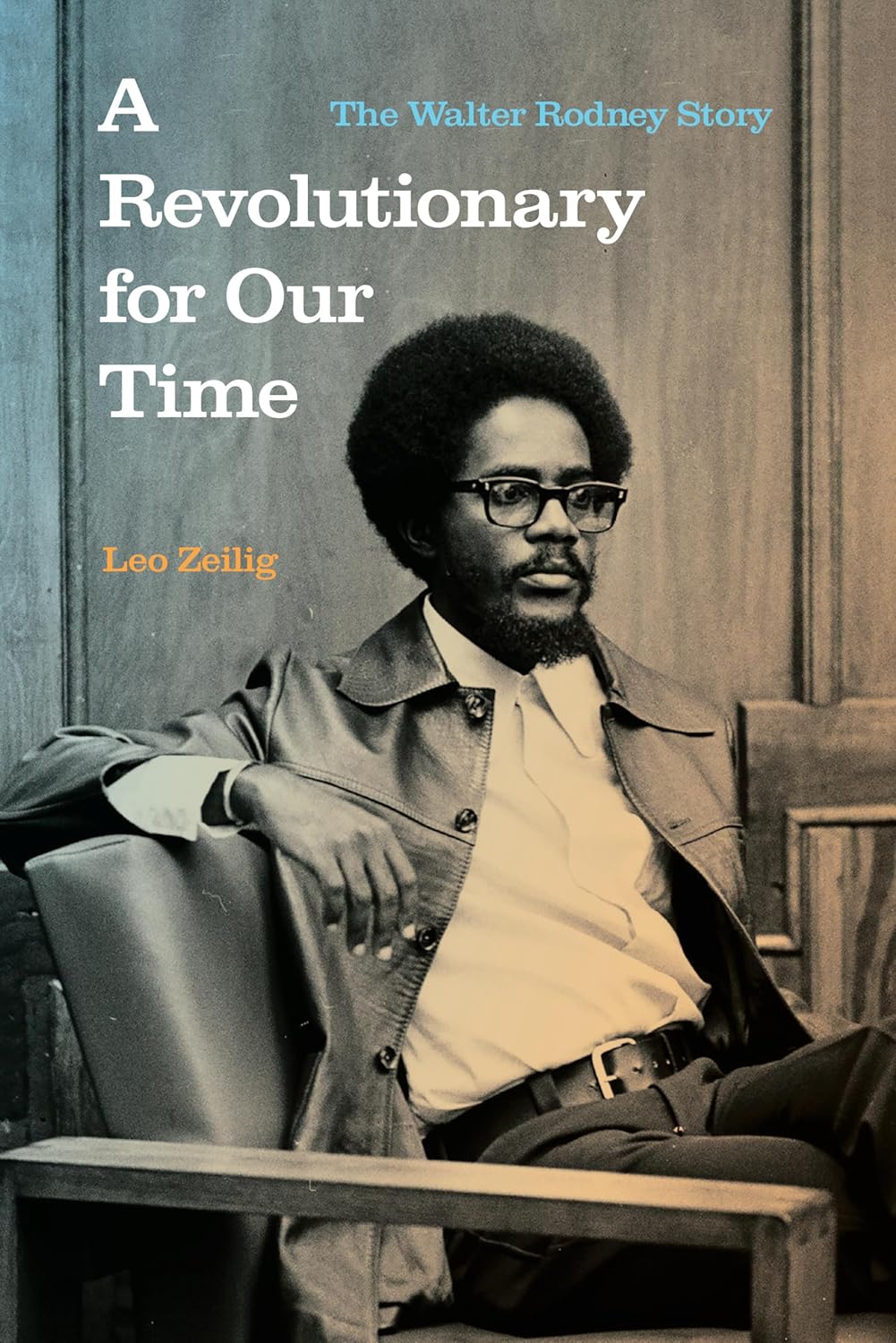
A Revolutionary for Our Time: The Walter Rodney Story by Leo Zeilig_eBook and Audiobook, with HAP 123-History Teaches Us- Walter Rodney

Book Summary

A Revolutionary for Our Time: The Walter Rodney Story by Leo Zeilig is a biography that delves into the life and legacy of Walter Rodney, a prominent Guyanese historian, political activist, and revolutionary. The book highlights Rodney’s contributions to Caribbean intellectual thought, his critiques of colonialism and imperialism, and his dedication to social justice and the empowerment of the oppressed. Through Rodney’s story, Zeilig explores broader themes of race, class, and resistance in the Caribbean, as well as the impact of Rodney’s work on contemporary movements for social change.

Key Themes and Historical Context:

  1. Introduction to Walter Rodney
    • Overview of Rodney’s significance in Caribbean history
    • Brief introduction to his early life and background
  2. Early Life and Education
    • Rodney’s upbringing in British Guiana
    • Educational experiences and early influences
    • Development of his political consciousness
  3. Academic Career and Historical Contributions
    • Rodney’s work as a historian and scholar
    • Key publications and their impact (e.g., “How Europe Underdeveloped Africa”)
    • Methodological approaches and critiques of traditional historiography
  4. Political Activism and Leader of the People’s Movement
    • Involvement in political movements in Guyana
    • Formation of the Working People’s Alliance (WPA)
    • Advocacy for the rights of marginalized communities
  5. Colonialism and Imperialism
    • Rodney’s critique of colonial structures
    • Analysis of the effects of colonialism on Caribbean societies
    • Advocacy for decolonization and self-determination
  6. Exile and International Influence
    • Rodney’s experiences of exile and its impact on his work
    • Connections with other revolutionary movements in the Caribbean and globally
    • Participation in international forums and discussions
  7. Legacy and Impact
    • Rodney’s influence on subsequent generations of activists and scholars
    • The continuing relevance of his ideas in contemporary struggles
    • Commemoration of Rodney’s life and work in cultural memory
  8. Conclusion
    • Reflection on Walter Rodney’s contributions as a revolutionary thinker
    • The importance of his legacy in the fight for social justice and equality

A Revolutionary for Our Time: The Walter Rodney Story_eBook

Walter Rodney was a scholar, working class militant, and revolutionary from Guyana. Strongly influenced by Marxist ideas, he remains central to radical Pan-Africanist thought for large numbers of activists’ today. Rodney lived through the failed –though immensely hopeful -socialist experiments in the 1960s and 1970s, in Tanzania and elsewhere. The book critically considers Rodney’s contribution to Marxist theory and history, his relationship to dependency theory and the contemporary significance of his work in the context of movements and politics today. The first full-length study of Rodney’s life, this book is an essential introduction to Rodney’s work.

Pop the document out from the upper right to read / expand / download.

A Revolutionary for Our Time: The Walter Rodney Story_Audiobook

Part 1

Part 2

HAP 123-History Teaches Us- Walter Rodney

Learn more in RBG Communiversity Knowledge Media eLibrary:

In the Spirit of Crazy Horse: The Story of Leonard Peltier and the FBI’s War on the American Indian Movement, by Peter Matthiessen| eBook and Audiobook, with FREE Leonard Peltier Video Player

In the Spirit of Crazy Horse is a chronicle of a fatal gun-battle between FBI agents and American Indian Movement activists by renowned writer Peter Matthiessen (1927-2014).

Book Summary

“In the Spirit of Crazy Horse: The Story of Leonard Peltier and the FBI’s War on the American Indian Movement” by Peter Matthiessen is a profound examination of the life of Leonard Peltier, a Native American activist and a key figure in the American Indian Movement (AIM). The book details the events surrounding the 1975 shootout at Wounded Knee, the subsequent FBI investigation, and the controversial trial of Peltier, who was convicted of murder in the deaths of two FBI agents. Matthiessen’s narrative provides insights into the systemic oppression faced by Native Americans, the FBI’s aggressive tactics against AIM, and the broader struggles for Indigenous rights in the United States.

Essential Themes and Historical Context:

  1. Introduction to Leonard Peltier
    • Overview of Peltier’s significance within the American Indian Movement
    • Introduction to the themes of oppression and resistance in Native American history
  2. Historical Context of the American Indian Movement
    • The formation of AIM and its goals
    • Key events leading to the rise of Native activism in the 1960s and 1970s
    • The impact of historical injustices on Indigenous communities
  3. The Wounded Knee Incident
    • Description of the 1973 occupation of Wounded Knee
    • Tensions between AIM activists and federal authorities
    • Major events and confrontations during the occupation
  4. The Shootout and Its Aftermath
    • Detailed account of the 1975 shootout that led to the deaths of FBI agents
    • The immediate aftermath and the FBI’s response to the incident
    • The portrayal of Peltier in the media and by the authorities
  5. The FBI’s Campaign Against AIM
    • Examination of the FBI’s surveillance and counterintelligence operations targeting AIM
    • Analysis of tactics used by the FBI to infiltrate and undermine the movement
    • The broader implications of the FBI’s actions on Native American activism
  6. Trial and Conviction of Leonard Peltier
    • Overview of Peltier’s arrest and the legal proceedings that followed
    • Discussion of the evidence presented during the trial and its controversies
    • Examination of claims regarding the fairness of the trial and the judicial system
  7. Public Support and Advocacy
    • Overview of the grassroots movements and public campaigns advocating for Peltier
    • The role of various organizations in raising awareness of his case
    • The significance of international attention and support for Indigenous rights
  8. Legacy and Ongoing Struggles
    • Reflection on Peltier’s impact on the fight for Indigenous rights and justice
    • Discussion of the continuing issues faced by Native Americans today
    • The importance of remembering and honoring the struggles of Indigenous peoples
  9. Conclusion
    • Summary of key themes and insights from Matthiessen’s narrative
    • Final reflections on the significance of Leonard Peltier’s story in the context of American history

In the Spirit of Crazy_eBook

“On a hot June morning in 1975, a desperate shoot-out between FBI agents and Native Americans near Wounded Knee, South Dakota, left an Indian and two federal agents dead. Four members of the American Indian Movement were indicted on murder charges, and one, Leonard Peltier, was convicted and is now serving consecutive life sentences in a federal penitentiary. Behind this violent chain of events lie issues of great complexity and profound historical resonance, brilliantly explicated by Peter Matthiessen in this controversial book. Kept off the shelves for eight years because of one of the most protracted and bitterly fought legal cases in publishing history, In the Spirit of Crazy Horse reveals the Lakota tribe’s long struggle with the U.S. government, and makes clear why the traditional Indian concept of the earth is so important at a time when increasing populations are destroying the precious resources of our world.”

Pop the document out from the upper right to read / expand / download.

In the Spirit of Crazy_Audiobook

Audio start corresponds to page 8 of the above Reader.

Part 1

Part 2

Part 3

FREE Leonard Peltier Video Player

12 Video Playlist

Learn more in RBG Communiversity Knowledge Media eLibrary:

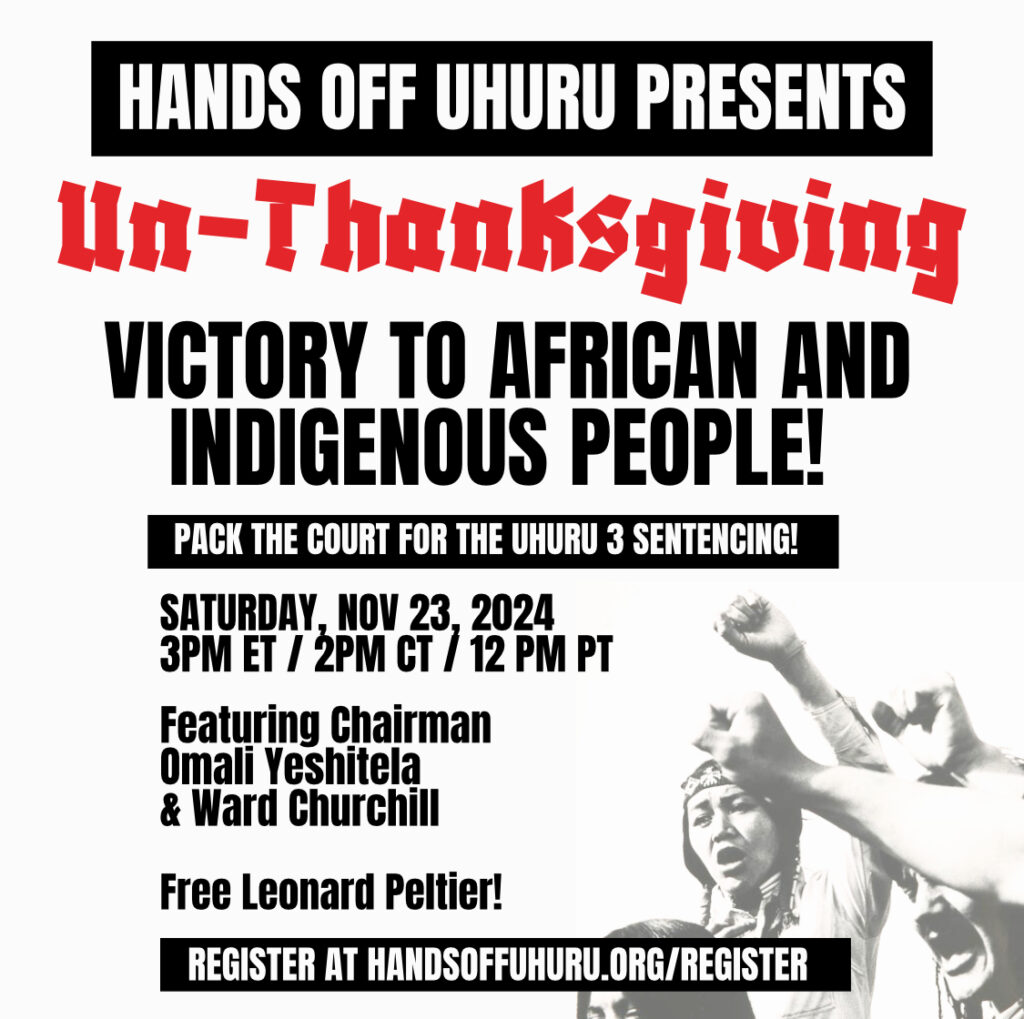
Hands Off Uhuru presents: “Unthanksgiving” Victory to African and Indigenous people!­_The Burning Spear TV, with Uhuru 3 Trial Re-enactment

Last Updated 12-06-24

https://handsoffuhuru.org/

Uhuru 3 Trial Re-enactment

3 Video Playlist (Episodes One thru Three.)

Companion Post/Lessons

Manifest Destiny and American Holocaust_Dr. Ward Churchill Lecture, History of COINTELPRO and COINTELPRO and Terrorism, The COINTELPRO Papers – Ward Churchill & Jim Vander Wall (eBook and Audiobook)

Learn more in RBG Communivesity Knowledge Media eLibrary:

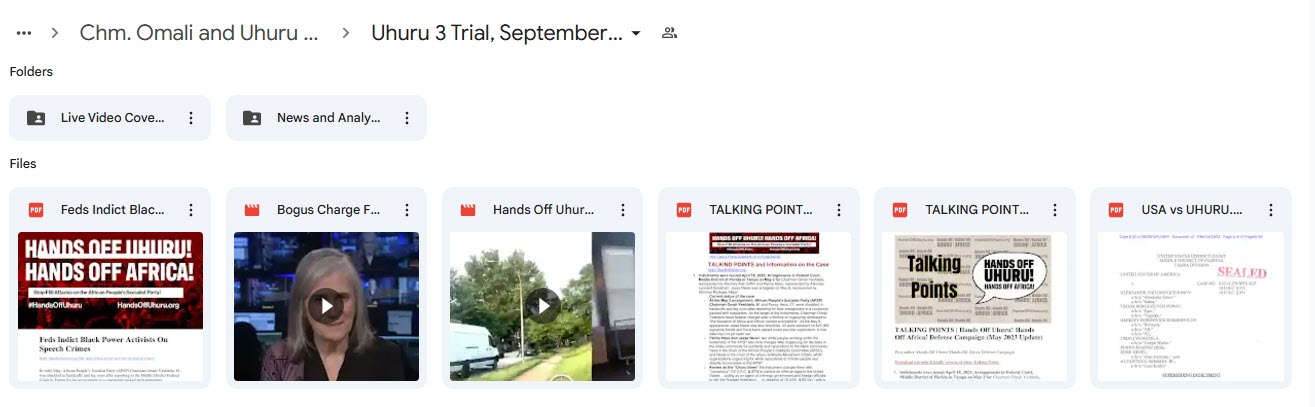
Uhuru 3 Trial, September 2024

Uhuru 3 Trial, September 2024 | INSIDE: Chm. Omali and Uhuru Movement Folder

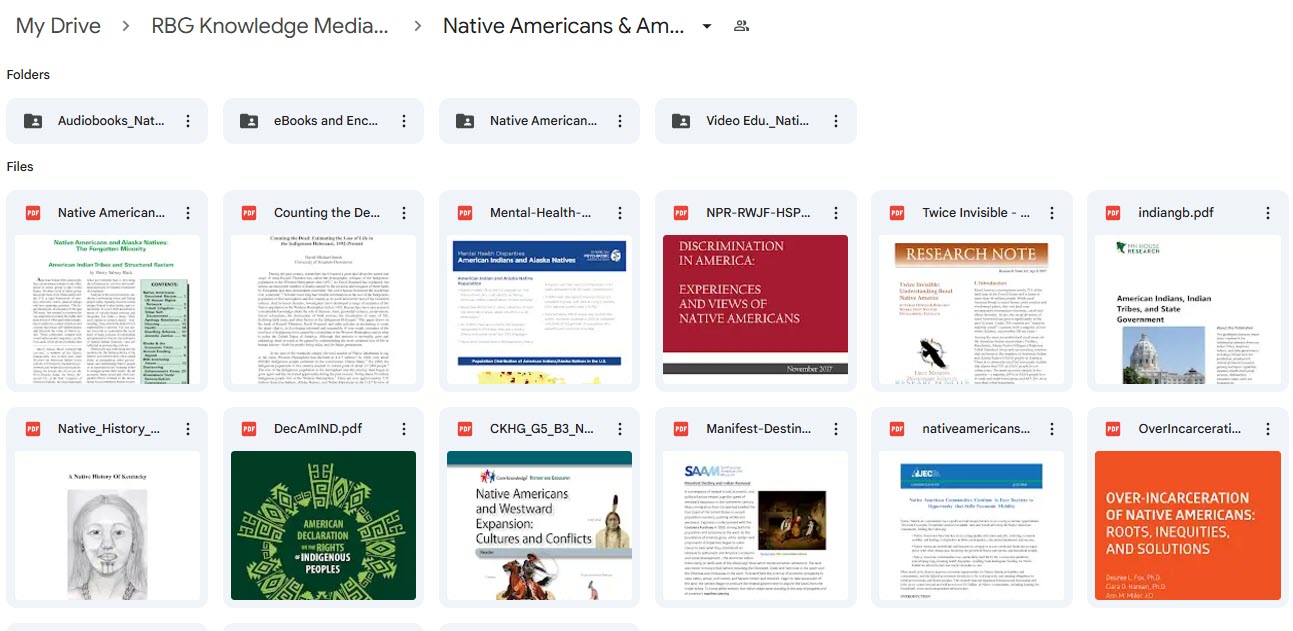
Native Americans & The American Indian Movement (AIM)

Native Americans & The American Indian Movement (AIM)  Folder

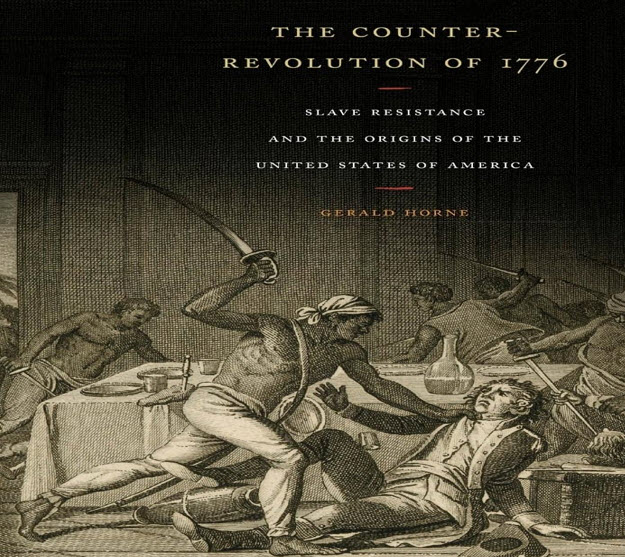
Dr. Gerald Horne: The Counter-Revolution of 1776: Slave Resistance and the Origins of the United States of America_eBook and Audiobook, with Trump 2.0: Gerald Horne on the Future of White Supremacy, Imperialism & the Rise of Third-Worldism (Jedaal English)

Dr. Gerald Horne is an American historian who currently holds the John J. and Rebecca Moores Chair of History and African American Studies at the University of Houston. 

Book Summary

Dr. Gerald Horne’s “The Counter-Revolution of 1776” presents a provocative reinterpretation of the American Revolution, arguing that it was not merely a struggle for independence from British rule but also a response to the increasing resistance of enslaved people. Horne posits that the revolution was fundamentally counter-revolutionary, aimed at preserving the institution of slavery and maintaining white supremacy. The book examines the social, political, and economic tensions that fueled both the revolution and the resistance of enslaved individuals, ultimately framing the American founding in a broader context of global struggles against colonialism and oppression.

The following outline captures the key themes and structure of Horne’s argument, highlighting the interconnections between slave resistance and the events leading to the formation of the United States.

Introduction

  • Explanation of the book’s thesis
  • Contextualization of the American Revolution within the framework of slavery

The Background of Slavery in Colonial America

  • Overview of the institution of slavery in the colonies
  • Economic importance of slavery to colonial economies
  • Social hierarchies and racial ideologies

Rising Tensions

  • Factors leading to increased resistance among enslaved people
  • The role of the British in promoting freedom for enslaved individuals
  • Key instances of slave resistance prior to the revolution

The Revolutionary Context

  • The impact of the American Revolution on colonial society
  • The ideological conflict between liberty and slavery
  • Examination of revolutionary leaders’ views on slavery

The Counter-Revolutionary Nature of the American Revolution

  • Analysis of how the revolution sought to protect slavery
  • The role of Southern colonies in shaping revolutionary goals
  • The influence of slave uprisings on revolutionary rhetoric

Global Implications

  • Connections between the American Revolution and global slave resistance
  • The impact of the revolution on other colonies and enslaved populations
  • The emergence of new ideologies and movements in response to slavery

The Legacy of the Counter-Revolution

  • Long-term effects of the American Revolution on slavery and race relations
  • The establishment of a national identity rooted in white supremacy
  • Reflections on the implications for understanding American history today

Conclusion

  • Summation of key arguments
  • The importance of recognizing the role of slavery in shaping American history
  • Call for re-examination of the narratives surrounding the founding of the United States

The Counter-Revolution of 1776_eBook

Illuminates how the preservation of slavery was a motivating factor for the Revolutionary War
The successful 1776 revolt against British rule in North America has been hailed almost universally as a great step forward for humanity. But the Africans then living in the colonies overwhelmingly sided with the British. In this trailblazing book, Gerald Horne shows that in the prelude to 1776, the abolition of slavery seemed all but inevitable in London, delighting Africans as much as it outraged slaveholders, and sparking the colonial revolt.
Prior to 1776, anti-slavery sentiments were deepening throughout Britain and in the Caribbean, rebellious Africans were in revolt. For European colonists in America, the major threat to their security was a foreign invasion combined with an insurrection of the enslaved. It was a real and threatening possibility that London would impose abolition throughout the colonies―a possibility the founding fathers feared would bring slave rebellions to their shores. To forestall it, they went to war.
The so-called Revolutionary War, Horne writes, was in part a counter-revolution, a conservative movement that the founding fathers fought in order to preserve their right to enslave others. The Counter-Revolution of 1776 brings us to a radical new understanding of the traditional heroic creation myth of the United States.

Pop the document out from the upper right to read / expand / download.

The Counter-Revolution of 1776_Audiobook

Trump 2.0: Gerald Horne on the Future of White Supremacy, Imperialism & the Rise of Third-Worldism (Jedaal English)

RBG Communiversity Dr. Gerald Horne Video Edu. Player (31)

Learn more in RBG Communiversity Knowledge Media eLibrary:

Black Power Afterlives| The Enduring Significance of the Black Panther Party_Audiobook and eBook, Edited by Diane Fujino and Matef Harmachis, with Haymarket Books Webinar: Black Power Afterlives: From The Black Panther Party to Black Lives Matter

Book Summary

Overview of “Black Power Afterlives: The Enduring Significance of the Black Panther Party”

“Black Power Afterlives” explores the legacy and continued relevance of the Black Panther Party (BPP) in contemporary society. Edited by Diane Fujino, the book gathers various essays and perspectives that examine the impact of the BPP on social movements, political thought, and cultural expressions. It addresses how the ideals of the Black Power movement resonate in current struggles for racial justice, equality, and community empowerment.

The outline that follows provides a cogent look at the themes and discussions presented in the book, highlighting the ongoing relevance of the Black Panther Party in today’s sociopolitical landscape.

Outline

  1. Introduction
    • Overview of the Black Panther Party’s foundational principles
    • Importance of examining the BPP’s legacy today
    • Purpose of the book and contributions of various authors
  2. Historical Context
    • Formation of the Black Panther Party in the 1960s
    • Key figures and events in the BPP’s history
    • The socio-political landscape of the era
  3. Core Ideologies of the Black Panthers
    • Ten-Point Program
    • Focus on self-defense and community empowerment
    • Intersectionality and the inclusion of diverse voices
  4. Cultural Impact
    • Representation in media and arts
    • Influence on music, literature, and visual arts
    • The role of propaganda and imagery in promoting BPP ideals
  5. Legacy and Influence on Modern Movements
    • Connections to contemporary civil rights movements (e.g., Black Lives Matter)
    • Examination of grassroots organizing and community programs inspired by the BPP
    • The relevance of BPP strategies in current social justice contexts
  6. Scholarly Perspectives
    • Contributions from various scholars and activists
    • Critical analyses of the BPP’s successes and challenges
    • The significance of oral histories and personal narratives
  7. Global Impact
    • Transnational solidarity and influence on international movements
    • The BPP’s role in global anti-colonial struggles
    • Comparisons with other revolutionary movements worldwide
  8. Conclusion
    • Reflections on the enduring significance of the BPP
    • Calls to action for future generations
    • The continuous evolution of Black Power ideologies

The first book to comprehensively examine how the Black Panther Party has directly shaped the practices and ideas that have animated grassroots activism in the decades since its decline, Black Power Afterlives represents a major scholarly achievement as well as an important resource for today’s activists. Through its focus on the enduring impact of the Black Panther Party, this volume expands the historiography of Black Power studies beyond the 1960s-70s and serves as a bridge between studies of the BPP during its organizational existence and studies of present-day Black activism, allowing today’s readers and organizers to situate themselves in a long lineage of liberation movements.

Black Power Afterlives_eBook

Pop the document out from the upper right to read / expand / download.

Black Power Afterlives_Audiobook

Part 1

Part 2

Haymarket Books Webinar: Black Power Afterlives: From The Black Panther Party to Black Lives Matter

https://www.youtube.com/@HaymarketBooks

Learn more in RBG Communiversity Knowledge Media eLibrary: