
Part of: Peacebuilding and Development (21 books)
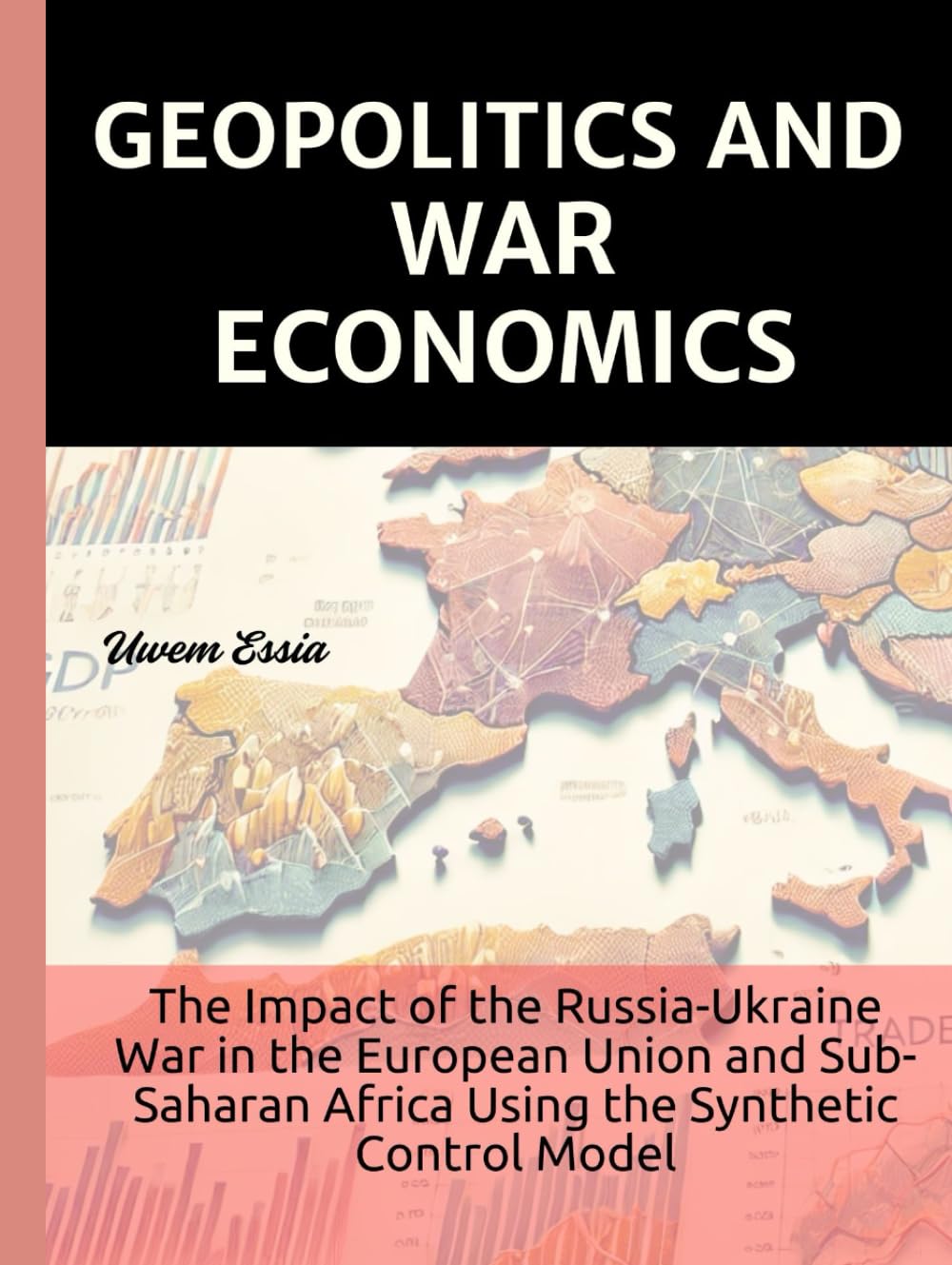
Book Summary
“GEOPOLITICS AND WAR ECONOMICS: The Impact of the Russia-Ukraine War in the European Union and Sub-Saharan Africa Using the “Synthetic Control Model” by Uwem Essia examines the far-reaching consequences of the Russia-Ukraine conflict on economic and geopolitical dynamics, particularly focusing on the European Union (EU) and Sub-Saharan Africa. Utilizing the Synthetic Control Model, the book provides a rigorous analysis of how the war has affected various economic indicators, trade relations, and geopolitical strategies in these regions. Essia delves into the interconnectedness of global economies and the implications of conflict on international relations, offering insights into how nations can navigate the complexities of a rapidly changing geopolitical landscape.
The outline that follows captures the essence of “GEOPOLITICS AND WAR ECONOMICS,” highlighting its focus on the economic and geopolitical impacts of the Russia-Ukraine conflict on the European Union and Sub-Saharan Africa. The book utilizes a rigorous methodological framework to provide valuable insights into the complexities of international relations and the challenges posed by geopolitical conflicts.
- Introduction
- Overview of the geopolitical context of the Russia-Ukraine war
- Explanation of the significance of studying its impact on the EU and Sub-Saharan Africa
- Introduction to the Synthetic Control Model as a methodological approach
- Geopolitical Background
- Historical context of Russia-Ukraine relations leading up to the conflict
- Overview of key players in the EU and Sub-Saharan Africa
- Analysis of the geopolitical implications of the war on global power dynamics
- Methodology
- Detailed explanation of the Synthetic Control Model
- Justification for using this model to analyze economic impacts
- Description of data sources and variables considered in the analysis
- Impact on the European Union
- Examination of economic repercussions within EU member states
- Changes in trade patterns and energy dependency
- Economic sanctions and their effects on EU economies
- Analysis of political responses and shifts in foreign policy
- Increased military expenditure and defense strategies
- Solidarity measures among EU countries in response to the war
- Impact on Sub-Saharan Africa
- Assessment of the economic impact of the war on Sub-Saharan African nations
- Disruptions in trade and supply chains, particularly in agriculture and energy
- Inflationary pressures and food security concerns
- Exploration of geopolitical ramifications for African nations
- Shifts in alliances and foreign relations with Russia and Western nations
- The role of African nations in global discussions about the conflict
- Comparative Analysis
- Comparison of the short-term and long-term effects of the war on the EU and Sub-Saharan Africa
- Identification of common challenges faced by both regions due to the conflict
- Insights into how different regions adapt to geopolitical shocks
- Policy Implications
- Recommendations for policymakers in the EU and Sub-Saharan Africa
- Strategies for enhancing economic resilience and diversification
- Approaches for strengthening regional cooperation and solidarity
- Considerations for future geopolitical stability and security
- Conclusion
- Summary of key findings and insights from the analysis
- Reflection on the broader implications of the Russia-Ukraine war for global geopolitics
- Final thoughts on the importance of understanding the interconnectedness of global economies
“GEOPOLITICS AND WAR ECONOMICS” by Uwem Essia provides a comprehensive analysis of how the ongoing conflict between Russia and Ukraine has reshaped economic and geopolitical landscapes, particularly in the European Union (EU) and Sub-Saharan Africa. The book leverages the Synthetic Control Model, a quantitative method that allows for a robust evaluation of causal effects, to assess the war’s impact on various economic indicators and political dynamics in these regions.
Key Themes Explored
- Geopolitical Context and Historical Background
- The book begins by situating the Russia-Ukraine conflict within a broader historical context, examining prior relations between Russia and Ukraine and the factors leading to the escalation of tensions.
- It explores how the war has redefined geopolitical alignments, with a focus on the shifting dynamics within the EU as member states respond to the crisis.
- Methodological Framework
- The Synthetic Control Model is central to Essia’s analysis, providing a framework for estimating what the economic outcomes would have been in the absence of the conflict. This method is particularly useful for assessing the impact of events that are not easily replicable or controlled for.
- The author details the specific data sources used, including economic indicators and trade statistics, and explains how these variables were selected to construct the synthetic control groups for both the EU and Sub-Saharan Africa.
- Economic Impact on the European Union
- Essia investigates the immediate and long-term economic repercussions of the war on EU member states, such as:
- Disruptions in trade flows, particularly concerning energy supplies, as many EU countries rely heavily on Russian gas and oil.
- The imposition of sanctions on Russia, which had significant ripple effects on EU economies, including inflation and supply chain issues.
- The analysis also covers shifts in the EU’s defense spending and military cooperation in response to perceived threats, as well as changes in foreign policy aimed at enhancing collective security.
- Economic Impact on Sub-Saharan Africa
- The book highlights the often-overlooked effects of the Russia-Ukraine conflict on Sub-Saharan African nations. Key points include:
- The disruption of agricultural exports, particularly grains like wheat, which has exacerbated food insecurity in a region already vulnerable to climate change and economic instability.
- Rising prices for essential goods, leading to inflationary pressures that affect the livelihoods of millions.
- Essia discusses how Sub-Saharan African countries are navigating the geopolitical landscape, often balancing their relationships with both Western nations and Russia.
- Comparative Analysis and Insights
- The comparative analysis section synthesizes the findings from the two regions, identifying similarities and differences in how they are affected by the war.
- Essia highlights common challenges, such as the need for economic diversification and resilience against external shocks, while also noting the distinct geopolitical strategies employed by the EU and Sub-Saharan Africa.
- Policy Recommendations
- The author provides actionable recommendations for policymakers in both regions, suggesting:
- Economic diversification strategies to reduce dependency on single sources of energy or commodities.
- Enhanced regional cooperation to build resilience against future geopolitical shocks.
- The importance of engaging in diplomatic efforts to mitigate the conflict and its repercussions on global stability.
Conclusion and Broader Implications
- Reflections on Global Interconnectedness
- In the conclusion, Essia reflects on the interconnected nature of today’s global economy and how localized conflicts can have far-reaching implications.
- He emphasizes that understanding the economic and geopolitical consequences of the Russia-Ukraine war is essential for anticipating future challenges and opportunities in international relations.
- Future Geopolitical Stability
- The book ends with a call for ongoing research and dialogue to address the complexities of global geopolitics, stressing the importance of adapting to changing dynamics in an increasingly multipolar world.
Overall, “GEOPOLITICS AND WAR ECONOMICS” offers a thorough and insightful examination of the ramifications of the Russia-Ukraine conflict, using a sophisticated methodological approach to shed light on the pressing economic and geopolitical issues facing the EU and Sub-Saharan Africa. By connecting the dots between conflict, economics, and international relations, Uwem Essia provides valuable perspectives that contribute to our understanding of contemporary global challenges.

“GEOPOLITICS AND WAR ECONOMICS: The Impact of the Russia-Ukraine War in the European Union and Sub-Saharan Africa Using the Synthetic Control Model” by Uwem Essia_eBook
Pop the document out from the upper right to read / expand / download






 RBG Communiversity: Message 2 Da Grassroots
You must be logged in to post a comment.