
Last Updated 12-06-24

Uhuru 3 Trial Re-enactment
Companion Post/Lessons

Learn more in RBG Communivesity Knowledge Media eLibrary:
Uhuru 3 Trial, September 2024
Native Americans & The American Indian Movement (AIM)
Last Updated 12-06-24
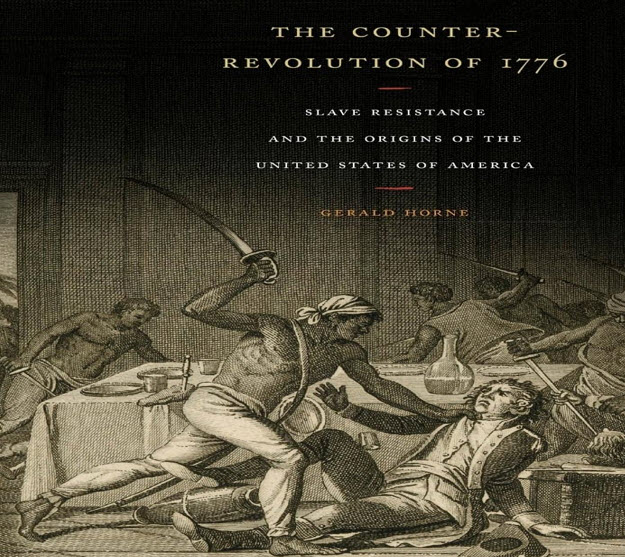
Dr. Gerald Horne’s “The Counter-Revolution of 1776” presents a provocative reinterpretation of the American Revolution, arguing that it was not merely a struggle for independence from British rule but also a response to the increasing resistance of enslaved people. Horne posits that the revolution was fundamentally counter-revolutionary, aimed at preserving the institution of slavery and maintaining white supremacy. The book examines the social, political, and economic tensions that fueled both the revolution and the resistance of enslaved individuals, ultimately framing the American founding in a broader context of global struggles against colonialism and oppression.
Introduction
■ The Background of Slavery in Colonial America
■ Rising Tensions
■ The Revolutionary Context
■ The Counter-Revolutionary Nature of the American Revolution
■ Global Implications
■ The Legacy of the Counter-Revolution
■ Conclusion
Illuminates how the preservation of slavery was a motivating factor for the Revolutionary War
The successful 1776 revolt against British rule in North America has been hailed almost universally as a great step forward for humanity. But the Africans then living in the colonies overwhelmingly sided with the British. In this trailblazing book, Gerald Horne shows that in the prelude to 1776, the abolition of slavery seemed all but inevitable in London, delighting Africans as much as it outraged slaveholders, and sparking the colonial revolt.
Prior to 1776, anti-slavery sentiments were deepening throughout Britain and in the Caribbean, rebellious Africans were in revolt. For European colonists in America, the major threat to their security was a foreign invasion combined with an insurrection of the enslaved. It was a real and threatening possibility that London would impose abolition throughout the colonies―a possibility the founding fathers feared would bring slave rebellions to their shores. To forestall it, they went to war.
The so-called Revolutionary War, Horne writes, was in part a counter-revolution, a conservative movement that the founding fathers fought in order to preserve their right to enslave others. The Counter-Revolution of 1776 brings us to a radical new understanding of the traditional heroic creation myth of the United States.
Pop the document out from the upper right to read / expand / download.
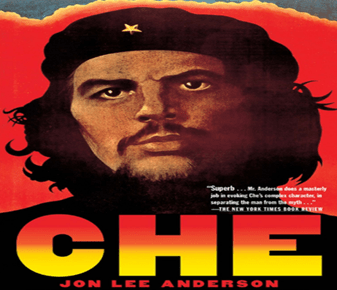

Acclaimed around the world and a national best-seller, this is the definitive work on Che Guevara, the dashing rebel whose epic dream was to end poverty and injustice in Latin America and the developing world through armed revolution.
Jon Lee Anderson’s biography traces Che’s extraordinary life, from his comfortable Argentine upbringing to the battlefields of the Cuban revolution, from the halls of power in Castro’s government to his failed campaign in the Congo and assassination in the Bolivian jungle.
Anderson has had unprecedented access to the personal archives maintained by Guevara’s widow and carefully guarded Cuban government documents. He has conducted extensive interviews with Che’s comrades some of whom speak here for the first time and with the CIA men and Bolivian officers who hunted him down. Anderson broke the story of where Guevara’s body was buried, which led to the exhumation and state burial of the bones. Many of the details of Che’s life have long been cloaked in secrecy and intrigue. Meticulously researched and full of exclusive information, Che Guevara illuminates as never before this mythic figure who embodied the high-water mark of revolutionary communism as a force in history.
Pop the document out from the upper right to read / expand / download.
Cotent in ernest starts at 10:00 mins.

“Malcolm X As Cultural Hero and Other Afrocentric Essays” by Molefi Kete Asante is a collection of essays that examine the significance of Malcolm X as a cultural icon and his impact on African American identity and consciousness. Asante, a prominent scholar in Afrocentric studies, explores themes of cultural pride, resistance, and the importance of historical context in understanding the contributions of Malcolm X and other African figures. The essays advocate for a re-framing of African American history through an Afrocentric lens, emphasizing the need for empowerment and self-determination within the Black community.
Pop the document out from the upper right to read / expand / download.

Overview of “Black Power Afterlives: The Enduring Significance of the Black Panther Party”
“Black Power Afterlives” explores the legacy and continued relevance of the Black Panther Party (BPP) in contemporary society. Edited by Diane Fujino, the book gathers various essays and perspectives that examine the impact of the BPP on social movements, political thought, and cultural expressions. It addresses how the ideals of the Black Power movement resonate in current struggles for racial justice, equality, and community empowerment.
The outline that follows provides a cogent look at the themes and discussions presented in the book, highlighting the ongoing relevance of the Black Panther Party in today’s sociopolitical landscape.
Outline
The first book to comprehensively examine how the Black Panther Party has directly shaped the practices and ideas that have animated grassroots activism in the decades since its decline, Black Power Afterlives represents a major scholarly achievement as well as an important resource for today’s activists. Through its focus on the enduring impact of the Black Panther Party, this volume expands the historiography of Black Power studies beyond the 1960s-70s and serves as a bridge between studies of the BPP during its organizational existence and studies of present-day Black activism, allowing today’s readers and organizers to situate themselves in a long lineage of liberation movements.
Pop the document out from the upper right to read / expand / download.
 RBG Communiversity: Message 2 Da Grassroots
You must be logged in to post a comment.