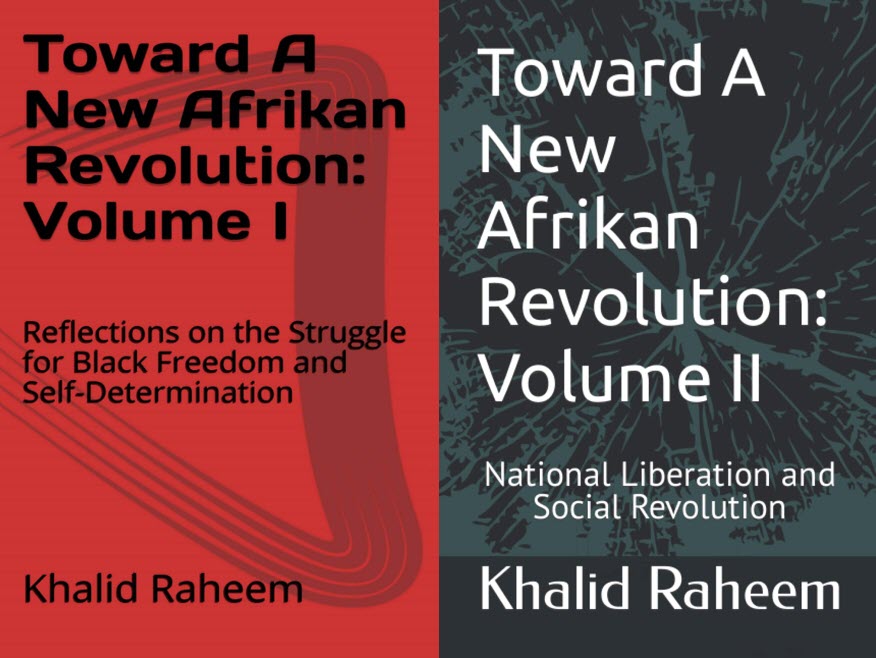
Toward A New Afrikan Revolution: Volume I: Reflections on the Struggle for Freedom and Self-Determination and Volume II: National Liberation and Social Revolution_eBooks and Audiobooks

New Afrikan Independence Party (www.newafrikan.org)

Toward A New Afrikan Revolution: Volume I: Reflections on the Struggle for Black Freedom and Self-Determination by Khalid Raheem 

“Toward A New Afrikan Revolution: Volume I” by Khalid Raheem lays the groundwork for understanding the dynamics of national liberation and social revolution within the Afrikan context. The book examines the historical and socio-political landscapes that have shaped the struggles of Afrikan peoples against colonialism and oppression. Raheem emphasizes the importance of self-determination, cultural identity, and collective action in pursuing a revolutionary agenda that seeks to dismantle systemic inequalities and build a just society.

Here’s an overview and an outline of “Toward A New Afrikan Revolution: Volume I:

Introduction

  • Purpose and significance of the book
  • Definition of key concepts: national liberation, social revolution
  • Contextualizing Afrikan struggles in the modern world

Chapter 1: The Legacy of Colonialism

  • Historical overview of colonialism in Afrika
  • Effects of colonial rule on Afrikan societies
  • Resistance movements against colonial oppression

Chapter 2: The Nature of National Liberation

  • Definition and importance of national liberation
  • Key principles guiding national liberation movements
  • Case studies of notable liberation struggles

Chapter 3: Social Revolution as a Complement

  • Understanding social revolution in the Afrikan context
  • Relationship between national liberation and social change
  • Addressing social injustices: class, race, and gender

Chapter 4: Afrikan Identity and Cultural Reclamation

  • Importance of cultural identity in the liberation struggle
  • Strategies for reclaiming Afrikan history and heritage
  • Role of language, art, and tradition in fostering unity

Chapter 5: Revolutionary Ideologies

  • Overview of different revolutionary ideologies
  • Analysis of socialism, pan-Africanism, and other movements
  • The need for a tailored ideological approach for Afrikan contexts

Chapter 6: The Role of Leadership in Revolution

  • Characteristics of effective revolutionary leaders
  • Historical examples of leadership in Afrikan movements
  • Importance of grassroots participation and collective leadership

Chapter 7: Strategies for Mobilization

  • Grassroots organizing and community engagement
  • Building networks and coalitions among Afrikan groups
  • The significance of education and awareness-raising

Chapter 8: Global Context of Afrikan Struggles

  • The impact of globalization on Afrikan liberation efforts
  • Solidarity with other movements worldwide
  • The role of international organizations and alliances

Conclusion: Call to action for continued engagement in the revolutionary struggle; Recap of main themes and arguments ; Vision for a liberated and just Afrikan society

Toward A New Afrikan Revolution: Volume I_eBook

Pop the documents out from the upper right to read / expand / download.

Toward A New Afrikan Revolution: Volume I_Audiobook

Toward A New Afrikan Revolution: Volume II: National Liberation and Social Revolution by Khalid Raheem 

In “Toward A New Afrikan Revolution: Volume II,” Khalid Raheem explores the intersections of national liberation and social revolution within the context of Afrikan struggles. The book articulates a vision for a united and liberated Afrikan identity, emphasizing the importance of both political and social transformations. Raheem critiques colonialism and imperialism, advocating for a revolutionary movement that addresses systemic inequalities and promotes cultural pride and self-determination among Afrikans globally.

Here’s an overview and an outline of “Toward A New Afrikan Revolution: Volume II: National Liberation and Social Revolution”

Introduction

  • Purpose of the book
  • Definition of key concepts: national liberation, social revolution
  • Importance of Afrikan identity in the struggle

Chapter 1: Historical Context

  • Overview of colonialism in Afrika
  • Impact of imperialism on Afrikan societies
  • Historical movements for liberation

Chapter 2: Theoretical Framework

  • Discussion of revolutionary theory
  • Analysis of social change and its necessity
  • Role of ideology in the liberation struggle

Chapter 3: National Liberation

  • Definition and significance of national liberation
  • Case studies of successful national liberation movements
  • Challenges faced during liberation efforts

Chapter 4: Social Revolution

  • Understanding social revolution in the Afrikan context
  • Interplay between social and national struggles
  • Key social issues: poverty, education, health

Chapter 5: Cultural Renaissance

  • Importance of cultural identity in the revolution
  • Promotion of Afrikan history and heritage
  • Role of arts and literature in social change

Chapter 6: Strategies for Change

  • Grassroots organizing and community mobilization
  • Building coalitions among diverse Afrikan groups
  • Nonviolent resistance vs. armed struggle

Chapter 7: The Role of Leadership

  • Characteristics of effective revolutionary leadership
  • Historical leaders in the Afrikan revolution
  • The importance of mentorship and youth involvement

Chapter 8: Global Solidarity

  • The role of the international community in Afrikan liberation
  • Building alliances with other oppressed peoples
  • The impact of globalization on Afrikan struggles

Conclusion: Call to action for continued activism and engagement; Summary of key arguments, Vision for a future Afrikan society

Toward A New Afrikan Revolution: Volume II_eBook

Pop the documents out from the upper right to read / expand / download.

Toward A New Afrikan Revolution: Volume II_Audiobook

Learn more in RBG Communiversity Knowledge Media eLibrary:

Jailhouse Lawyers: Prisoners Defending Prisoners v. the USA by Mumia Abu-Jamal, Introduction Angela Y. Davis_eBook and Audiobook

Book Summary

“Jailhouse Lawyers: Prisoners Defending Prisoners v. the USA” is a powerful examination of the U.S. prison system through the lens of those incarcerated. Written by Mumia Abu-Jamal, a prominent journalist and activist on death row, this book sheds light on the struggles and experiences of prisoners who take on the challenge of defending themselves and their peers within a flawed legal system. The introduction by Angela Y. Davis adds depth, contextualizing the importance of prison activism and the fight against systemic injustice.

The outline that follows provides a structured view of the book’s content and themes, highlighting the critical issues surrounding the prison system and the efforts of those within it to seek justice.

  • Introduction by Angela Y. Davis
    • Overview of the prison industrial complex
    • Historical context of prison activism
    • Importance of prisoner representation in the legal system
  • Chapter 1: The Role of Jailhouse Lawyers
    • Definition and function of jailhouse lawyers
    • Historical examples of successful jailhouse lawyers
    • The impact of jailhouse lawyers on prison reform
  • Chapter 2: The Prison System and Legal Barriers
    • Description of the barriers faced by prisoners in accessing legal resources
    • Overview of the legal system’s shortcomings regarding prisoner rights
    • The role of censorship and isolation in hindering legal defense
  • Chapter 3: Case Studies of Prisoner Defenses
    • Detailed accounts of notable cases handled by jailhouse lawyers
    • Analysis of the outcomes and their implications for justice
    • Reflection on the strategies employed by these lawyers
  • Chapter 4: The Intersection of Race and Incarceration
    • Examination of racial disparities within the prison system
    • Impact of systemic racism on legal representation for prisoners
    • Stories of racial injustice and resistance
  • Chapter 5: The Future of Prisoner Advocacy
    • Discussion on the evolving role of jailhouse lawyers in modern justice
    • Potential reforms and changes needed in the legal system
    • The importance of solidarity among prisoners and advocates
  • Conclusion: A Call to Action
    • Reflection on the necessity of continued advocacy for prisoners’ rights

Here’s a deeper dive into the key themes and concepts presented in “Jailhouse Lawyers”

Key Themes

  1. Prisoner Advocacy:
    • The book emphasizes the empowerment of prisoners to advocate for themselves and their peers. Jailhouse lawyers often develop a deep understanding of legal principles, despite the limitations of their environments. They become vital resources for other inmates who may lack formal legal representation.
  2. Systemic Injustice:
    • Abu-Jamal critiques the U.S. legal system, highlighting how it disproportionately affects marginalized populations, particularly people of color. He argues that the system is designed to perpetuate inequality and that many prisoners face insurmountable barriers when trying to navigate it.
  3. Resistance and Solidarity:
    • The narrative illustrates the importance of solidarity among prisoners. It showcases how collective efforts can challenge injustices and how shared experiences often lead to organized actions for reform. The book serves as a testament to the resilience of those incarcerated who refuse to be silenced.
  4. Historical Context:
    • The introduction by Angela Y. Davis situates the discussion within a broader historical framework, linking contemporary issues in the prison system to past movements for civil rights and social justice. Davis provides insights into how historical struggles inform current advocacy efforts.
  5. Legal Education:
    • The book highlights the informal education that takes place within prison walls, where inmates learn about the law and legal strategies. This self-education is often a response to the inadequacies of the legal system and the lack of access to professional legal assistance.

Important Concepts

  • Jailhouse Lawyer:
    • A term used to describe inmates who have taken it upon themselves to learn about the law and assist others in their legal battles. These individuals often possess significant knowledge and can navigate the complexities of the legal system despite their confinement.
  • Access to Justice:
    • The book underscores the challenges faced by prisoners in accessing legal resources, such as libraries, legal texts, and supportive networks. It critiques the systemic barriers that prevent a fair trial and adequate representation.
  • Racial Disparities:
    • Abu-Jamal explores how race and ethnicity intersect with the prison system, revealing how systemic racism is embedded within legal practices. He discusses the disproportionate incarceration rates of Black and Latino individuals and the implications of this on their communities.
  • Activism and Reform:
    • The narrative calls for ongoing activism to reform the justice system, advocating for policies that prioritize rehabilitation over punishment. It encourages readers to engage in grassroots movements and support organizations working toward prison reform.

Jailhouse Lawyers: Prisoners Defending Prisoners v. the USA_eBook

Overall, “Jailhouse Lawyers” is not only a critique of the prison system but also a celebration of the resilience and ingenuity of those who fight for justice from behind bars. It serves as a reminder of the importance of advocacy, education, and solidarity in the face of systemic oppression.

Pop the documents out from the upper right to read / expand / download.

Jailhouse Lawyers: Prisoners Defending Prisoners v. the USA_Audiobook

Learn more in RBG Communiversity Knowledge Media eLibrary: