
Dr. Gerald Horne is an American historian who currently holds the John J. and Rebecca Moores Chair of History and African American Studies at the University of Houston.
Book Summary
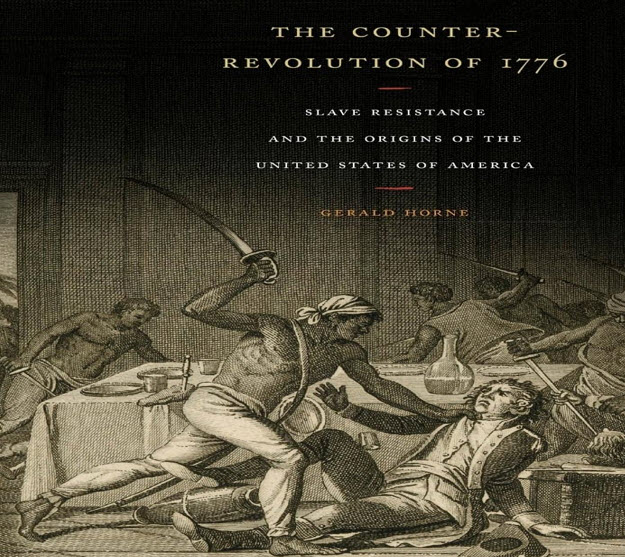
Dr. Gerald Horne’s “The Counter-Revolution of 1776” presents a provocative reinterpretation of the American Revolution, arguing that it was not merely a struggle for independence from British rule but also a response to the increasing resistance of enslaved people. Horne posits that the revolution was fundamentally counter-revolutionary, aimed at preserving the institution of slavery and maintaining white supremacy. The book examines the social, political, and economic tensions that fueled both the revolution and the resistance of enslaved individuals, ultimately framing the American founding in a broader context of global struggles against colonialism and oppression.
The following outline captures the key themes and structure of Horne’s argument, highlighting the interconnections between slave resistance and the events leading to the formation of the United States.
Introduction
- Explanation of the book’s thesis
- Contextualization of the American Revolution within the framework of slavery
■ The Background of Slavery in Colonial America
- Overview of the institution of slavery in the colonies
- Economic importance of slavery to colonial economies
- Social hierarchies and racial ideologies
■ Rising Tensions
- Factors leading to increased resistance among enslaved people
- The role of the British in promoting freedom for enslaved individuals
- Key instances of slave resistance prior to the revolution
■ The Revolutionary Context
- The impact of the American Revolution on colonial society
- The ideological conflict between liberty and slavery
- Examination of revolutionary leaders’ views on slavery
■ The Counter-Revolutionary Nature of the American Revolution
- Analysis of how the revolution sought to protect slavery
- The role of Southern colonies in shaping revolutionary goals
- The influence of slave uprisings on revolutionary rhetoric
■ Global Implications
- Connections between the American Revolution and global slave resistance
- The impact of the revolution on other colonies and enslaved populations
- The emergence of new ideologies and movements in response to slavery
■ The Legacy of the Counter-Revolution
- Long-term effects of the American Revolution on slavery and race relations
- The establishment of a national identity rooted in white supremacy
- Reflections on the implications for understanding American history today
■ Conclusion
- Summation of key arguments
- The importance of recognizing the role of slavery in shaping American history
- Call for re-examination of the narratives surrounding the founding of the United States
The Counter-Revolution of 1776_eBook
Illuminates how the preservation of slavery was a motivating factor for the Revolutionary War
The successful 1776 revolt against British rule in North America has been hailed almost universally as a great step forward for humanity. But the Africans then living in the colonies overwhelmingly sided with the British. In this trailblazing book, Gerald Horne shows that in the prelude to 1776, the abolition of slavery seemed all but inevitable in London, delighting Africans as much as it outraged slaveholders, and sparking the colonial revolt.
Prior to 1776, anti-slavery sentiments were deepening throughout Britain and in the Caribbean, rebellious Africans were in revolt. For European colonists in America, the major threat to their security was a foreign invasion combined with an insurrection of the enslaved. It was a real and threatening possibility that London would impose abolition throughout the colonies―a possibility the founding fathers feared would bring slave rebellions to their shores. To forestall it, they went to war.
The so-called Revolutionary War, Horne writes, was in part a counter-revolution, a conservative movement that the founding fathers fought in order to preserve their right to enslave others. The Counter-Revolution of 1776 brings us to a radical new understanding of the traditional heroic creation myth of the United States.
Pop the document out from the upper right to read / expand / download.
The Counter-Revolution of 1776_Audiobook
Trump 2.0: Gerald Horne on the Future of White Supremacy, Imperialism & the Rise of Third-Worldism (Jedaal English)
Learn more in RBG Communiversity Knowledge Media eLibrary:
- Dr. Gerald Horne History Education Collection Folder
- BPM | BLM Audiobooks Folder
- BPM | BLM eBooks Folder
 RBG Communiversity: Message 2 Da Grassroots
You must be logged in to post a comment.