
Book Summary
- Introduction to Settler Colonialism
- Definition and explanation of settler colonialism
- Overview of the book’s objectives and key arguments
- Historical Context
- The arrival of European settlers and the establishment of colonies
- Early interactions with Indigenous populations
- The impact of colonization on native peoples and cultures
- The Myth of the White Proletariat
- Examination of the concept of the white working class
- Critique of the portrayal of white settlers as victims of capitalism
- Discussion of the privileges afforded to white settlers
- Class and Race Dynamics
- Analysis of the relationships between race and class throughout American history
- The role of white supremacy in shaping labor relations and social hierarchies
- Impact of immigration and labor movements on racial dynamics
- The Role of Settlers in Capitalism
- The contributions of settlers to the development of capitalism in America
- Exploration of how settler colonialism facilitated economic exploitation
- The relationship between land ownership and class status
- Resistance and Solidarity
- The role of marginalized groups in resisting settler colonialism
- Examples of solidarity between Indigenous peoples and other oppressed groups
- The importance of intersectional analysis in understanding social movements
- Contemporary Implications
- The lasting effects of settler colonialism on modern society
- Discussion of ongoing struggles against systemic racism and oppression
- The need for a re-evaluation of historical narratives and identities
- Conclusion
- Summary of key themes and arguments presented in the book
- Call to action for readers to critically engage with the history of settler colonialism
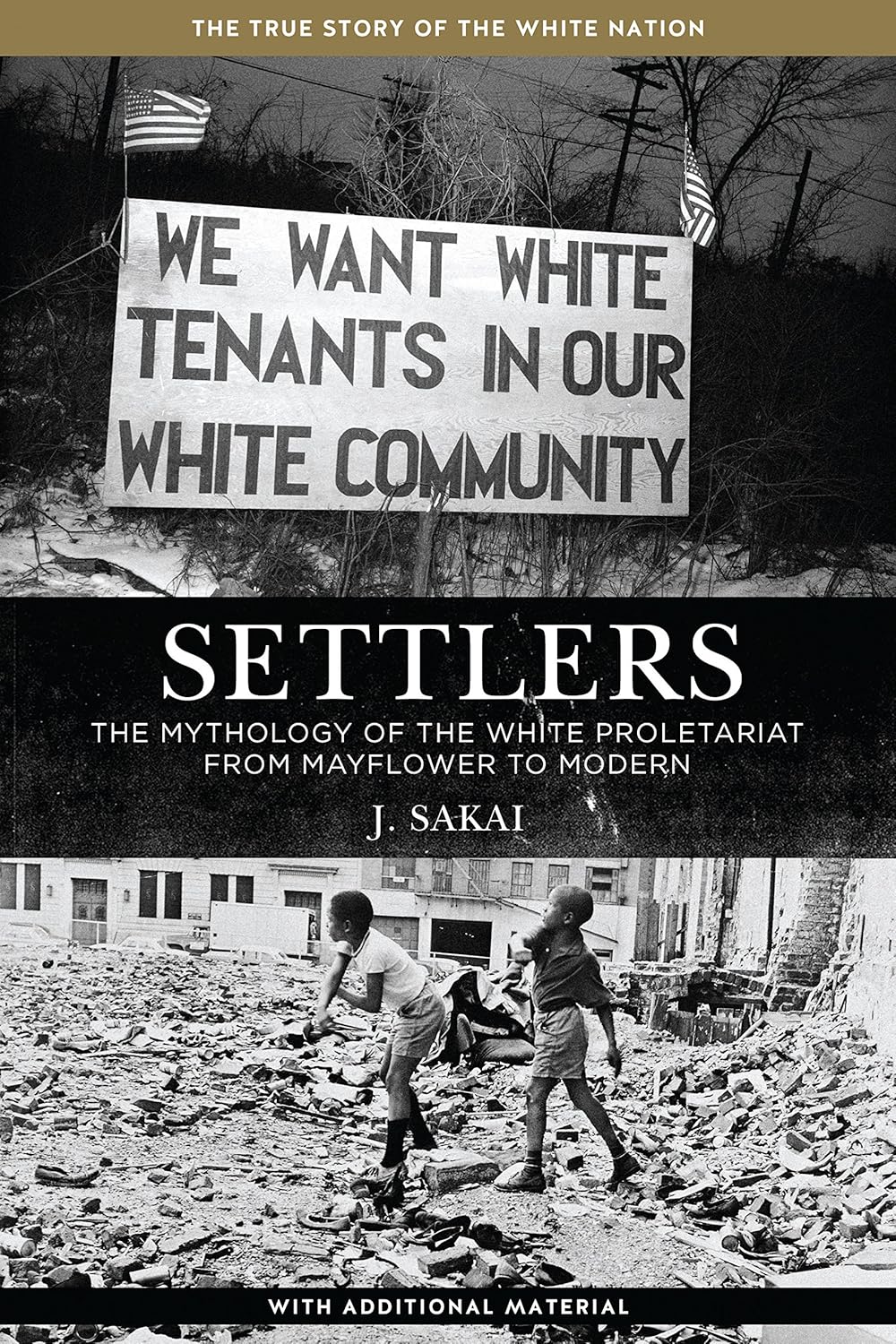
Settlers: The Mythology of the White Proletariat from Mayflower to Modern by J. Sakai_eBook
A uniquely important book in the canon of the North American revolutionary left and anticolonial movements, Settlers was first published in the 1980s. Written by activists with decades of experience organizing in grassroots anticapitalist struggles against white supremacy, the book established itself as an essential reference point for revolutionary nationalists and dissident currents within the Marxist-Leninist and anarchist movements. Always controversial within the establishment left, Settlers uncovers centuries of collaboration between capitalism and white workers and their organizations, as well as their neocolonial allies, showing how the United States was designed from the ground up as a parasitic and genocidal entity. As recounted in painful detail by J. Sakai, the United States has been built on the theft of Indigenous lands and of Afrikan labor, on the robbery of the northern third of Mexico, the colonization of Puerto Rico, and the expropriation of the Asian working class, with each of these crimes being accompanied by violence. This new edition includes a new essay and an interview with author J. Sakai by Ernesto Aguilar.
Pop the document out from the upper right to read / expand / download.
 RBG Communiversity: Message 2 Da Grassroots
LikeLike
LikeLike
LikeLike
LikeLike
LikeLike
LikeLike