
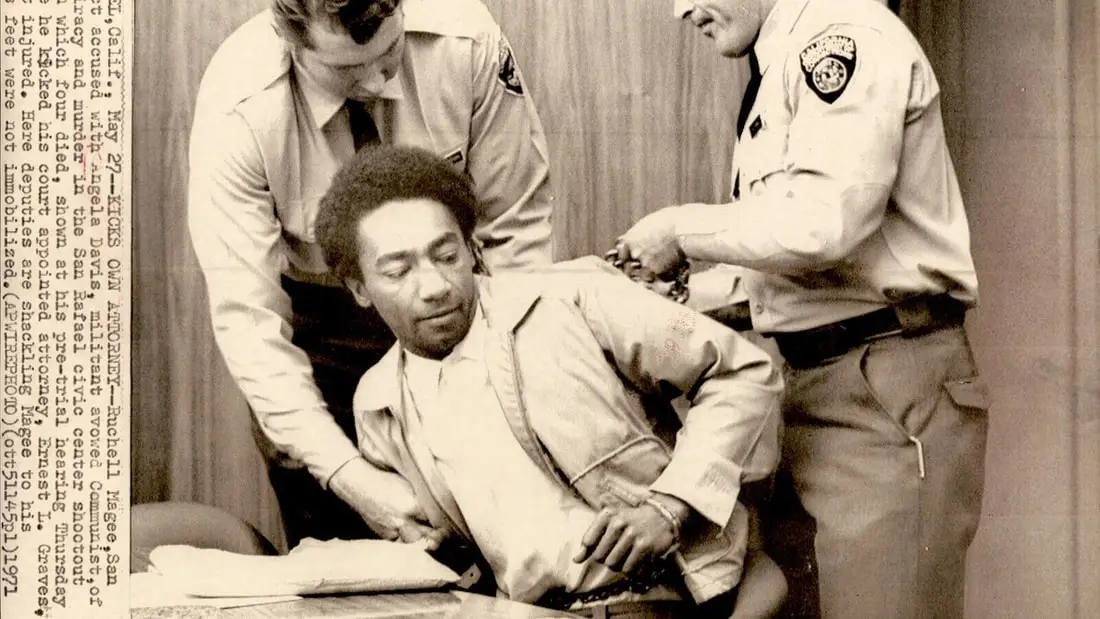
…Slavery is being practiced by the system under the color of law…. Slavery 400 years ago, slavery today; it’s the same thing, but with a new name. They’re making millions and millions of dollars enslaving blacks, poor whites, and others–people who don’t even know they’re being railroaded.–Political Prisoner Ruchell Magee
To the Man-Child, Tall, evil, graceful, bright eyed, black man-child- Jonathan Peter Jackson-who died on August 7, 1970, courage in one hand, assault rifle in the other; my brother, comrade, friend- the true revolutionary, the black communist guerrilla in the highest state of development, he died on the trigger, scourge of the unrighteous, soldier of the people; to this terrible man-child and his wonderful mother Georgia Bea, to Angela Y. Davis, my tender experience, I dedicate this collection of letters; to the destruction of their enemies I dedicate my life. George L. Jackson


August 7, 1970, just a few days after George Jackson was transferred to San Quentin, the case was catapulted to the forefront of national news when his brother, Jonathan, a seventeen-year-old high school student in Pasadena, staged a raid on the Marin County courthouse with a satchelful of handguns, an assault rifle, and a shotgun hidden under his coat. Educated into a political revolutionary by George, Jonathan invaded the court during a hearing for three black San Quentin inmates, not including his brother, and handed them weapons. As he left with the inmates and five hostages, including the judge, Jonathan demanded that the Soledad Brothers be released within thirty minutes. In the shootout that ensued, Jonathan was gunned down. Of Jonathan, George wrote, “He was free for a while. I guess that’s more than most of us can expect.”

Azadeh Zohrabi, Resistance and Repression: The Black Guerrilla Family in Context, 9 Hastings Race & Poverty L.J. 167 (2012).
Available at: https://repository.uchastings.edu/hastings_race_poverty_law_journal/vol9/iss1/7
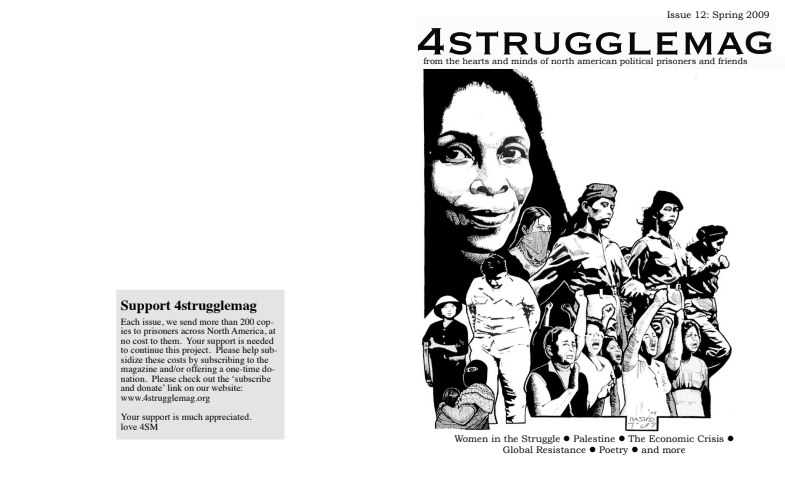

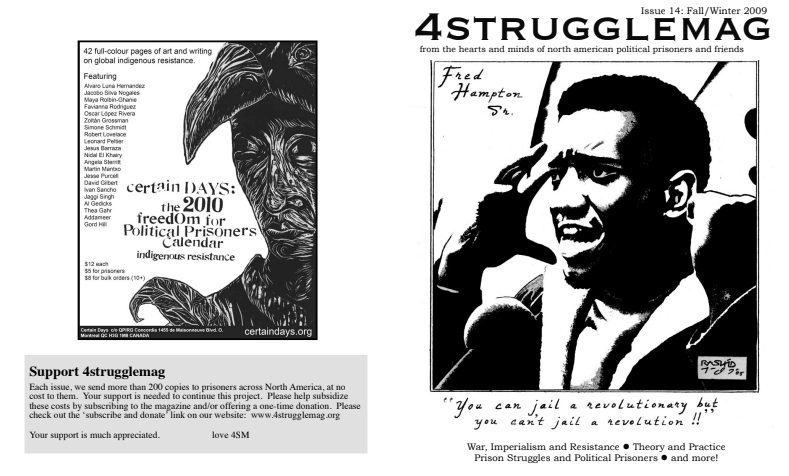

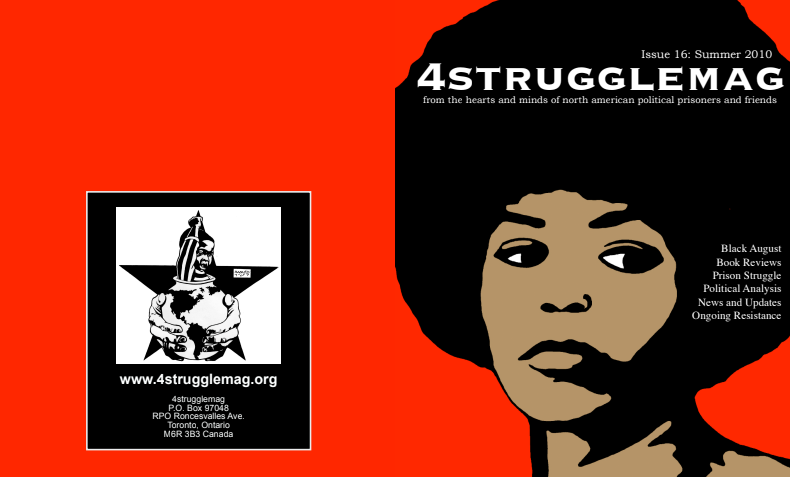
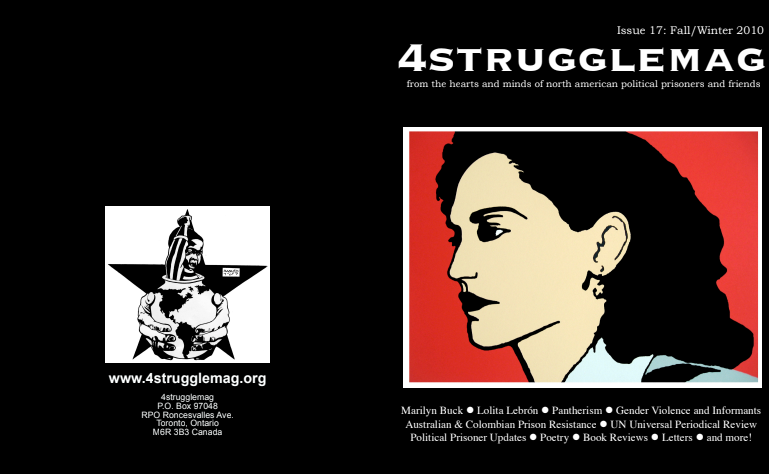
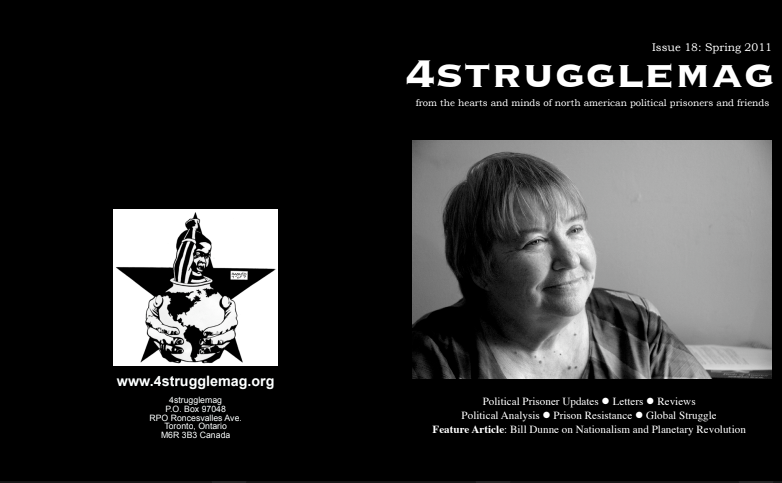
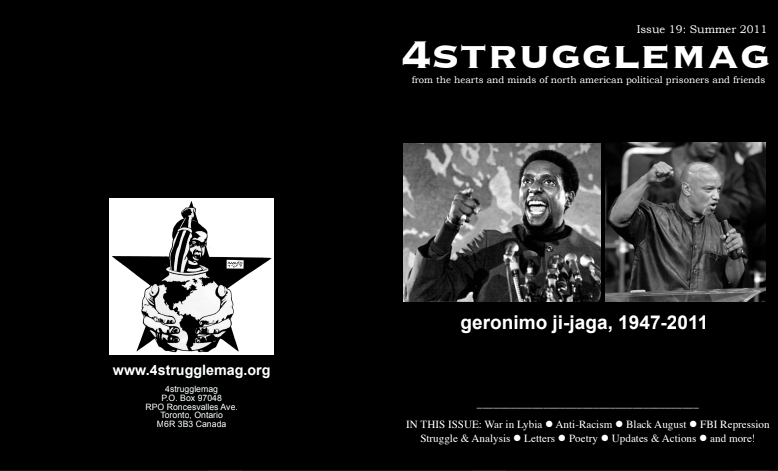
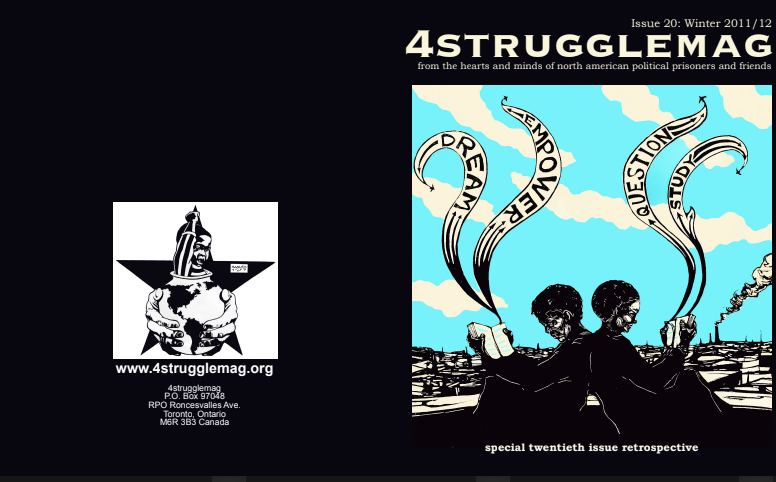


Graphics of slideshow: https://4strugglemag.org/
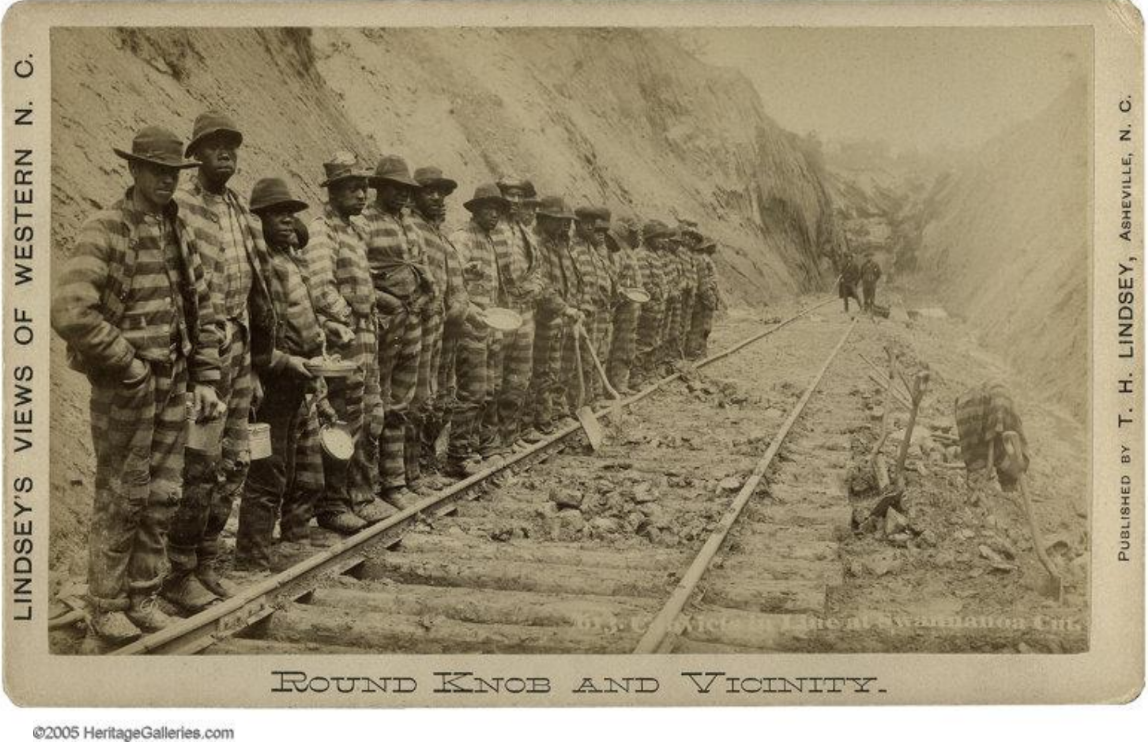
Despite a chilling official silence, 1995 was a bombshell in the “war on crime.” In this one year alone, 150 new prisons were built in the United States and 171 existing prisons were expanded. This was the year the crime bill was passed, mandating that 100,000 additional police officers be added to the already enormous law enforcement establishment. In California, this was the first year that the state budget allocated more money for prisons than higher education. Most astonishingly, with one short day of media attention, 1995 was the year that Alabama’s governor Fob James, and other state officials, made the callous and horrifying decision to reinstate the nationally abolished chain gang.
For new comers, pop the document out from the upper right to read / expand / download
RBG Communiversity eLibrary| 4STRUGGLEMAG_Issues 11-21 _Read/Study/Download






 RBG Communiversity: Message 2 Da Grassroots
You must be logged in to post a comment.