Pop the document out from the upper right to read / expand / download.
Book Summary
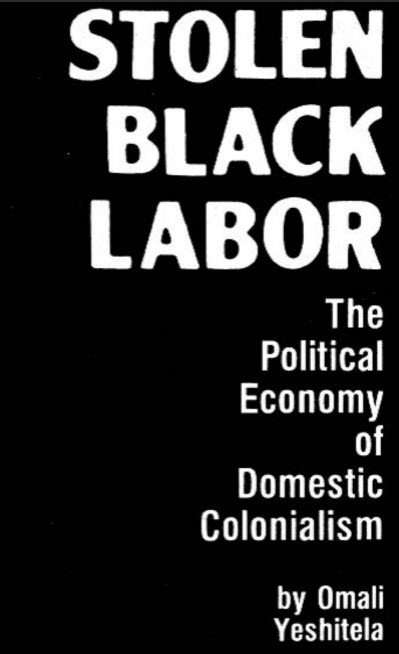
“Stolen Black Labor: The Political Economy of Domestic Colonialism” by Omali Yeshitela is a critical examination of the exploitation and oppression of Black people in the United States, framed within the context of domestic colonialism. Yeshitela argues that the systemic exploitation of Black labor has been integral to the economic development of the U.S., drawing parallels between historical and contemporary forms of oppression. The book explores the intersections of race, class, and economic structures, elucidating how the legacy of slavery has persisted through various forms of exploitation in modern society. Yeshitela presents a call for political awareness and activism to address these enduring injustices.
Outline
Introduction
Overview of the book’s themes and objectives
Definition of domestic colonialism and its relevance to the Black experience in America
Explanation of the connection between historical exploitation and contemporary issues
Chapter 1: Historical Context of Black Labor
Examination of the origins of Black labor in the U.S. and the legacy of slavery
Discussion of the economic foundations of slavery and its role in capitalist development
Analysis of the transition from slavery to sharecropping and other forms of labor exploitation
Chapter 2: The Concept of Domestic Colonialism
Definition and exploration of domestic colonialism as a framework for understanding Black oppression
Discussion of how domestic colonialism manifests in economic, social, and political structures
Analysis of the impact of colonialism on Black communities and their development
Chapter 3: The Political Economy of Exploitation
Exploration of the economic systems that perpetuate the exploitation of Black labor
Discussion of how capitalism relies on the devaluation of Black labor and the maintenance of poverty
Examination of the roles of institutions, policies, and practices that sustain economic disparities
Chapter 4: Resistance and Resilience
Overview of historical and contemporary forms of resistance by Black communities
Discussion of movements for civil rights, economic justice, and self-determination
Analysis of the significance of community organizing and grassroots activism in challenging oppression
Chapter 5: The Role of the State and Policy
Examination of the state’s role in perpetuating or addressing the exploitation of Black labor
Discussion of policies that have historically marginalized Black communities, such as redlining and mass incarceration
Analysis of contemporary policy proposals aimed at addressing economic injustices
Chapter 6: Towards a New Political Economy
Exploration of the possibilities for economic empowerment and liberation for Black communities
Discussion of alternative economic models that prioritize equity and justice
Call for a reimagining of economic relationships and structures to dismantle systemic oppression
Conclusion
Summary of key arguments and insights presented in the book
Reflection on the importance of understanding the historical context of Black labor to inform contemporary activism
Call to action for collective struggle against domestic colonialism and the pursuit of justice
Importance of the Book
“Stolen Black Labor: The Political Economy of Domestic Colonialism” is a vital contribution to the discourse on race, labor, and economic exploitation in the U.S. Omali Yeshitela’s analysis provides a framework for understanding the enduring impacts of colonialism and the systemic nature of oppression faced by Black people. The book serves not only as a historical examination but also as a call for political engagement and activism aimed at achieving true liberation and justice for Black communities.
“Stolen Black Labor” is a thought-provoking and deeply analytical work that addresses the systemic exploitation of Black labor throughout American history and its implications for contemporary society. Here’s a more detailed exploration of the key themes, arguments, and significance of the book:
Key Themes Explored
Domestic Colonialism as a Framework
Yeshitela introduces the concept of “domestic colonialism,” framing the systemic oppression of Black people as a form of colonialism occurring within the borders of the United States. He argues that this framework helps to understand the ongoing exploitation and marginalization of Black communities.
The book distinguishes domestic colonialism from traditional colonialism by emphasizing that it occurs in the context of a nation where the colonized population is subjected to both economic exploitation and cultural suppression.
Historical Continuity of Labor Exploitation
The author traces the history of Black labor from the era of slavery to present-day economic conditions. He illustrates how the legacy of slavery has morphed but continues to influence the treatment and exploitation of Black workers.
Yeshitela discusses the transition from slavery to sharecropping, highlighting how economic structures were designed to keep Black people in cycles of poverty and dependency, effectively replicating aspects of the exploitative system of slavery.
Capitalism and Racial Exploitation
The book argues that capitalism in the U.S. is built on the exploitation of Black labor, relying on a system that devalues Black contributions and perpetuates economic disparities.
Yeshitela examines how economic policies and practices have historically favored white populations while systematically disenfranchising Black communities, leading to significant wealth gaps and social inequalities.
Resistance and Agency
Yeshitela emphasizes the importance of resistance within Black communities, documenting historical and contemporary efforts to combat exploitation. He highlights various movements for civil rights, labor rights, and economic justice as expressions of resilience and agency.
The author discusses the significance of grassroots organizing and community activism as pivotal elements in the struggle against domestic colonialism, illustrating how collective action has historically led to meaningful change.
The Role of the State
The book critically examines the role of government institutions in perpetuating systemic oppression. Yeshitela discusses policies that have marginalized Black communities, including redlining, discriminatory labor practices, and mass incarceration.
He argues that the state often acts in ways that reinforce existing power structures rather than addressing the needs and rights of marginalized populations.
Vision for the Future
Yeshitela calls for a reimagining of economic systems that prioritize equity and justice for Black communities. He advocates for economic models that empower rather than exploit, emphasizing the need for systemic change.
The book encourages readers to envision a future where Black labor is valued, and communities have the agency to determine their economic destinies.
Significance of the Book
Critical Analysis of Systemic Issues
“Stolen Black Labor” provides a critical lens through which to view the intersection of race and economics in American society. Yeshitela’s analysis challenges readers to confront uncomfortable truths about the historical and ongoing exploitation of Black labor.
The book serves as an essential resource for scholars, activists, and anyone interested in understanding the complexities of race, class, and economic systems in the U.S.
Call to Action
Yeshitela’s work is not only an academic examination but also a passionate call to action for social and economic justice. He emphasizes the need for continued activism and awareness to dismantle systemic oppression and advocate for the rights of Black people.
By linking historical struggles to contemporary issues, the book urges readers to engage in the ongoing fight for equity and justice.
Broader Implications for Social Justice
The concepts explored in “Stolen Black Labor” resonate beyond the specific context of Black labor, inviting discussions about the treatment of marginalized groups within various economic systems. Yeshitela’s arguments contribute to broader conversations about human rights, social justice, and the necessity of addressing economic inequalities.
Conclusion
“Stolen Black Labor” is a powerful and necessary examination of the historical and contemporary exploitation of Black labor in America. Through the lens of domestic colonialism, the book highlights the enduring legacies of slavery, the systemic nature of oppression, and the vital importance of resistance and activism. Yeshitela’s work serves as both a historical account and a rallying cry for justice, making it an essential addition to the discourse on race, economics, and social change.
“Stolen Black Labor: The Political Economy of Domestic Colonialism” by Omali Yeshitela _eBook
Pop the documents out from the upper right to read / expand / download.
Learn more in RBG Communiversity Knowledge Media eLibrary:



 RBG Communiversity: Message 2 Da Grassroots
You must be logged in to post a comment.