“Pedagogy of the Oppressed” by Paulo Freire is a foundational text in critical pedagogy that critiques traditional education models and advocates for a more liberating approach to teaching and learning. Freire argues that conventional education often reinforces oppression by treating students as passive recipients of knowledge rather than active participants in their own learning. He emphasizes the importance of dialogue, critical thinking, and consciousness-raising to empower learners and challenge oppressive systems. Freire presents a vision of education as a practice of freedom, where educators and students collaboratively engage in the process of learning, fostering critical awareness and social change.
Outline:
Introduction
Context of education as a tool for liberation or oppression
Importance of critical pedagogy
Oppression and Education
Definition of oppression in society
Traditional education as a “banking model” that deposits information into passive students
Dialogical Method
Emphasis on dialogue as a means of communication and understanding
The role of critical reflection in education
Consciousness-Raising
Importance of developing critical consciousness (conscientização)
Awareness of social, political, and economic contradictions
The Role of the Educator
Shift from authority figure to co-learner and facilitator
Encouraging collaboration and mutual respect in the classroom
Liberation through Education
Education as a practice of freedom rather than domination
Fostering a sense of agency and empowerment among learners
Cultural Context
Recognition of the unique cultural backgrounds of students
Importance of culturally relevant pedagogy
Conclusion
Call for a transformative approach to education
Vision of a just society achieved through critical education and social action
“Pedagogy of the Oppressed” is a profound work that not only critiques existing educational practices but also offers a transformative vision for how education can be a means of liberation. Here’s a deeper exploration of its main themes and concepts:
Key Themes and Concepts:
Banking Model of Education:
Freire critiques the traditional “banking” model of education, where teachers deposit information into students, who are expected to memorize and regurgitate it. This model promotes passive learning and maintains the status quo, rather than fostering critical thinking or creativity. Freire advocates for a more dynamic and interactive approach to education.
Dialogue and Communication:
Central to Freire’s philosophy is the idea of dialogue. He argues that education should be a collaborative process where both teachers and students engage in meaningful conversations. Dialogue enables learners to express their thoughts, question assumptions, and develop critical perspectives.
Conscientização (Critical Consciousness):
Freire introduces the concept of conscientização, which refers to the process of developing a critical awareness of one’s social reality. This consciousness allows individuals to recognize oppressive structures in society and empowers them to take action against these injustices. Education, in this sense, becomes a means of awakening this critical consciousness.
Praxis:
Freire emphasizes the importance of praxis, which is the combination of reflection and action. He argues that true education must lead to transformative action, allowing learners to apply their critical thinking to real-world problems. This cycle of reflection and action helps individuals challenge and change their oppressive conditions.
Cultural Context and Relevance:
Freire stresses the significance of acknowledging the cultural backgrounds of learners. Education should be relevant to students’ lived experiences and cultural contexts, promoting a sense of identity and belonging. This relevance enhances engagement and learning outcomes.
Role of the Educator:
Freire redefines the role of educators, suggesting they should act as facilitators and co-learners rather than authoritative figures. Educators are encouraged to create an environment of mutual respect and collaboration, where students feel empowered to share their ideas and challenge existing norms.
Oppression and Liberation:
The book explores the dynamics of oppression, emphasizing that true liberation requires a collective struggle against oppressive systems. Freire argues that the oppressed must play an active role in their emancipation, fostering solidarity and collective action.
Social Justice and Transformation:
Freire’s pedagogy is rooted in a commitment to social justice. He envisions education as a means to transform society by equipping individuals with the tools to challenge inequality and advocate for change. This transformative potential is a key aspect of his educational philosophy.
Conclusion:
“Pedagogy of the Oppressed” remains a seminal text that has influenced educators, activists, and scholars worldwide. Freire’s insights into the relationship between education and social justice have sparked movements for reform in educational practices. His call for a participatory and liberating approach to education continues to resonate, encouraging individuals to seek not only knowledge but also the power to enact meaningful change in their lives and communities. The book serves as both a critique of traditional educational systems and a powerful manifesto for a more equitable and just approach to teaching and learning.
Pedagogy of the Oppressed, Paulo Freire_eBook
Pop the documents out from the upper right to read / expand / download.
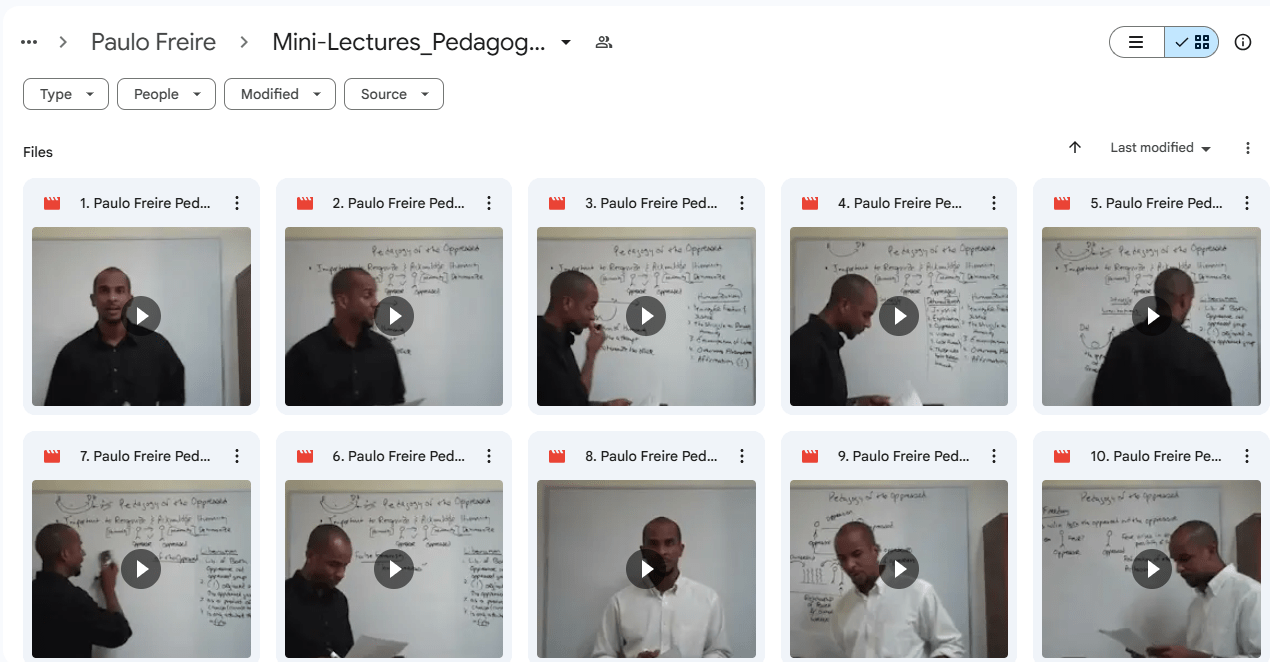
Understanding Paulo Freire’s “Pedagogy of the Oppressed” Dr. Masood
You must be logged in to post a comment.