A moving spoken word that was performed at the Jena 6 rally on 9/20/07 by the artist Ty Gray-El. And for all my females i’m sure that you will appreciate what this brother has to say and for all my brothers out there thats not doing they thing and being real men, take notes and man up!
If you want to find more of his work, than simply go to:
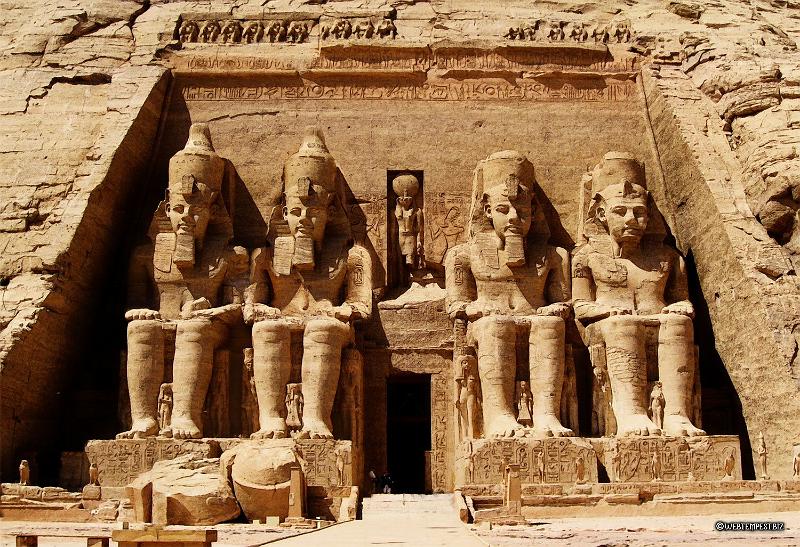
The Black Egyptians are the original settlers of KMT. “The native Sudanese are one of the original pigmented Arabs in that region. They are members of the same ethnic family with the ancient Egyptians, the Ethiopians, the Southern Arabians, and the primitive inhabitants of Babylon. All founders and sustainers of the mighty Nilotic civilization we still admire today. They are very great nation of Blacks, who did rule almost over all Africa and Asia in a very remote era, in fact beyond the reach of history of any of our records.
1. Egypt is a Greek word meaning “Black.” 2. The Egyptians of the Bible were Negroid. 3. The Bible says both Egyptians and Ethiopians are descendants of Ham. 4. Arabs invaded Egypt in the 7th Century AD; Remember, Egypt wasn’t invaded by Rome until 300 BC. The Bible dates 4000 BC. Therefore, Arabs have no more connection to Ancient Egypt than Europeans have to Ancient America. Egyptian is an Afro-Asiatic language. (AFRO, AFRO) The national language of modern day Egypt is Egyptian Arabic, which gradually replaced Coptic. (Coptic–Ethiopia)
Black Egyptians were eventually mixed with invading Libyans, Persians, Greeks, Romans, Turks, Arabs and Western Europeans. That is where the mixed people of the modern-day Arabs come from. The following is supporting evidence from The African Origin of Civilization: by: Cheikh Anta Diop
1. Evidence from Physical Anthropology The skeletons and skulls of the Ancient Egyptians clearly reflect they were Negroid people with features very similar to those of modern Black Nubians and other people of the Upper Nile and of East Africa.
2. Melanin Dosage Test Egyptologist Cheikh Anta Diop invented a method for determining the level of melanin in the skin of human beings. When conducted on Egyptian mummies in the Museum of Man in Paris, this test indicated these remains were of Black people.
3. Osteological Evidence “Lepsius canon,” which distinguishes the bodily proportions of various racial groups categories the “ideal Egyptian” as “short-armed and of Negroid or Negrito physical type.”
4. Evidence From Blood Types Diop notes that even after hundreds of years of inter-mixture with foreign invaders, the blood type of modern Egyptians is the “same group B as the populations of western Africa on the Atlantic seaboard and not the A2 Group characteristic of the white race prior to any crossbreeding.”
5. The Egyptians as They Saw Themselves “The Egyptians had only one term to designate themselves =kmt= the Negroes (literally). This is the strongest term existing in the Pharaonic tongue to indicate blackness; it is accordingly written with a hieroglyph representing a length of wood charred at the end and not crocodile scales,” singular. ‘Kmt’ from the adjective =kmt= black; it therefore means strictly Negroes or at the very least black men. The term is a collective noun which thus described the whole people of Pharaonic Egypt as a black people.”
6. Divine Epithets Diop demonstrates that “black or Negro” is the divine epithet invariably used for the chief beneficent Gods of Egypt, while the evil spirits were depicted as red.
7. Evidence From the Bible
The Bible states”…[t]he sons of Ham [were] Cush and Mizraim [i.e. Egypt], and Phut, and Canaan. And the sons of Cush; Seba, and Havilah, and Sabtah, and Raamah and Sabtechah.” According to Biblical tradition, Ham, of course, was the father of the Black race. “Generally speaking all Semitic tradition (Jewish and Arab) class ancient Egypt with the countries of the Black.”
8. Cultural unity of Egypt With The Rest of Africa Through a study of circumcision and totemism. Diop gives detailed data showing cultural unity between Egypt and the rest of Africa.
9. Linguistic Unity With Southern and Western Africa In a detailed study of languages, Diop clearly demonstrates that Ancient Egyptian, modern Coptic of Egypt and Walaf of West Africa are related, with the latter two having their origin in the former.
10. Testimony of Classical Greek and Roman Authors Virtually all of the early Latin eyewitnesses described the Ancient Egyptians as Black skinned with wooly hair.
After the conquest of Egypt by Alexander, under the Ptolemies, crossbreeding between white Greeks and black Egyptians flourished. “Nowhere was Dionysus more favored, nowhere was he worshiped more adoringly and more elaborately than by the Ptolemies, who recognized his cult as an especially effective means of promoting the assimilation of the conquering Greeks and their fusion with the native Egyptians.” {Endnote 15: J. J. Bachofen, Pages choisies par Adrien Turel, “Du Regne de la mere au patriarcat.” Paris: F. Alcan, 1938, p. 89.}
These facts prove that if the Egyptian people had originally been white, it might well have remained so. If Herodotus found it still black after so much crossbreeding, it must have been basic black at the start.
Before examining the contradictions circulating in the modern era and resulting from attempts to prove at any price that the Egyptians were Whites, let us note the comments of Count Constantin de Volney (1757-1820). After being imbued with all the prejudices we have just mentioned with regard to the Negro, Volney had gone to Egypt between 1783 and 1785, he reported the Egyptian Race is the very race that had produced the Pharaohs: the Copts (p. 27).
“All have a bloated face, puffed up eyes, flat nose, and thick lips; in a word, the true face of the mulatto. I was tempted to attribute it to the climate, but when I visited the Sphinx; its appearance gave me the key to the riddle. On seeing that head, typically Negro in all its features, I remembered the remarkable passage where Herodotus says: “As for me, I judge the Colchians to be a colony of the Egyptians because, like them, they are black with woolly hair. …” We can see how their blood, mixed for several centuries with that of the Romans and Greeks, must have lost the intensity of its original color, while retaining nonetheless the imprint of its original mold. We can even state as a general principle that the face is a kind of monument able, in many cases, to attest or shed light on historical evidence on the origins of peoples. {End quote}
When Egypt was invaded by Arabs – Egypt suffered turbulent times when, in 609 AD, the country had sided with Nicetas, a lieutenant of Heraclius, in the rebellion against the emperor Phocas. Only shortly after Heraclius overthrew Phocas, the Byzantines were attacked by the Persians. The armies of the Sasanid King Khosrau II invaded Egypt, inflicting cruel suffering upon its some of its inhabitants. This Persian occupation lasted six years.
African Antiquity
In the Beginning…
Narmer (Menes) The 1st Pharaoh of Egypt
(Fig 5 – Diop Cheikh Anta, The African Origin of Civilization, 1974)
King Aha-Mena-Narmer is known by millions of people by the Greek-distorted “version” of his name: King Menes. Notice the African features from his high chick bones, flat nose and thick lips. The Kufi/Crown upon his head is a sign of royal authority.
King Aha-Mena-Narmer is the founding King of the first Ancient Egyptian dynasty. He also become the first Emperor of Kemet by unifying Upper and Lower Egypt into one imperial federation, along the Nile Valley. From its Central-Eastern Kilimanjaro Mountains sources to the Mediterranean Sea Delta, the Ancient Egyptian Empire gave birth to the world’s first civilization.
Since then, the imperial heritage has been carried on, from dynasty to dynasty and from generation to generation. Extensive territory is nothing new to African Kings and Emperors: it is simply a matter of historical, cultural and imperial continuity.
African history and culture trace their roots back to that pharaonic period, the ultimate source of African humanities. The same way the European/Western world traces its history and culture back to Greece and Rome. African human sciences, finally reconciled with its Ancient Egyptian sources, can retrace the entire history of the Nation, step-by-step.
On this immemorial timeline, the enslavement and colonial periods suffered by African people can be considered as little parenthesis. Yet, the terrible impact of colonial bound mis-education and cultural conditioning affects many people, Blacks and Whites alike. Consequently, innocent victims of “schooling” who have lost their historical memories, now find it hard to believe that, Black people actually played the earliest civilizing role in the world. That misleading education has damaged the minds, self-esteem and behavior of many people across racial lines:
“The History of humanity will remain confused as long as as we fail to distinguish between the two early cradles in which nature fashioned the instincts, temperament, habits and ethical concepts of the two subdivisions before they met each other after a long separation, dating back to prehistoric times…”Cheikh Anta Diop
Dr. Cheikh Anta Diop, in his “L’Antiquité Africaine Par L’Image” (Notes Africaines No Special 145) drew two important conclusions:
1. Humanity born at the latitude of the African Great Lakes, near the Ecuador is by necessity pigmented (black) and African. This is substantiated by Gloger’s Law which states that warm blooded beings are pigmented in hot and humid climates”. 2. All races are issued from the African race by direct relationships and, the other continents were peopled from Africa at the Homo erectus stage, as well as the Homo sapiens stage, which appeared about 150,000 years ago.
It has been finally proven that, for a time period beginning 5 million years ago up until the glacial thaw (10,000 years ago), Africa almost unilaterally peopled and influenced the rest of the world.
Dr. Leakey, one of the world’s most reputable paleo-anthropologist, in his serious work “Progress And Evolution Of Man In Africa”, reminds us that: “The critics of Africa forget that men of science are today satisfied that, Africa was the birthplace of man himself”. Human beings are Africa’s first contribution to humanity.
Advanced research and several studies in prehistory and paleo-anthropology have confirmed the similarities between the original founders of the pharaonic civilization (ancient Nubians, Ethiopians and Egyptians) and the modern day Africans.
Rawlinson concludes in “Origins Of Nations” that: “The authors of Genesis unites together as members of the same ethnic family the Egyptians, the Ethiopians, the Southern Arabians, and the primitive inhabitants of Babylon”.
According to many ancient testimonies, the inhabitants of Sudan, Egypt, Arabia, Palestine, Western Asia and India were Ethiopians, therefore Africans. Back in that era, there were two lands called Ethiopia. Sir Godfrey Higgins (Anacalypsis, vol.1) declared: “One on the east of the Red Sea, and the other on the west of it; and a very great nation of Blacks, from India, did rule almost over all Asia in a very remote era, in fact beyond the reach of history of any of our records”.
Herodotus who was initiated within the Ancient Egyptian mystery system declared that:” The uniform voice of primitive antiquity spoke of the Ethiopians as one single race, dwelling along the shores of the southern ocean, from India to the pillars of Hercules”. (Herodotus, vol.1 book I)
Greece: An Average Student of Ancient Egypt
Dr. Theophile Obenga, in this magisterial book “African Philosophy in World History” (Obenga,1998), successfully challenges and neutralizes the Hegelian philosophy of history, continuing in the footsteps of Dr. Cheikh Anta Diop, his mentor. Hegel alienated the Caucasian mind by stating with ignorance that “Africa has no history”. That mis-education of the Caucasians led to arrogance with an unfounded racial superiority belief system.
The seven liberal arts and sciences, which are grammar, rhetoric, logic, arithmetic, geometry, music and astronomy, come out of Africa. Therefore, to the Ancient Egyptians, and neither to the Greeks, nor to the Romans, are we indebted for the present body of human knowledge. Greece and Rome were average students in Ancient Egypt. Considered foreigners and childish, Greek students were unable to access a complete initiation and induction within the Ancient Egyptian Mystery System.
Aristotle of Stagira, Thales of Miletus, Pythagoras of Samos, Diodorus of Sicily, Plato and Strabo were all initiated in Ancient Egypt, from a very young age until adulthood. Their eyewitness accounts reflect the fact that they were taught and instructed by dark skinned teachers born and raised in Africa. Greed, prestige and reputation made most of them ungrateful, when they claimed all the theories and theorems, formulas and axioms they learned in Ancient Egypt for themselves. Most Greek and Roman students of Africa committed plagiarism by signing their names on their African teachers writings, inventions, creations and productions.
Thus, we now have: “Theorem of Pythagoras”, “Thales’Axiom” among many illegal appropriations of the African sciences of geometry, mathematics, architecture, rhetoric and philosophy. Those operative sciences have been invented and implemented in the heart of Africa, thousands of years before the Greeks and Romans came into existence as a distinct race!
That saga continues today with the renaming of African scientific papyri such as the “Rhind Papyri” and the “Moscow mathematical Papyri”. Those Papyri and their scientific content were produced and elaborated thousands of years before Rhind’s people were born. Eastern Europe was still under the ice-age with barbaric people. Moscow, nor any of its founders, were even in existence at the time.
Since mankind originated first in Africa, it was necessarily black before becoming white through mutation and adaptation, at the end of the last ice-age in Europe. Scholars both ancient and modern have finally come to the conclusion that, the African people created the world first civilization. Our ancestors did rule the world from its seats of power, enthroned from the valley of the Granges, the Tigris and Euphrates, to the Nile and Niger Rivers.
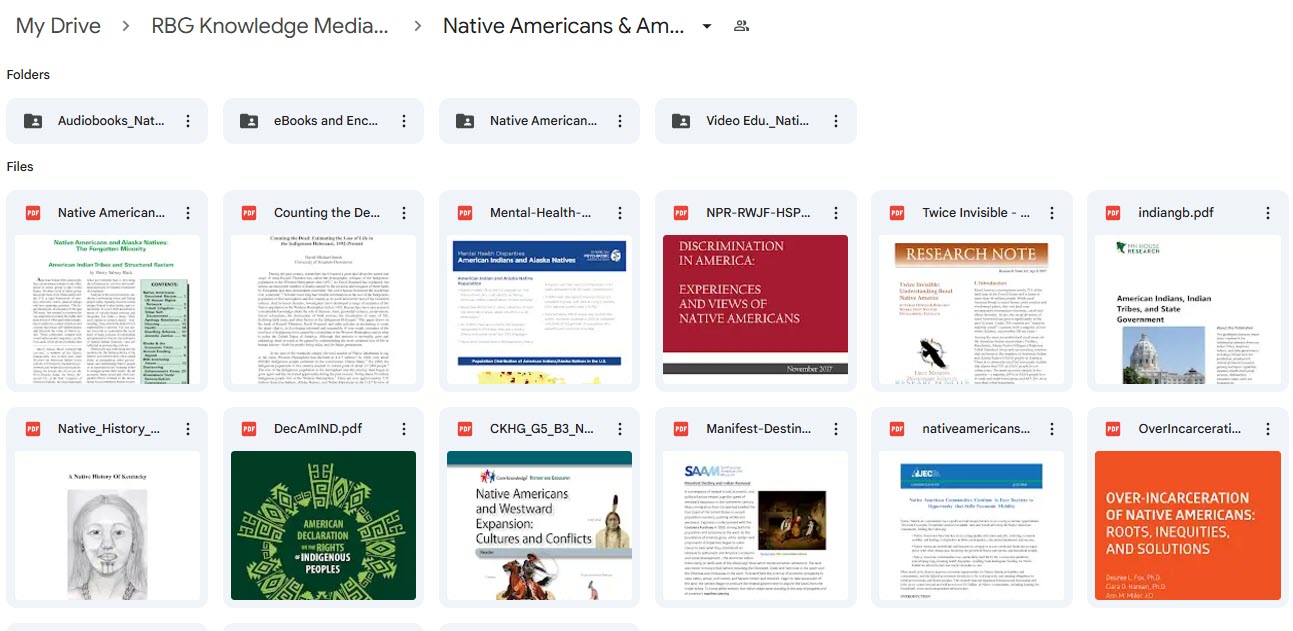
Pop the documents out from the upper right to read / expand / download.
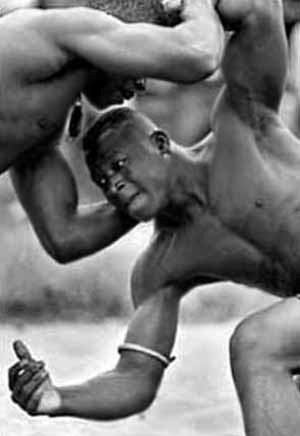
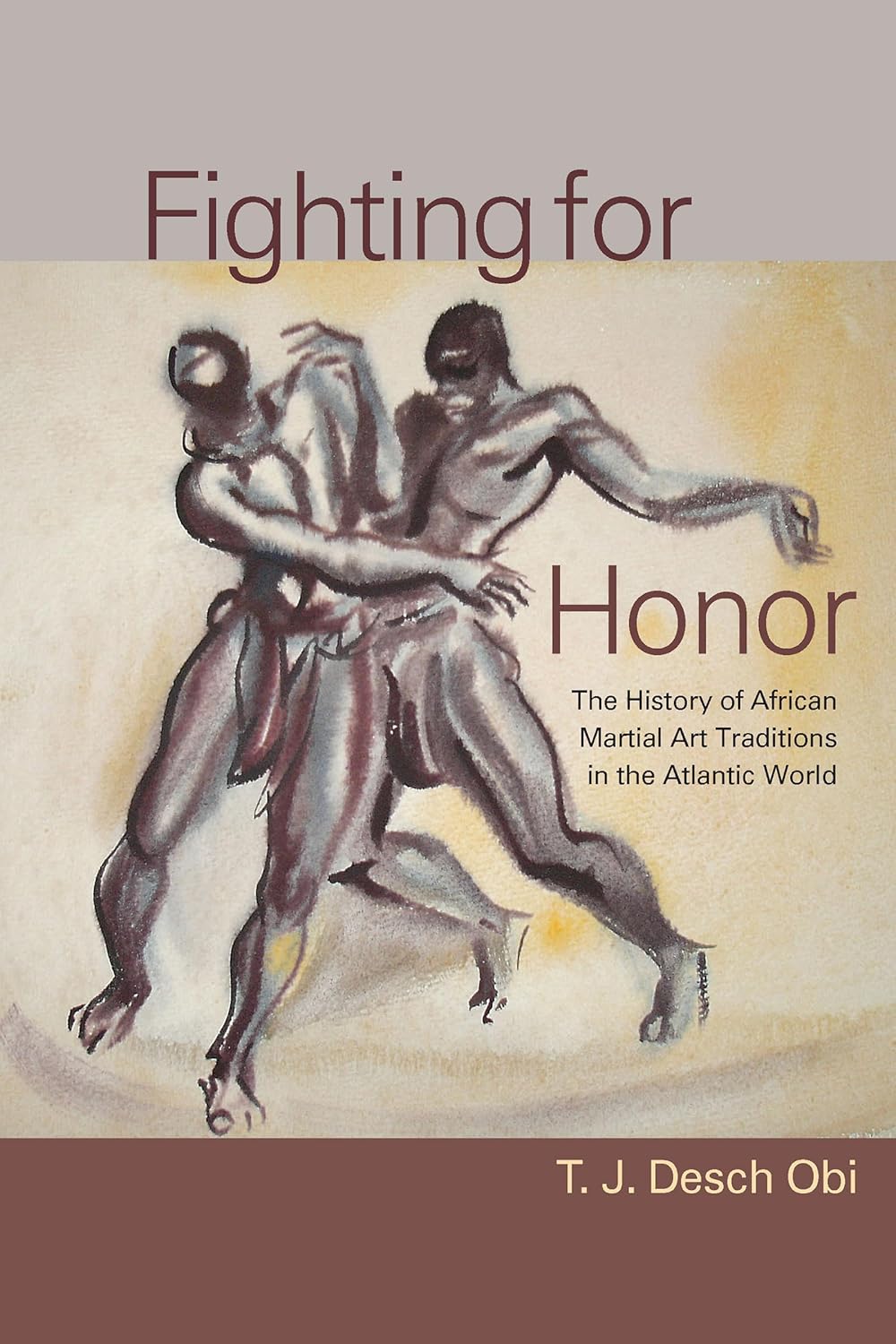
Fighting for Honor: The History of African Martial Art in the Atlantic World
Book Summary
A groundbreaking investigation into the migration of martial arts techniques across continents and centuries The presence of African influence and tradition in the Americas has long been recognized in art, music, language, agriculture, and religion. T. J. Desch-Obi explores another cultural continuity that is as old as eighteenth-century slave settlements in South America and as contemporary as hip-hop culture. In this thorough survey of the history of African martial arts techniques, Desch-Obi maps the translation of numerous physical combat techniques across three continents and several centuries to illustrate how these practices evolved over time and are still recognizable in American culture today. Some of these art traditions were part of African military training while others were for self-defense and spiritual discipline. Grounded in historical and cultural anthropological methodologies, Desch-Obi’s investigation traces the influence of well-delineated African traditions on long-observed but misunderstood African and African American cultural activities in North America, Brazil, and the Caribbean. He links the Brazilian martial art capoeira to reports of slave activities recorded in colonial and antebellum North America. Likewise Desch-Obi connects images of the kalenda African stick-fighting techniques to the Haitian Revolution. Throughout the study Desch-Obi examines the ties between physical mastery of these arts and changing perceptions of honor. Including forty-five illustrations, this rich history of the arrival and dissemination of African martial arts in the Atlantic world offers a new vantage for furthering our understanding of the powerful influence of enslaved populations on our collective social history.
Gil Scott-Heron was born in Chicago, Illinois, but spent his early childhood in the home of his grandmother Lillie Scott (mother’s family) in Jackson, Tennessee. Gil’s mother Bobbie Scott-Heron sang with the New York Oratorial Society. Gil’s father was a professional soccer player and is also a poet. His father’s family is of Jamaican descent. When he was 13, his grandmother died and he moved with his mother to the Bronx, where he enrolled in DeWitt Clinton High School. He transferred to The Fieldston School after one of his teachers, a Fieldston graduate, showed one of his writings to the head of the English department there and he was granted a full scholarship. Gil attended Lincoln University because it was the college of choice by his biggest influence Langston Hughes. It was at Lincoln University that Gil met Brian Jackson and they formed the band Black & Blues. After about two years at Lincoln University in Pennsylvania, Scott-Heron took a year off to write a novel The Vulture. He returned to New York City, settling in Chelsea, Manhattan, which was at the time a multiracial and multicultural neighborhood. The novel, The Vulture, was published in 1970 and well received. Although Gil never received his undergraduate degree, he has a Masters in Creative Writing from Johns Hopkins University.
Scott-Heron began his recording career in 1970 with the LP Small Talk at 125th and Lenox. Bob Thiele of Flying Dutchman Records produced the album and Scott-Heron was accompanied by Eddie Knowles and Charlie Saunders on conga and David Barnes on percussion and vocals. The album’s 15 tracks dealt with themes such as the superficiality of television and mass consumerism, the hypocrisy of some would-be Black revolutionaries, white middle-class ignorance of the difficulties faced by inner-city residents, and fear of homosexuals. In the liner notes, Scott-Heron acknowledged as influences Richie Havens, John Coltrane, Otis Redding, Jose Feliciano, Billie Holiday, Langston Hughes, Malcolm X, Huey Newton, Nina Simone, and the pianist who would become his long-time collaborator, Brian Jackson.
Scott-Heron’s 1971 album Pieces of a Man used more conventional song structures than the loose, spoken-word feel of Small Talk. He was joined by Johnny Pate (conductor), Brian Jackson (piano and electric piano), Ron Carter (bass and electric bass), Bernard Pretty Purdie (drums), Burt Jones (electric guitar), and Hubert Laws (flute and saxophone), with Thiele producing again. Scott-Heron’s third album, Free Will, was released in 1972. Jackson, Purdie, Laws, Knowles, and Saunders all returned to play on Free Will and were joined by Jerry Jemmott (bass), David Spinozza (guitar), and Horace Ott (arranger and conductor).
1974 saw another LP collaboration with Brian Jackson, Winter in America, with Bob Adams on drums and Danny Bowens on bass. He didn’t reach the charts until 1975 with the song Johannesburg, from the album From South Africa to South Carolina. That year he and Jackson also released Midnight Band: The First Minute of a New Day. A live album, It’s Your World, followed in 1976 and a recording of spoken poetry, The Mind of Gil Scott-Heron was released in 1979. His biggest hit came with a song called Angel Dust, which he recorded as a single with producer Malcolm Cecil. Angel Dust peaked at #15 on the R&B charts in 1978.
In 1979, Scott-Heron played at the No Nukes concerts at Madison Square Garden. The concerts were organized after the Three Mile Island accident by Musicians United for Safe Energy to protest the use of nuclear energy. Scott-Heron’s song We Almost Lost Detroit, about a previous accident at a nuclear facility, was included in the No Nukes album of concert highlights.
During the 1980s, Scott-Heron continued recording, releasing Reflections in 1981 and Moving Target in 1982.
Scott-Heron was a frequent critic of President Ronald Reagan and his conservative policies:
“The idea concerns the fact that this country wants nostalgia. They want to go back as far as they can — even if it’s only as far as last week. Not to face now or tomorrow, but to face backwards. And yesterday was the day of our cinema heroes riding to the rescue at the last possible moment. The day of the man in the white hat or the man on the white horse – or the man who always came to save America at the last moment — someone always came to save America at the last moment — especially in ‘B’ movies. And when America found itself having a hard time facing the future, they looked for people like John Wayne. But since John Wayne was no longer available, they settled for Ronald Reagan — and it has placed us in a situation that we can only look at — like a ‘B’ movie.” (Gil Scott-Heron, “‘B’ Movie”)
Scott-Heron was dropped by Arista Records in 1985 and quit recording, though he continued to tour. He also appeared in the Sun City (album) track, “Let Me See Your ID” in 1985.
In 1993, he signed to TVT Records and released Spirits, an album that included the seminal track Message to the Messengers. The first track on the album was a position point poem to the rap artists of the day and included such comments as:
* “Four-letter words or four-syllable words won’t make you a poet, it will only magnify how shallow you are and let ev’rybody know it.”
* “Tell all them gun-totin’ young brothers that the ‘man’ is glad to see us out there killin’ one another! We raised too much hell, when they was shootin’ us down.”
* “Young rappers, one more suggestion, before I get outta your way. I appreciate the respect you give to me and what you’ve got to say.”
Scott-Heron is known in many circles as “the godfather of rap” and is widely considered to be one of the genre’s founding fathers. Given the political consciousness that lies at the foundation of his work, he can also be called a founder of political rap. Message to the Messengers was a plea for the new generation of rappers to speak for change rather than perpetuate the current social situation, and to be more articulate and artistic:
“There’s a big difference between putting words over some music, and blending those same words into the music. There’s not a lot of humour. They use a lot of slang and colloquialisms, and you don’t really see inside the person. Instead, you just get a lot of posturing.”
In 2001, Gil Scott-Heron was sentenced to one to three years’ imprisonment in New York State for cocaine possession. While out of jail in 2002, he appeared on the Blazing Arrow album by Blackalicious. He was released on parole in 2003.
On July 5, 2006, Scott-Heron was sentenced to two to four years in a New York State prison for violating a plea deal on a drug-possession charge by leaving a treatment center. Scott-Heron said he is HIV-positive and claimed the in-patient rehabilitation center stopped giving him his medication. The prosecution countered that Scott-Heron had once skipped out for an appearance with singer Alicia Keys. Scott-Heron’s sentence was to run until July 13, 2009. He was paroled on May 23, 2007. He has since begun performing live again, starting with a show at SOBs in New York on 13 September 2007. On stage, he stated that he and his musicians were working on a new album, and that he had resumed writing a book entitled “The Last Holiday” (previously on long-term hiatus) about Stevie Wonder and his successful attempt to have Martin Luther King’s birthday made a national holiday in the USA. Gil was arrested October 10, the day before a second SOB’S performance scheduled for October 11, 2007 on felony possession of cocaine charges.
Scott-Heron’s father, Giles “Gil” Heron (nicknamed “The Black Arrow”) was a Jamaican football player who played for Glasgow’s Celtic Football Club in the 1950s. In fact, when he came to Scotland from the United States to join Celtic in 1951 he became the team’s first black player. At the time, Celtic F.C. was the team of Scotland’s Irish immigrants. However, Gil himself has said that he supports Celtic’s great rivals, Rangers.
Mark T. Watson, a student of Scott-Heron’s work, dedicated a collection of poetry to Gil entitled Ordinary Guy which also contained a foreword by Jalal Mansur Nuriddin of The Last Poets. The book was published in the UK in 2004 by Fore-Word Press Ltd. Gil recorded one of the poems in Mark T. Watson’s book entitled “Black & Blue” due for release in 2008 as part of the album “Rhythms of the Diaspora” by Malik & the OG’s on the label “CPR recordings”.




 RBG Communiversity: Message 2 Da Grassroots
You must be logged in to post a comment.