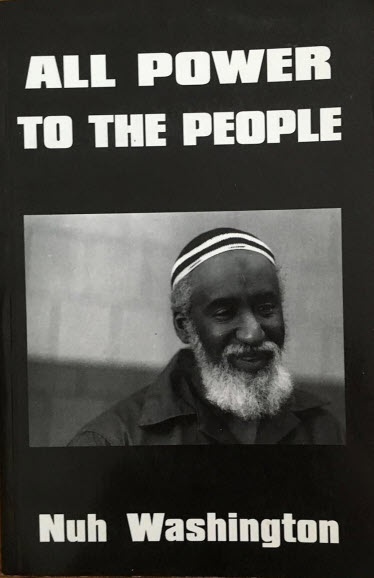
All Power to the People by Albert Nuh Washington, eBook and Audiobook, with Video Education Player

ICEBREAKER VIDEO

Pop the document out from the upper right to read / expand / download.

See NY3. The Case of the New York Three.pdf

Book Summary

Overview

“All Power to the People” by Albert Nuh Washington is a significant work that explores the history and impact of the Black Panther Party (BPP) and the broader Black radical movement in the United States. Published in 2002, the book provides an in-depth analysis of the social, political, and economic conditions that gave rise to the BPP, as well as the party’s contributions to the struggle for civil rights and social justice. Washington draws on personal experiences, interviews, and historical narratives to highlight the achievements and challenges faced by the Black Panther Party, offering a critical perspective on its legacy and the continuing relevance of its ideals in contemporary society. The outline and overview that follows provides a structured look at the contents of “All Power to the People” by Albert Nuh Washington.

Outline

I. Introduction

  • A. Overview of the Black Panther Party’s significance
  • B. Purpose of the book and its relevance to contemporary social justice movements
  • C. Author’s background and perspective

II. Historical Context

  • A. The civil rights movement and its limitations
    • Key figures and events leading to the rise of the BPP
    • Challenges faced by African Americans in the 1960s
  • B. The influence of Black nationalism and radical thought
    • Connection to earlier movements (e.g., Marcus Garvey, the Nation of Islam)
  • Emergence of the Black Power movement

III. Formation of the Black Panther Party

  • A. Founding members and their motivations
    • Huey P. Newton and Bobby Seale
    • Key ideological influences
  • B. Development of the party’s platform and goals
    • The Ten-Point Program
  • Focus on community empowerment and social justice

IV. Key Activities and Programs

  • A. Community initiatives
    • Free breakfast programs for children
    • Health clinics and education programs
  • B. Armed self-defense and its implications
    • The philosophy of self-defense against police brutality
  • Impact on public perception and law enforcement responses

V. Internal Challenges and Conflicts

  • A. Struggles within the organization
    • Leadership disputes and factionalism
    • The influence of COINTELPRO and government repression
  • B. The impact of external pressures
    • Surveillance and infiltration by law enforcement
  • Media portrayal and public perception of the BPP

VI. Legacy of the Black Panther Party

  • A. Contributions to civil rights and social justice
    • Influence on later movements (e.g., Black Lives Matter)
    • Cultural impact through art, music, and literature
  • B. Ongoing relevance of BPP ideals
    • Discussion of systemic racism and inequality today
  • Calls for community empowerment and social change

VII. Conclusion

  • A. Summary of key themes and insights from the book
  • B. Reflection on the importance of understanding the BPP’s history
  • C. Call to action for continued activism and social justice

“All Power to the People” serves as a vital resource for understanding the history and legacy of the Black Panther Party and the broader struggle for racial and social justice in America. By examining the party’s origins, key initiatives, and challenges, Washington provides valuable insights into the ongoing fight against systemic oppression and the importance of community empowerment. The book encourages readers to reflect on the lessons of the past while inspiring continued activism in the pursuit of equality and justice.

“All Power to the People” is an essential examination of the Black Panther Party (BPP) and its pivotal role in the fight for civil rights and social justice in the United States. Here’s a more detailed exploration of the book’s themes, key figures, historical context, and its significance:

Detailed Exploration of Key Themes

1. Historical Context

  • Civil Rights Movement Limitations: Washington discusses the civil rights movement’s achievements, such as the Civil Rights Act and the Voting Rights Act, while highlighting its limitations in addressing systemic issues like poverty, police brutality, and economic inequality. The urgency for a more radical approach was felt by many African Americans, leading to the rise of the Black Panther Party.
  • Influence of Black Nationalism: The book places the BPP within the wider context of Black Nationalism and the Black Power movement, which emerged in the 1960s as a response to the perceived inadequacies of mainstream civil rights strategies. Washington emphasizes the influence of figures like Marcus Garvey and Malcolm X, who advocated for self-determination and empowerment for Black communities.

2. Formation and Ideology of the Black Panther Party

  • Founding Members: The BPP was founded in 1966 by Huey P. Newton and Bobby Seale in Oakland, California. Washington explores how their backgrounds and experiences shaped their vision for the party, particularly their commitment to armed self-defense against police violence.
  • The Ten-Point Program: A central feature of the BPP’s ideology was its Ten-Point Program, which outlined the party’s demands for justice, equality, and economic empowerment. Washington details each point, which included calls for decent housing, education, and employment, as well as an end to police brutality.

3. Community Programs and Activism

  • Social Initiatives: Washington highlights the BPP’s commitment to community service through programs like free breakfast for children, health clinics, and educational programs. These initiatives were designed to address the immediate needs of African American communities and demonstrate that the BPP was more than just a militant organization.
  • Armed Self-Defense: The book discusses the philosophy of armed self-defense that the BPP adopted in response to police brutality. Washington analyzes how the party’s public displays of armed self-defense were both a statement of empowerment and a catalyst for increased tensions with law enforcement.

4. Internal Struggles and External Pressures

  • Factionalism and Leadership Conflicts: Washington examines internal conflicts within the BPP, particularly the power struggles between different factions. These conflicts were exacerbated by the pressure from law enforcement and the FBI’s Counterintelligence Program (COINTELPRO), which sought to undermine the party through infiltration, disinformation, and surveillance.
  • Government Repression: The book details the various tactics used by law enforcement to suppress the BPP, including arrests, harassment, and violent confrontations. Washington underscores the impact of COINTELPRO in destabilizing the organization and contributing to its decline in the early 1970s.

5. Legacy and Ongoing Relevance

  • Cultural Impact: Washington discusses how the BPP’s ideals and aesthetics influenced music, art, and literature, leaving a lasting mark on African American culture. The party’s imagery and messages of empowerment continue to resonate in contemporary artistic expressions.
  • Influence on Modern Movements: The book draws connections between the BPP and contemporary movements such as Black Lives Matter, highlighting how the party’s focus on systemic injustice and community empowerment laid the groundwork for ongoing activism. Washington calls attention to the continuing struggle against racism, police violence, and inequality.

Significance of the Work

  • Educational Resource: “All Power to the People” serves as an important educational tool for understanding the complexities of the Black Panther Party and the broader Black radical movement. It provides a nuanced perspective that challenges mainstream narratives about the BPP as solely a militant organization.
  • Inspiration for Activism: Washington’s work encourages readers to reflect on the lessons of the past and recognize the importance of grassroots activism in effecting social change. The book emphasizes the need for community engagement and the importance of addressing systemic issues through collective action.
  • Reexamination of History: By providing a detailed account of the BPP’s history and its various programs, Washington invites readers to reconsider the legacy of the Black Panther Party and its contributions to the struggle for civil rights and social justice in America. It challenges readers to acknowledge the complexities of the BPP’s mission and its relevance in contemporary discussions about race and inequality.

Conclusion

“All Power to the People” by Nuh Washington is a vital contribution to the understanding of the Black Panther Party and the Black radical movement in the United States. Through its exploration of historical context, ideology, activism, and legacy, the book highlights the significance of the BPP in shaping the discourse around civil rights and social justice. Washington’s work serves as both a historical account and a call to action, inspiring readers to engage with the ongoing fight for equality and justice in today’s society.

All Power to the People by Albert Nuh Washington, eBook

Pop the document out from the upper right to read / expand / download.

All Power to the People by Albert Nuh Washington, Audiobook

Video Education_All Power To The People The Black Panther Party & Beyond

Learn more in RBG Knowledge Media eLibrary

RBG4Lif Teaching /Learning Tools & Resources

BPM|BLM eBooks 

BPM|BLM Audiobooks

No Surrender: Writings From An Anti-Imperialist Political Prisoner by David Gilbert_eBook and Audiobook, with Supplemental_David Gilbert’s Message to the 2021 Columbia University Reunion

Last Updated 04-27-2024

Book Summary

“No Surrender: Writings From An Anti-Imperialist Political Prisoner” by David Gilbert is a collection of essays, letters, and reflections from the author, who is a former member of the Weather Underground Organization. The book captures Gilbert’s thoughts and experiences during his imprisonment, highlighting his commitment to anti-imperialism, social justice, and revolutionary politics. Through his writings, Gilbert examines the nature of state power, the struggles for liberation, and the importance of solidarity among oppressed peoples. His reflections provide insight into the broader context of political activism, the prison industrial complex, and the fight against imperialism, making it a significant contribution to contemporary political discourse.

The outline that follows captures the key themes and structure of David Gilbert’s “No Surrender: Writings From An Anti-Imperialist Political Prisoner.” The book serves as a powerful testament to the resilience of political prisoners and the ongoing struggles for justice and liberation. Gilbert’s writings reflect a deep commitment to anti-imperialism, solidarity, and revolutionary change, making it an important contribution to contemporary political thought and activism.

I. Introduction

  • A. Purpose of the book
  • B. Overview of David Gilbert’s background and activism
  • C. Importance of anti-imperialist struggle in contemporary politics

II. Personal Reflections

  • A. Experiences as a political prisoner
    • Life in prison and its challenges
    • The impact of incarceration on personal beliefs and activism
  • B. The role of writing in maintaining political consciousness
    • Reflection as a tool for resistance
  • The importance of intellectual engagement while incarcerated

III. Anti-Imperialism and Revolutionary Politics

  • A. Definition and principles of anti-imperialism
    • Historical context of imperialism
    • Links between imperialism and capitalism
  • B. The significance of revolutionary movements
    • Case studies of global liberation struggles
  • Lessons learned from past revolutionary efforts

IV. The Prison Industrial Complex

  • A. Examination of the U.S. prison system
    • Historical development of mass incarceration
    • Racial and economic disparities in imprisonment
  • B. The role of prisons in maintaining state power
    • Analysis of how prisons serve the interests of capitalism
  • The impact of incarceration on communities and social movements

V. Solidarity and Collective Action

  • A. The importance of solidarity among oppressed groups
    • Building coalitions across movements
    • Historical examples of successful solidarity efforts
  • B. Strategies for effective collective action
    • Organizing tactics and community engagement
  • The role of education and awareness in fostering solidarity

VI. Political Analysis and Critique

  • A. Critique of U.S. foreign policy and imperialism
    • Analysis of specific policies and their impacts
    • The consequences of imperialist actions on global populations
  • B. Reflection on the revolutionary potential of marginalized communities
    • The role of grassroots movements in driving change
  • Vision for a more equitable and just society

VII. Conclusion

  • A. Summary of key themes and insights
  • B. Call to action for readers and activists
  • C. Vision for continuing the struggle against imperialism and for social justice

“No Surrender: Writings From An Anti-Imperialist Political Prisoner” is a profound exploration of political activism, anti-imperialism, and the experiences of being incarcerated as a political prisoner. Here’s a deeper look at the key themes, insights, and implications presented in the book:

Detailed Exploration of Key Themes

1. Personal Reflections

  • Experiences of Incarceration: Gilbert shares his firsthand experiences as a political prisoner, providing readers with an intimate look at life behind bars. He discusses the psychological and emotional challenges of imprisonment, including isolation and the struggle to maintain a sense of purpose and identity while incarcerated.
  • Writing as Resistance: Throughout the book, Gilbert emphasizes the importance of writing as a means of maintaining political consciousness and resilience. His reflections illustrate how writing serves not only as a personal outlet but also as a tool for engaging with broader political struggles and sharing knowledge with others.

2. Anti-Imperialism and Revolutionary Politics

  • Understanding Anti-Imperialism: Gilbert defines anti-imperialism as a critical response to the oppressive practices of powerful nations that exploit and dominate less powerful countries. He contextualizes this within the historical framework of colonialism and contemporary global politics, arguing that imperialism is deeply intertwined with capitalism.
  • Lessons from Revolutionary Movements: The book includes analyses of various revolutionary movements around the world, examining their strategies, successes, and failures. Gilbert draws lessons from these movements, emphasizing the need for solidarity and cooperation among oppressed peoples to achieve liberation.

3. The Prison Industrial Complex

  • Mass Incarceration: Gilbert critiques the U.S. prison system, detailing how mass incarceration disproportionately affects marginalized communities, particularly people of color. He explores the historical roots of this phenomenon and its ongoing consequences for society.
  • Prisons as Tools of Control: The book discusses how the prison industrial complex serves to uphold state power and reinforce societal inequalities. Gilbert argues that prisons are not just sites of punishment but also mechanisms for maintaining social order and capitalist interests.

4. Solidarity and Collective Action

  • Building Solidarity Among Movements: Gilbert stresses the importance of solidarity among various social justice movements, advocating for coalitions across racial, economic, and ideological lines. He highlights historical examples where solidarity has led to significant progress and change.
  • Strategies for Activism: The book provides insights into effective organizing strategies, emphasizing the need for grassroots engagement, education, and community-building. Gilbert encourages readers to become active participants in the struggle for justice and to seek out opportunities for collective action.

5. Political Analysis and Critique

  • Critique of U.S. Imperialism: Gilbert offers a critical analysis of U.S. foreign policy and its imperialist undertones. He discusses specific instances of military intervention and exploitation, highlighting the human costs of these actions on affected populations.
  • Revolutionary Potential of Marginalized Communities: The book underscores the importance of recognizing the agency of marginalized communities in driving change. Gilbert argues that these communities possess the potential to lead revolutionary movements and challenge oppressive systems.

Implications and Legacy

  • Continuity of Struggles: Gilbert’s writings illustrate the ongoing nature of struggles against imperialism and oppression. He connects historical movements with contemporary issues, urging readers to recognize the continuity of these struggles.
  • Call for Awareness and Action: The book serves as a rallying cry for activists and individuals to engage critically with their surroundings and take action against injustice. Gilbert emphasizes the need for awareness of systemic inequalities and the importance of collective mobilization.
  • Educational Resource: “No Surrender” functions as an important resource for those seeking to understand the intersections of incarceration, imperialism, and activism. It provides valuable insights and historical context for contemporary social justice movements.

Conclusion

In conclusion, David Gilbert’s “No Surrender: Writings From An Anti-Imperialist Political Prisoner” is a powerful and thought-provoking work that challenges readers to confront issues of imperialism, incarceration, and social justice. Through his reflections and analyses, Gilbert highlights the importance of resilience, solidarity, and collective action in the fight against oppression. His experiences as a political prisoner enrich the narrative, offering a unique perspective on the struggles for liberation and justice. The book is a compelling call to action, urging individuals and communities to engage in the ongoing fight for a more equitable and just world.

No Surrender: Writings From An Anti-Imperialist Political Prisoner by David Gilbert_eBook

Pop the documents out from the upper right to read / expand / download.

No Surrender: Writings From An Anti-Imperialist Political Prisoner by David Gilbert_Audiobook

Reading starts in eearnest @ 7 min, 30 sec (Foward) and corresponds with page 10 of the above reader.

Part 1

Part 2

David Gilbert’s Message to the 2021 Columbia University Reunion

A co-founder of the Columbia University chapter of Students for a Democratic Society in 1966, and a leading antiwar and anti-imperialist activist since before that, David Gilbert is one of the few remaining US political prisoners from that period still incarcerated after almost 40 years. This, despite no direct ties to the harming of any person, a completely clean and nonviolent prison record, and support for his immediate, unconditional release from prominent Nobel Peace laureates including Archbishop Desmond Tutu, from M.K. Gandhi’s grand-daughter and Rev. Dr. Martin Luther King Jr.’s daughter, and from the heads of the Episcopal Church, USA, the Presbyterian Church, Pax Christi International Catholic peace movement, and many others. This presentation by David to the 2021 Columbia University reunion was facilitated by IPRA Secretary General Matt Meyer, a long-standing friend of Gilbert’s who also works with friendsofdavidgilbert.org

Learn more in RBG Communiversity Knowledge Media eLibrary:

We Want Freedom: A Life in the Black Panther Party, by Mumia Abu-Jamal, Kathleen Cleaver (Introduction)_eBook and Audiobooks

Mumia Abu-Jamal, America’s most famous political prisoner, is internationally known for his “live from death row” radio broadcasts and writings. In his youth, he helped found the Philadelphia branch of the Black Panther Party, wrote for the national newspaper, and began his lifelong work of exposing the violence of the state as it manifests in entrenched poverty, endemic racism, and unending police brutality.

Book Summary

“We Want Freedom: A Life in the Black Panther Party” is a memoir by Mumia Abu-Jamal that chronicles his experiences as a member of the Black Panther Party (BPP). The book provides an intimate look at Abu-Jamal’s journey within the party, detailing the struggles, victories, and challenges faced by its members during a tumultuous period in American history. With an introduction by Kathleen Cleaver, a prominent BPP leader, the memoir explores themes of resistance, social justice, and the fight against systemic racism. Through personal anecdotes and reflections, Abu-Jamal emphasizes the importance of community, solidarity, and the enduring legacy of the Black Panther Party in the struggle for civil rights.

The outline that follows captures the main themes and structure of “We Want Freedom,” highlighting Mumia Abu-Jamal’s personal journey in the Black Panther Party and the broader implications of the party’s legacy in the ongoing struggle for civil rights. The memoir serves as both a historical account and a source of inspiration for contemporary movements advocating for social justice and equality.

Outline

I. Introduction

  • Overview of Mumia Abu-Jamal’s background and significance
  • Role of Kathleen Cleaver in the Black Panther Party and her contributions to the introduction
  • The purpose of the memoir: to share personal experiences within the BPP

II. Early Life and Influences

  • Abu-Jamal’s upbringing in a racially charged environment
  • The impact of family, community, and early experiences on his political consciousness
  • Introduction to radical ideas and movements that shaped his worldview

III. Joining the Black Panther Party

  • The circumstances leading to Abu-Jamal’s involvement with the BPP
  • Overview of the party’s founding principles and goals
  • Initial experiences and impressions as a new member

IV. Activism and Community Engagement

  • Description of BPP community programs (e.g., free breakfast programs, health clinics)
  • The role of activism in addressing social issues and injustices
  • Personal anecdotes illustrating the impact of community work

V. The Struggle Against Oppression

  • Examination of the challenges faced by the BPP, including police brutality and state repression
  • Key events and confrontations involving BPP members and law enforcement
  • The significance of armed self-defense and the philosophy behind it

VI. Internal Dynamics and Challenges

  • Insights into the internal workings of the BPP, including leadership and organizational structure
  • Discussion of factionalism, ideological differences, and personal conflicts within the party
  • The impact of these dynamics on the effectiveness of the BPP

VII. Legacy and Reflections

  • Abu-Jamal’s reflections on the enduring legacy of the Black Panther Party
  • The relevance of the BPP’s principles and actions in contemporary social justice movements
  • Personal insights on the importance of resistance and community solidarity

VIII. Conclusion

  • Summary of key themes and insights from Abu-Jamal’s experiences
  • Call to action for continued activism and engagement in the fight for freedom and justice
  • The significance of remembering the history and contributions of the Black Panther Party

“We Want Freedom: A Life in the Black Panther Party” by Mumia Abu-Jamal, with an introduction by Kathleen Cleaver, is a powerful memoir that provides a firsthand account of Abu-Jamal’s life as a member of the Black Panther Party (BPP). The book offers a deeply personal perspective on the complexities of the party’s activities, the socio-political context of the era, and the enduring impact of the BPP on contemporary struggles for justice and equality. Here’s a deeper exploration of the key themes and insights from the memoir:

Key Themes and Insights

  1. Personal Journey and Political Awakening:
    • Abu-Jamal’s early life is marked by his experiences growing up in a racially charged environment, which shaped his understanding of systemic racism and social injustice. He reflects on how these formative experiences influenced his political consciousness and sparked his desire to engage in activism.
    • The memoir highlights the transformative effect of community and family, illustrating how support systems can inspire individuals to challenge oppressive structures.
  2. The Black Panther Party’s Ideology and Goals:
    • The book delves into the foundational principles of the BPP, focusing on its commitment to self-determination, social justice, and armed self-defense against police brutality. Abu-Jamal emphasizes the party’s dedication to empowering marginalized communities and addressing systemic inequalities.
    • The introduction by Kathleen Cleaver provides additional context about the BPP’s mission and the broader civil rights movement, framing the party as a crucial player in the struggle for racial equality.
  3. Community Programs and Activism:
    • Abu-Jamal vividly describes the various community service programs initiated by the BPP, such as free breakfast programs for children, health clinics, and educational initiatives. These programs were designed to address immediate needs within the Black community and foster a sense of solidarity and empowerment.
    • Through personal anecdotes, he illustrates the direct impact of these initiatives on individuals and families, showcasing the BPP’s commitment to serving the community beyond confrontations with law enforcement.
  4. Confrontations with Law Enforcement:
    • The memoir examines the violent confrontations that the BPP faced, including police brutality and state repression. Abu-Jamal recounts specific incidents that highlight the dangers faced by party members, emphasizing the need for armed self-defense in the face of systemic violence.
    • He reflects on the psychological toll of living under constant threat from law enforcement and the state, providing insight into the realities of activism during this tumultuous period.
  5. Internal Dynamics and Challenges:
    • Abu-Jamal provides a candid look at the internal dynamics within the BPP, discussing leadership struggles, ideological differences, and factionalism that arose over time. He explores how these internal conflicts sometimes undermined the party’s effectiveness and unity.
    • The memoir also touches on the role of women in the BPP, highlighting their contributions and the complexities of gender dynamics within the organization.
  6. Reflections on Legacy:
    • Throughout the memoir, Abu-Jamal reflects on the enduring legacy of the Black Panther Party and its relevance in contemporary social justice movements. He argues that the principles and actions of the BPP continue to resonate in today’s struggles against racial injustice and inequality.
    • The narrative serves as a reminder of the importance of remembering history and honoring the sacrifices made by those who fought for civil rights.
  7. Call to Action:
    • In the conclusion, Abu-Jamal emphasizes the need for continued activism and resistance in the quest for justice. He encourages readers to engage in the struggle for freedom and equality, drawing inspiration from the BPP’s legacy.
    • The memoir serves not only as a personal account but also as a rallying cry for future generations to uphold the values of community, solidarity, and social justice.

Conclusion

“We Want Freedom” is a significant contribution to the literature on the Black Panther Party and the broader civil rights movement. Mumia Abu-Jamal’s memoir offers an intimate and powerful perspective on the challenges and triumphs faced by BPP members, as well as the complexities of activism during a pivotal period in American history. The book highlights the importance of community engagement, the fight against systemic oppression, and the enduring relevance of the BPP’s ideals in contemporary struggles for justice. Through his personal narrative, Abu-Jamal not only honors the legacy of the Black Panther Party but also inspires readers to remain vigilant and active in the ongoing fight for freedom and equality.

We Want Freedom: A Life in the Black Panther Party, by Mumia Abu-Jamal, Kathleen Cleaver (Introduction)_eBook

Pop the documents out from the upper right to read / expand / download.

We Want Freedom: A Life in the Black Panther Party, by Mumia Abu-Jamal, Kathleen Cleaver (Introduction)_Audiobook

Learn more in RBG Communiversity Knowledge Media eLibrary:

Up Against the Wall: Violence in the Making and Unmaking of the Black Panther Party by Curtis J. Austin (Author), Elbert “Big Man” Howard (Foreword)_eBook and Audiobook

Book Summary

“Up Against the Wall: Violence in the Making and Unmaking of the Black Panther Party” by Curtis J. Austin, with contributions from Elbert “Big Man” Howard, offers a comprehensive analysis of the Black Panther Party (BPP) and the role of violence in its formation, evolution, and eventual decline. The book examines how the BPP’s revolutionary ideals were shaped by the context of systemic racism, social injustice, and police brutality in America during the 1960s and 1970s. Austin delves into the internal and external factors that influenced the party’s strategies, including its use of armed self-defense, community programs, and the violent responses from law enforcement and the state. The work provides a nuanced perspective on the complexities of the BPP’s legacy, emphasizing both its contributions to the civil rights movement and the challenges it faced due to violence and repression.

The following outline captures the main themes and structure of “Up Against the Wall,” highlighting Austin’s exploration of the complexities surrounding the Black Panther Party, its use of violence, and its significant role in the struggle for racial justice in America. The book provides a critical understanding of the BPP’s legacy and the factors that shaped its trajectory.

Outline

I. Introduction

  • Purpose of the book: to explore the role of violence in the Black Panther Party’s history
  • Overview of the BPP’s significance in the civil rights movement
  • Introduction to key themes: resistance, violence, and community activism

II. Historical Context

  • The socio-political landscape of the 1960s and 1970s
  • Systemic racism and police brutality faced by African Americans
  • The emergence of radical movements in response to oppression

III. Formation of the Black Panther Party

  • Founding principles and ideology of the BPP
  • Influences from earlier civil rights movements and revolutionary thought
  • The role of key figures, including Huey P. Newton and Bobby Seale

IV. Armed Self-Defense and Community Programs

  • Examination of the BPP’s stance on armed self-defense
  • Overview of community programs initiated by the BPP (e.g., free breakfast programs, health clinics)
  • The impact of these programs on local communities and the party’s popularity

V. Violence and State Repression

  • Analysis of violent confrontations between the BPP and law enforcement
  • The role of the FBI’s COINTELPRO in undermining the BPP
  • Consequences of state-sponsored violence on the party’s operations and membership

VI. Internal Conflicts and Challenges

  • Examination of factionalism and leadership struggles within the BPP
  • The impact of gender dynamics and the role of women in the party
  • Issues of ideology and strategy that contributed to internal tensions

VII. The Decline of the Black Panther Party

  • Factors leading to the decline and dissolution of the BPP
  • The effects of external repression and internal conflicts
  • Reflection on the legacy of the BPP in contemporary movements

VIII. Conclusion

  • Summary of key arguments and insights regarding violence and community activism
  • Reflection on the lasting impact of the Black Panther Party
  • Call for recognition of the BPP’s contributions to social justice and civil rights

“Up Against the Wall: Violence in the Making and Unmaking of the Black Panther Party provides a nuanced and in-depth exploration of the Black Panther Party (BPP), focusing particularly on the interplay between violence, resistance, and community activism. The authors examine how the BPP’s approach to violence shaped its identity and legacy while also reflecting on the broader social and political context in which the party operated. Here’s a more detailed look at the key themes and insights from the book:

Key Themes and Insights

  1. Historical Context of the Black Panther Party:
    • The authors place the BPP within the tumultuous backdrop of the 1960s and 1970s, a period marked by widespread civil rights activism and systemic oppression faced by African Americans. They highlight the profound effects of police brutality, economic inequality, and social injustice that drove many to seek radical solutions.
    • The book emphasizes how the BPP emerged as a response to these conditions, representing a shift towards more militant forms of activism in the fight against racial oppression.
  2. Founding Ideology and Principles:
    • The BPP was founded on a framework of revolutionary socialism, influenced by figures like Malcolm X, Frantz Fanon, and Karl Marx. Austin discusses how the party’s leaders, particularly Huey P. Newton and Bobby Seale, articulated a vision of self-determination and empowerment for Black communities.
    • The authors explore the dual focus of the BPP on armed self-defense against police violence and community service programs aimed at improving the quality of life for African Americans.
  3. Armed Self-Defense and Community Programs:
    • A significant portion of the book is dedicated to the BPP’s philosophy of armed self-defense and its implications. Austin details how the party’s members carried firearms to protect themselves and their communities from police brutality, a stance that garnered both support and backlash.
    • The BPP also initiated various community programs, such as free breakfast for children, health clinics, and educational initiatives. These programs were instrumental in building community support and enhancing the party’s image as a force for positive change.
  4. Violence and State Repression:
    • The authors analyze the violent confrontations that occurred between the BPP and law enforcement, highlighting key events that underscored the tensions between the party and the state. The book details how these confrontations often escalated into lethal encounters, such as the infamous shootout in 1969 that resulted in the deaths of BPP members.
    • A critical aspect of the narrative is the examination of the FBI’s Counterintelligence Program (COINTELPRO), which aimed to infiltrate, undermine, and discredit the BPP. Austin discusses how state-sponsored violence and surveillance contributed to the party’s fragmentation and decline.
  5. Internal Conflicts and Dynamics:
    • Austin delves into the internal struggles within the BPP, including factionalism and leadership disputes that arose as the party evolved. He addresses how ideological differences and personal rivalries created rifts that weakened the party’s cohesion.
    • The book also highlights the contributions of women in the BPP, discussing the complexities of gender dynamics within the organization and how women played pivotal roles in both leadership and grassroots activism.
  6. Legacy and Impact:
    • The decline of the BPP is examined in the context of both external repression and internal challenges. Austin reflects on how these factors ultimately led to the party’s disbandment by the mid-1970s. However, he emphasizes that the BPP’s legacy continues to resonate in contemporary movements for social justice and racial equality.
    • The authors argue that understanding the BPP’s history is crucial for recognizing the ongoing struggles against systemic oppression and the importance of grassroots activism.
  7. Call for Recognition:
    • In the conclusion, Austin urges readers to acknowledge the complexity of the BPP’s legacy, recognizing both its contributions to the civil rights movement and the challenges it faced due to violence and repression. He advocates for a more nuanced understanding of the BPP that appreciates its grassroots efforts and revolutionary ideals.

Conclusion

“Up Against the Wall” serves as a vital contribution to the scholarship on the Black Panther Party, offering a comprehensive analysis of the factors that influenced its rise and fall. Curtis J. Austin and Elbert “Big Man” Howard provide a detailed examination of how violence and community activism intersected within the BPP, shaping its identity and impact. The book not only highlights the historical significance of the BPP but also encourages contemporary readers to engage with the ongoing struggles for justice and equality in society. It serves as a reminder of the resilience of marginalized communities in the face of systemic oppression and the importance of collective action in the pursuit of social change.

Up Against the Wall: Violence in the Making and Unmaking of the Black Panther Party by Curtis J. Austin (Author), Elbert “Big Man” Howard (Foreword)_eBook

Pop the documents out from the upper right to read / expand / download.

Up Against the Wall: Violence in the Making and Unmaking of the Black Panther Party by Curtis J. Austin (Author), Elbert “Big Man” Howard (Foreword)_Audiobook

Part 1

Part 2

Learn more in RBG Communiversity Knowledge Media eLibrary:

The Huey P. Newton Reader_eBook and Audiobook

Book Summary

“The Huey P. Newton Reader” is a compilation of writings and speeches by Huey P. Newton, co-founder of the Black Panther Party. This collection offers a comprehensive look at Newton’s thoughts on race, social justice, and the revolutionary movements of the 1960s and 1970s. It includes a range of materials, from essays and manifestos to interviews and personal reflections, providing insight into Newton’s ideology and the principles that guided the Black Panther Party. The reader serves not only as an important historical document but also as a source of inspiration for contemporary movements advocating for social justice and equality.

  • Introduction
    • Overview of Huey P. Newton’s life and significance
    • Contextualization of the Black Panther Party and its impact on civil rights movements
    • Explanation of the purpose of the reader and its relevance today
  • Part 1: Early Writings
    • Chapter 1: Political Ideology
      • Exploration of Newton’s early political influences and formation of ideas
      • Discussion of the impact of Marxism and Black nationalism on his thought
    • Chapter 2: The Birth of the Black Panther Party
      • Account of the founding of the Black Panther Party in 1966
      • Analysis of the party’s original goals and community programs
  • Part 2: Key Speeches and Essays
    • Chapter 3: On Revolutionary Violence
      • Examination of Newton’s views on the necessity of armed self-defense
      • Discussion of the philosophical underpinnings of revolutionary violence
    • Chapter 4: The Role of the Black Panther Party
      • Insight into the functions and programs of the Black Panther Party
      • Analysis of the party’s approach to community service and empowerment
  • Part 3: Political Activism
    • Chapter 5: Engaging with the System
      • Discussion of Newton’s strategies for engaging with political systems and institutions
      • Examination of the party’s efforts to influence legislation and public policy
    • Chapter 6: Challenges and Confrontations
      • Overview of the challenges faced by the Black Panther Party, including government opposition
      • Reflection on Newton’s personal experiences with law enforcement and incarceration
  • Part 4: Personal Reflections
    • Chapter 7: The Personal and the Political
      • Exploration of the relationship between Newton’s personal life and his activism
      • Discussion of themes such as identity, community, and resilience
    • Chapter 8: Legacy and Continuing Struggles
      • Reflection on Newton’s enduring influence on contemporary social justice movements
      • Consideration of the ongoing relevance of his ideas in today’s context
  • Conclusion
    • Summary of Newton’s contributions to revolutionary thought and activism
    • Reflection on the importance of the Black Panther Party in shaping discussions around race and justice
    • Call to action for future generations to engage in the ongoing struggle for equality and justice

Significance of the Book

“The Huey P. Newton Reader” is an essential resource for understanding the ideology and activism of one of the most influential figures in the civil rights movement. Through his writings and speeches, Newton articulates a vision for social justice that continues to resonate today. The reader serves as both a historical account of the Black Panther Party’s efforts and a source of inspiration for those advocating for systemic change and equality. By engaging with Newton’s work, readers can gain a deeper appreciation for the complexities of the struggle for civil rights and the ongoing fight against oppression.

“The Huey P. Newton Reader” is a significant compilation that sheds light on the life, thoughts, and activism of Huey P. Newton, co-founder of the Black Panther Party. This book not only serves as a historical record but also as a vital resource for understanding the ideological foundations of one of the most influential revolutionary movements in American history. Here’s a deeper exploration of the book’s key themes, contributions, and the impact of Newton’s work:

Key Themes Explored

  1. Revolutionary Ideology
    • Newton’s writings reflect a blend of Marxist thought and Black nationalism, emphasizing the need for a revolutionary approach to address systemic oppression faced by Black communities. He discusses the importance of understanding the socio-economic conditions that perpetuate inequality.
    • The book articulates the idea that true liberation requires not only political change but also a transformation of the underlying economic structures that disadvantage marginalized groups.
  2. Self-Defense and Armed Resistance
    • A prominent theme in Newton’s work is the necessity of armed self-defense against police brutality and systemic violence. He argues that Black communities have the right to protect themselves from oppression and that revolutionary violence may be justified in the pursuit of justice.
    • This perspective was pivotal in shaping the Black Panther Party’s identity, as they organized armed patrols to monitor police activity and protect community members.
  3. Community Empowerment and Services
    • Newton highlights the importance of community programs as a means of empowerment. The Black Panther Party initiated various social programs, including free breakfast programs for children, health clinics, and educational initiatives aimed at uplifting the community.
    • Newton’s writings emphasize the belief that self-determination and community control are essential for achieving lasting change, advocating for grassroots organizing and direct action.
  4. Critique of Capitalism and Imperialism
    • The reader includes critiques of capitalist systems, which Newton argues are inherently exploitative and contribute to the oppression of marginalized groups. He draws connections between domestic issues and global struggles against imperialism, advocating for solidarity among oppressed peoples worldwide.
    • This global perspective is significant, as it situates the struggles of Black Americans within a broader context of anti-colonial and anti-imperialist movements.
  5. Personal Reflection and Identity
    • Newton’s writings often reflect on his personal experiences, struggles, and growth as a leader. He candidly discusses the challenges of leadership, the toll of activism on his personal life, and the importance of maintaining a sense of identity amidst the pressures of revolutionary work.
    • By sharing his personal journey, Newton humanizes the struggle for civil rights and invites readers to understand the emotional and psychological dimensions of activism.

Contributions to Civil Rights Discourse

  • Empowerment of Black Women
    • Although the book primarily focuses on Newton’s perspective, it also acknowledges the critical roles played by women within the Black Panther Party. Women like Angela Davis and Ericka Huggins were instrumental in shaping the party’s initiatives and ideology, and Newton’s writings reflect an awareness of the need for gender equity within the movement.
  • Legacy of the Black Panther Party
    • “The Huey P. Newton Reader” serves as a vital resource for understanding the legacy of the Black Panther Party, particularly its influence on subsequent social justice movements. Newton’s ideas continue to resonate in contemporary discussions surrounding police brutality, systemic racism, and community activism.
    • The book encourages readers to critically engage with the history of the Black Panther Party and consider how its principles can inform current struggles for equity and justice.

Impact of Newton’s Work

  • Inspiration for Activism
    • Newton’s writings inspire a new generation of activists by demonstrating the importance of political education, community organizing, and the need for a revolutionary approach to social justice. His emphasis on self-determination resonates with contemporary movements advocating for racial and economic justice.
    • The book serves as a call to action, encouraging readers to understand their role in the ongoing fight against oppression and to engage in meaningful activism.
  • Educational Resource
    • As a compilation of Newton’s key writings, the reader is a valuable educational resource for students, scholars, and anyone interested in the history of civil rights and social justice. It provides insight into the ideological foundations of the Black Panther Party and the broader context of the civil rights movement.

Conclusion

“The Huey P. Newton Reader” is more than just a collection of writings; it is a testament to the enduring struggle for justice and equality. Huey P. Newton’s insights into revolution, community empowerment, and the complexities of race and identity continue to inspire and challenge readers today. By engaging with Newton’s work, individuals can gain a deeper understanding of the historical and contemporary struggles for social justice, encouraging a commitment to activism and advocacy in the pursuit of a more equitable society.

“The Huey P. Newton Reader”_eBook

Pop the documents out from the upper right to read / expand / download.

“The Huey P. Newton Reader”_Audiobook

Learn more in RBG Communiversity Knowledge Media eLibrary: